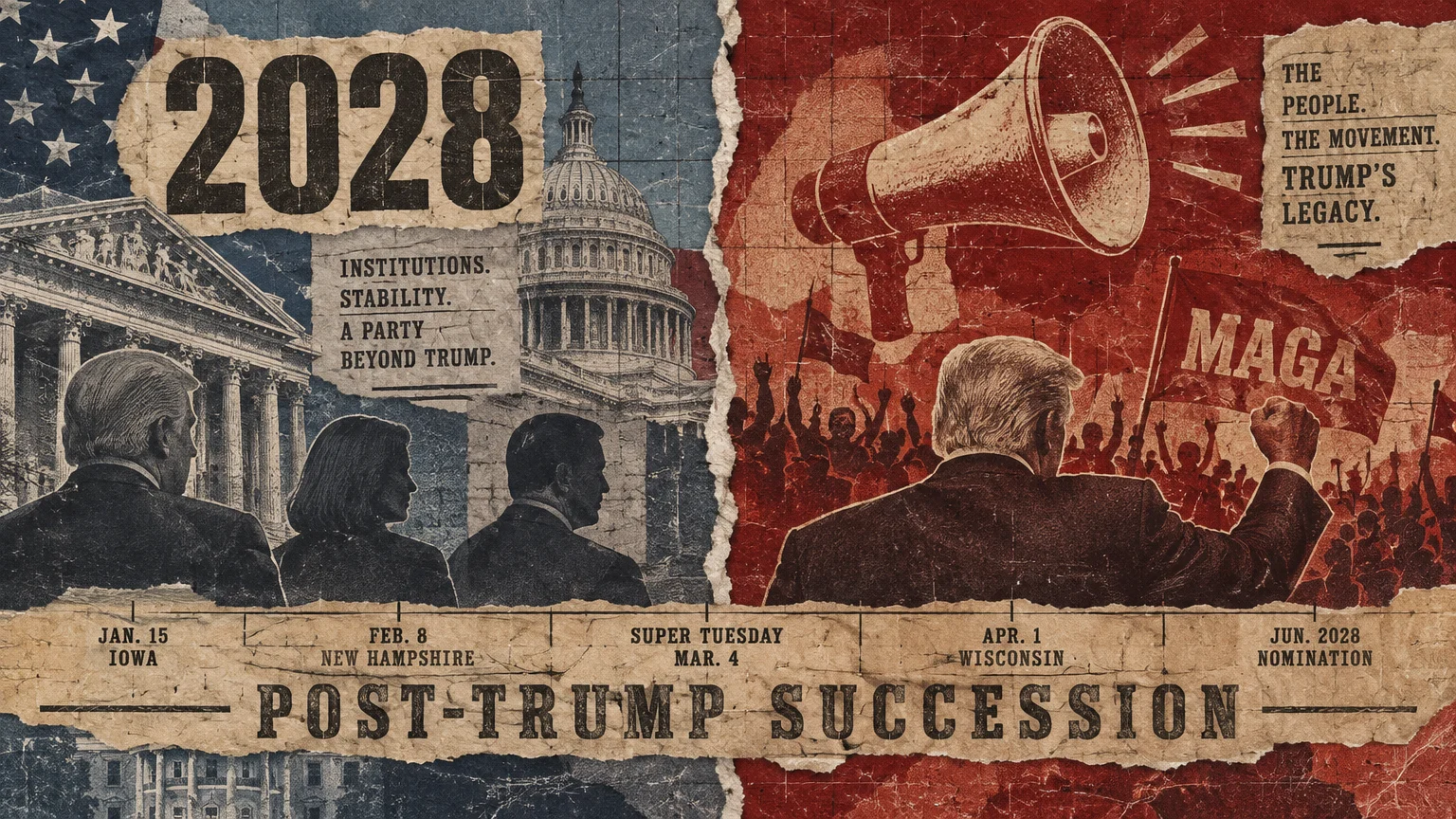
No single official holds an uncontested lock on the MAGA movement for the 2028 presidential election. Vice President JD Vance and Secretary of State Marco Rubio lead early polling, yet President Donald Trump has withheld an endorsement.
November 2026 surveys from Emerson College, Reuters/Ipsos, and The Economist/YouGov reveal a fractured Republican coalition after bruising midterm losses. Over half of Republican and Republican-leaning voters now seek a different governing approach.
You can separate campaign hype from real momentum by tracking verified polling swings, constitutional guardrails, and Federal Election Commission disclosures. Understanding these benchmarks early prepares you for every twist ahead of the 2028 nominating contest.
A Crowded White House Briefing Reveals a Party at a Crossroads
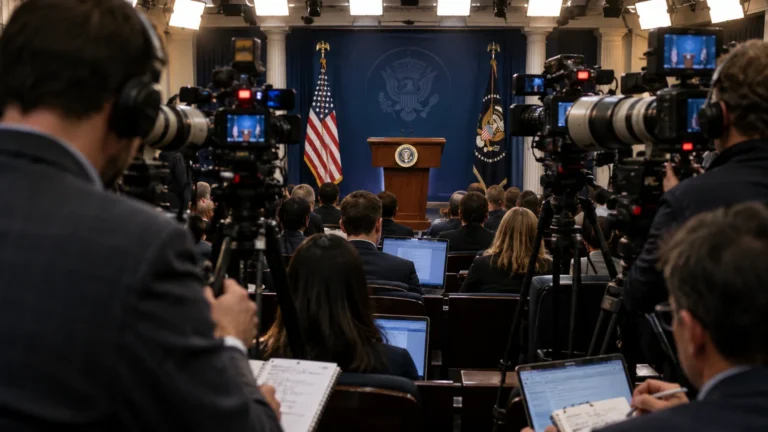
On November 20, 2026, President Donald Trump stood at a White House briefing beside Vice President JD Vance and Secretary of State Marco Rubio. Reporters pressed the president to name which official would make a better future president.
Trump refused to pick a side in front of the cameras. The very next day, he told Fox News that both men were “doing fantastically” and suggested he might back an open primary.
That public neutrality marked a sharp shift from August 2026, when Trump told Republican donors “we need to elect JD”. By November 8, 2026, Trump told CBS’s 60 Minutes he would “probably” endorse someone eventually while calling Rubio “great”.
If you follow Republican succession battles, that briefing room dynamic tells you everything about the current power balance. The MAGA movement has not rallied behind one consensus heir; instead, two top administration officials are competing for the mantle.
The November 3, 2026 midterm elections triggered much of this sudden uncertainty. Voters handed Democrats unified control of the U.S. House and Senate, according to PBS News and Newsweek.
Democrats flipped at least seven Senate seats across Kansas, Iowa, Texas, Ohio, Maine, North Carolina, and South Carolina. They also won major governorships in Georgia, Ohio, Iowa, and Texas, rattling Republican strategists nationwide.
Those sweeping losses forced conservative donors and grassroots organizers to rethink their assumptions about 2028. An easy coronation inside the Trump coalition now looks far less likely than a hard-fought primary.
Early Formation and Political Trajectories of the Top Contenders
To evaluate who might emerge from a contested 2028 Republican primary, you need to examine the institutional standing and voter appeal of each leading figure. Several distinct factions are already testing their strength.
JD Vance: Sitting Vice President and Grassroots Standard-Bearer
At age 42, JD Vance holds the most visible launchpad in American politics as sitting vice president. Historically, that office gives a candidate formidable advantages inside a party nominating contest.
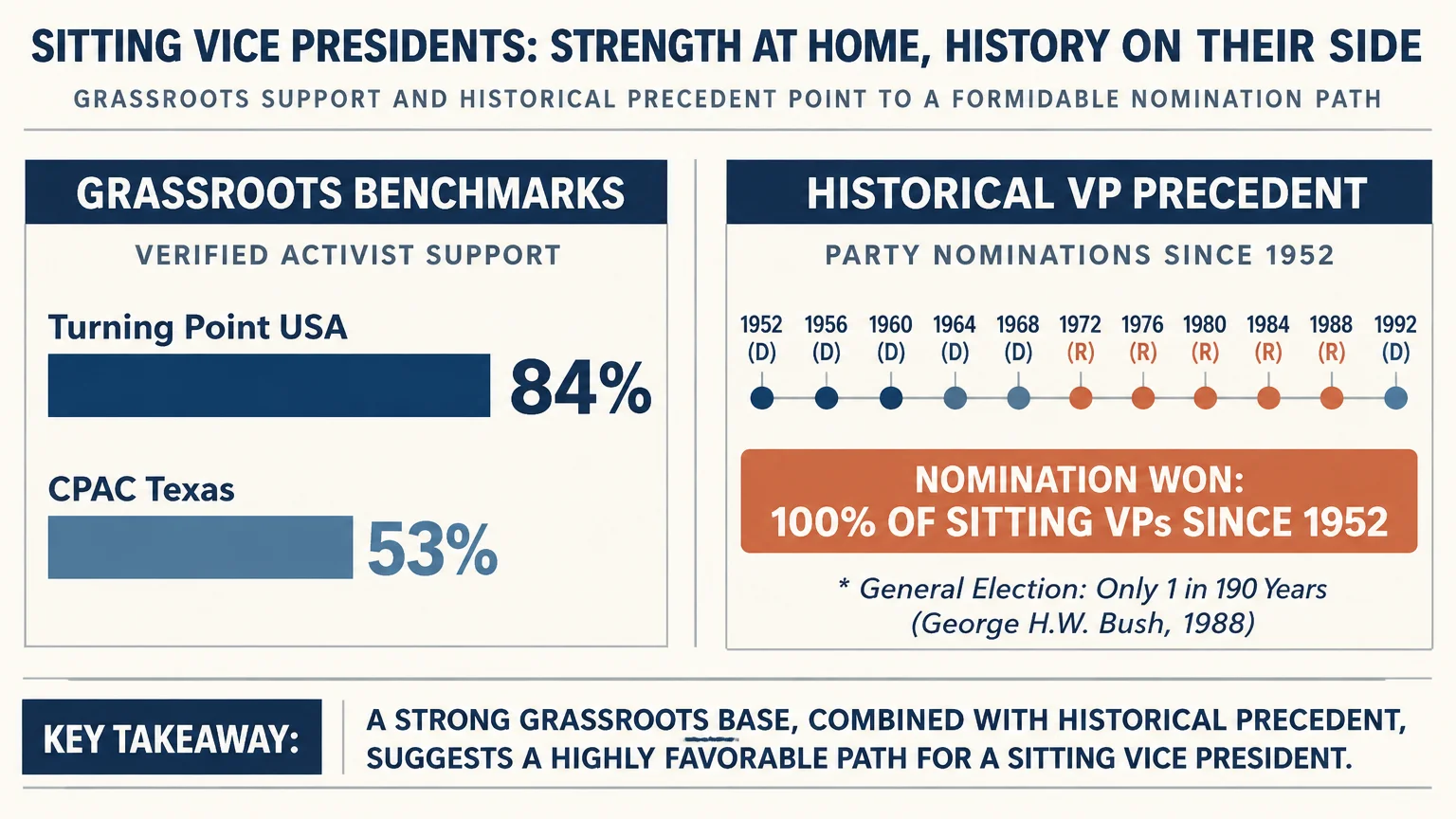
A November 3, 2026 Council on Foreign Relations analysis found that every sitting vice president seeking his party’s nomination since 1952 won it. That list spans Richard Nixon in 1960, George H.W. Bush in 1988, Al Gore in 2000, and Kamala Harris in 2024.
Yet that same Council on Foreign Relations report highlights a sobering general-election warning for you to weigh. Only one sitting vice president in the past 190 years—George H.W. Bush in 1988—actually won the presidency in November.
Inside conservative activist circles, Vance built an early powerhouse. At Turning Point USA in December 2025, he captured 84% of the straw poll, setting the highest single-candidate share in that event’s history, per Florida Politics.
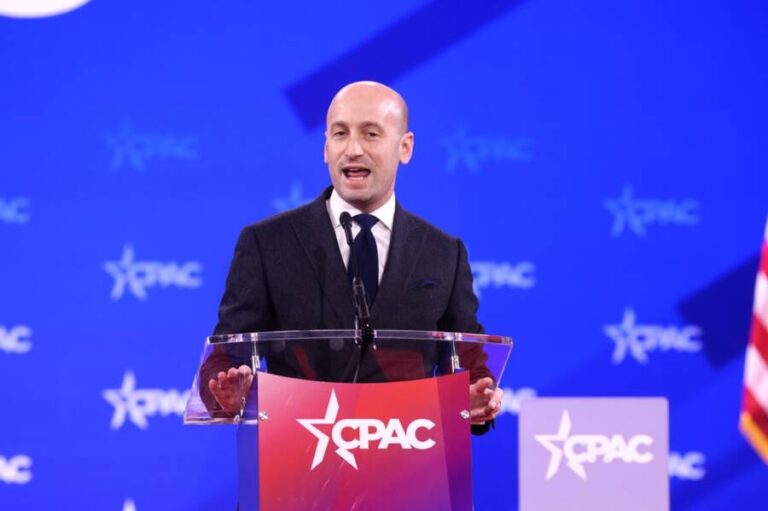
Months later, on March 28, 2026, Vance won 53% in the CPAC straw poll in Grapevine, Texas, among roughly 1,600 attendees, per CNN and Al Jazeera. However, that figure dropped from his 61% share in 2025.
Marco Rubio: Foreign Policy Veteran and Polling Surger
Secretary of State Marco Rubio offers a contrasting profile rooted in traditional Republican foreign policy and steady institutional management. Throughout 2026, Rubio quietly gained ground among both establishment conservatives and mainstream primary voters.
His CPAC straw poll share jumped from just 3% in 2025 to 35% in March 2026, per CNN and Al Jazeera. By August 2026, Rubio finished first ahead of Vance at the Western Conservative Summit among over 500 attendees, per the Centennial Institute and Washington Examiner.
Publicly, Rubio has downplayed any rivalry with the vice president. He previously stated, “If J.D. Vance runs for president, he’s going to be our nominee”, before telling The New York Times on November 5, 2026 that he was done discussing 2028.
Even with those denials, polling data shows Republican primary voters keep writing Rubio’s name into their preferences. You should watch his diplomatic travel and domestic speeches closely rather than relying solely on early refusals.
Term-Limited Governors and Outside MAGA Contenders
Beyond the White House, two prominent governors will regain full political freedom in January 2027. Florida Governor Ron DeSantis and Georgia Governor Brian Kemp both exit office then due to state term limits.
DeSantis called the 2026 midterms an “extinction-level event for Republicans” and told CNN he will become “a free man” in January. Freed from state legislative duties, both governors can raise money and visit early nominating states aggressively.
Other once-prominent contenders face steeper climbs after recent setbacks. Vivek Ramaswamy lost the November 3, 2026 Ohio gubernatorial race to Democrat Amy Acton, dimming his immediate electoral momentum.
Media coverage also regularly tracks Senators Ted Cruz, Josh Hawley, John Kennedy, and Rand Paul, alongside Defense Secretary Pete Hegseth and Donald Trump Jr. Arkansas Governor Sarah Huckabee Sanders and former Virginia Governor Glenn Youngkin remain in discussion too.
Former UN Ambassador Nikki Haley, commentator Tucker Carlson, and outgoing Representative Thomas Massie—who lost his 2026 House primary to a Trump-backed challenger—round out the wider field. Former Trump aide John McEntee even topped a November 12, 2026 University of Tennessee straw poll.

Power Portfolio: Governance, Midterm Fallout, and the Iran Shift
Campaign speeches tell you what candidates promise, but executive decisions show you how they handle pressure. Inside the second Trump administration, governing disputes over foreign conflict and electoral losses have redrawn the internal hierarchy.
The clearest flashpoint erupted one day after the November 3, 2026 midterm elections. On November 4, 2026, Vance posted on X that “the reason we lost is the war”, pointing directly to the U.S. conflict with Iran.
Trump initially told 60 Minutes that Vance’s postmortem was “largely true”. Behind closed doors, however, friction quickly surfaced over loyalty and messaging.
The New York Times reported on November 18, 2026 that Trump felt privately frustrated because Vance failed to defend the administration’s war decision. Six days earlier, on November 12, 2026, Trump removed Vance from the Iran portfolio and assigned him to crime and corruption.
You can read that reassignment as a critical data point in the succession race. Moving Vance off foreign crisis management narrowed his executive portfolio while keeping Rubio at the center of global diplomacy.
Meanwhile, voters are actively questioning the administration’s overall direction. A November 2026 Reuters/Ipsos poll found that 52% of Republicans and Republican-leaning independents want a 2028 nominee taking a different governing approach from Trump.
That sentiment gives potential challengers room to separate their personal records from unpopular White House policies. Yet roughly 40% to 45% of respondents in that same Reuters/Ipsos survey still rated both Rubio and Vance as “excellent” candidates.
Supporters of Vance argue his focus on domestic working-class concerns and skepticism of foreign entanglements keeps faith with core MAGA voters. Critics counter that his public break over Iran exposed poor political timing when the administration needed unity.
Rubio’s backers contend his steady management at the State Department reassures hesitant moderates and suburban voters who abandoned the GOP in 2026. Critics within populist circles worry his traditional outlook could dampen turnout among hardcore Trump loyalists.
Networks, Polling Swings, and Campaign Resources
To assess real primary strength, you must distinguish scientific voter samples from self-selected activist straw polls and online betting markets. November 2026 surveys show dramatic divergence depending on who pollsters ask and how they frame the ballot.
Reading the 2026 Polling Swings Accurately
An Emerson College national poll conducted November 14–16, 2026 and released November 19, 2026 revealed a striking reversal. Surveying 1,000 voters with a plus-or-minus 3% margin of error, Emerson showed Rubio surging into first place.
In Emerson’s closed-ended GOP primary question, Rubio drew 44% against Vance’s 24%, while DeSantis took 9% and Donald Trump Jr. took 6%, leaving 3% undecided. In the open-ended version, Rubio led 36% to Vance’s 20%, with DeSantis, Trump, and Thomas Massie each at 7%.
Comparing earlier Emerson surveys exposes the speed of this shift. Vance previously led Rubio 46% to 12% in June 2025, expanded to 52% to 20% in February 2026, and edged him 36% to 35% in May 2026.
From February to November 2026, those numbers represent a 52-point margin swing toward Rubio. You should watch future Emerson waves to see whether Rubio holds that lead or experiences a post-midterm plateau.
Other polls paint a tighter race that keeps Vance firmly ahead. A November 9–11, 2026 Economist/YouGov poll of intended 2028 GOP primary voters placed Vance at 40%, Rubio at 33%, DeSantis at 14%, and Trump at 9%, with Nikki Haley and Thomas Massie at 1% each.
That Economist/YouGov survey also broke down the coalition divide you need to monitor. Among self-identified MAGA supporters, Vance led Rubio 45% to 35%, while DeSantis and Trump drew 10% each.
Among non-MAGA Republican voters, Vance’s margin shrank to 33% over Rubio’s 29%, with DeSantis climbing to 19% and Trump at 7%. Earlier October 2026 polls also favored Vance: New York Times/Siena put Vance at 33% and Rubio at 23% with 26% unsure, while Bowling Green State University/YouGov reported Vance at 44% and Rubio at 21% in The Washington Post.
Prediction markets reflect that ongoing stalemate rather than a runaway favorite. As of November 22, 2026, Kalshi traders across roughly $104 million in volume gave Vance 31% implied odds, Rubio 25%, and DeSantis 16%.
FEC Thresholds, Contribution Rules, and Party Infrastructure
Campaign finance filings offer you the cleanest way to verify when exploratory talk becomes an official presidential run. Under Federal Election Commission rules, any candidate raising or spending more than $5,000 must register and file public financial disclosures.
For the 2025–2026 cycle, the FEC limits individual donors to $3,500 per election—meaning $7,000 combined for a primary and general campaign. Individuals may also give $5,000 annually to federal PACs and $10,000 annually to state or local party federal accounts.
National party accounts carry much higher limits that benefit well-connected contenders. Donors can contribute $44,300 per year to a national party’s main account, plus $132,900 per year to each specialized account for conventions, headquarters buildings, and legal or recount funds.
If a candidate accepts public primary matching funds, stricter rules apply. Only $250 per individual counts toward matching funds, and candidates must cap personal campaign spending at $50,000, per the FEC.
Party rules also shape how candidates allocate those dollars across early states. On September 10, 2026, the Republican National Committee voted to keep its early nominating lineup unchanged, per RNC Chairman Joe Gruters and South Carolina committee member Tyson Grinstead.
That vote preserves Iowa, New Hampshire, Nevada, and “first in the South” South Carolina at the front of the 2028 calendar. Later that summer, Republicans will gather at the Toyota Center in Houston, Texas—a site 168 RNC members selected on August 25, 2023.
Accountability Snapshot: Approval Ratings, Constitutional Guardrails, and Filings
Every prospective 2028 Republican nominee faces serious headwinds from public approval ratings and constitutional law. Examining those constraints helps you separate realistic paths to power from online rumors.
First, the sitting administration enters the 2028 cycle with deep approval deficits. President Trump’s job approval stood at 37% with 54% disapproval in Emerson College’s November 2026 poll, and dropped to 32% in Reuters/Ipsos polling that same month.
Vice President Vance carries steep favorability challenges of his own. In June 2026, the United States Studies Centre reported Vance held a negative-21 net approval rating, the lowest mark on record for a sitting vice president at that stage.
Second, constitutional eligibility strictly limits who can sit at the top of the 2028 ticket. The Twenty-second Amendment to the U.S. Constitution, ratified in 1951, states that “no person shall be elected to the office of the President more than twice”.
Because Trump served as both the 45th and 47th president, 2028 marks the first election since 2012 without him as the GOP nominee. It also becomes the first cycle since 1884 with no incumbent president on the ballot in consecutive elections.
Trump himself has sent mixed public signals about those limits over time. In March 2025, he told NBC News he was “not joking” about exploring methods for a third term.
Yet on August 12, 2026 at Joint Base Andrews, Trump brushed off another 2028 question, saying he “would love to run” again while acknowledging “the law is very strong”. Under Article II, Section 1, candidates must still meet baseline rules: natural-born citizenship, at least 35 years of age, and 14 years of U.S. residency.
Some commentators have floated whether a two-term former president could run for vice president instead. Notre Dame election law professor Derek Muller notes that the Twelfth Amendment, ratified in 1804, bars anyone constitutionally ineligible for the presidency from serving as vice president—though legal scholars still debate edge scenarios.
Finally, official transparency records confirm that major contenders are still waiting on the sidelines. As of November 2026, no prominent national Republican has filed presidential paperwork with the FEC.
According to Wikipedia and FEC records, declared filers include television writer Dan Greaney, who filed May 26, 2026, and 2024 Minnesota GOP Senate nominee Royce White, who declared August 12, 2026. Former Border Patrol official Gregory Bovino also formed an exploratory committee on June 8, 2026.
Frequently Asked Questions About the 2028 GOP Succession
Who is the official MAGA candidate rallying support for 2028?
No single official holds unified backing right now. JD Vance leads among MAGA-identified voters in The Economist/YouGov polling and dominated early TPUSA and CPAC straw polls, while Marco Rubio surged ahead in Emerson College polling and won the Western Conservative Summit.
President Trump has praised both officials while keeping his endorsement uncommitted. You should treat any claim of an already settled nominee as premature until formal campaign filings and Trump’s personal backing appear.
What issues divide potential 2028 Republican primary candidates?
Foreign military intervention and executive management sit at the center of the debate. Vance publicly blamed the U.S. conflict with Iran for the 2026 midterm losses, leading Trump to shift Vance to crime and corruption duties while keeping Rubio over foreign affairs.
Meanwhile, Reuters/Ipsos found 52% of Republicans and Republican-leaning independents want a nominee who governs differently from Trump. Candidates will have to balance populist economic themes against growing voter fatigue over political turbulence.
How strong are a sitting vice president’s general-election odds?
Vice presidents typically hold strong advantages in primaries, winning every party nomination they sought since 1952, per the Council on Foreign Relations. However, winning the White House afterward has proved exceptionally difficult.
Only George H.W. Bush in 1988 won a general election as sitting vice president over the past 190 years. Vance’s negative-21 net approval rating from June 2026 underscores why primary donors weigh general-election viability carefully.
How can you verify when a candidate officially enters the 2028 race?
Skip social media rumors and check official Federal Election Commission disclosures directly. Once any hopeful raises or spends over $5,000, federal law forces them to register a campaign committee and report donors publicly.
You can also watch for exploratory committee filings, which let politicians test donor appetite before making a full announcement. Keep in mind that major figures often wait until after midterm transitions to trigger those legal deadlines.
What to Watch Next on the Road to November 2028
Several concrete milestones over the next two years will reveal whether MAGA consolidates around Vance, pivots toward Rubio, or opens the door for term-limited governors. Tracking these scheduled checkpoints keeps you ahead of the news cycle.
First, watch January 2027, when Ron DeSantis and Brian Kemp step down from their governorships under state term limits. Their early travel schedules to Iowa, New Hampshire, Nevada, and South Carolina will signal whether they plan full-scale challenges.
Second, monitor RNC calendar announcements and FEC contribution updates throughout 2027. Party officials expect to lock in exact 2028 primary dates in 2027, while the FEC adjusts federal donation limits for inflation during odd-numbered years.
Third, mark August 2028 on your calendar for the national nominating conventions. Because Democrats announced their convention for August 7–10, 2028, Republicans holding the White House will gather in Houston afterward—likely after August 14, 2028.
From there, federal law sets an immovable timetable under 3 U.S.C. sections 7 and 21 and the Twentieth Amendment, detailed on USAGov. Voters will cast ballots on Tuesday, November 7, 2028, with 270 of 538 electoral votes required to win.
State electors will meet on December 19, 2028, Congress will count those electoral votes on January 6, 2029, and the next president will take the oath at noon on January 20, 2029. Follow the filings, early-state coalitions, and policy shifts now so you can judge every 2028 contender on verified records rather than political hype.