Global power shifted dramatically in 2026, directly altering your economic security and international stability. Ten political leaders drove these historic realignments through decisive elections, summit diplomacy, and institutional clashes.
From legislative upheavals in Washington to sweeping democratic shakeups across Europe, Asia, and Latin America, their actions redefined governance. You need clear facts to evaluate how their policy choices affect your future.
This comprehensive review examines their records, campaign funding, and legislative battles throughout an unprecedented year. Discover how these leaders secured power and what their next decisions mean for your community.
Donald Trump: Executive Power and the Midterm Reckoning
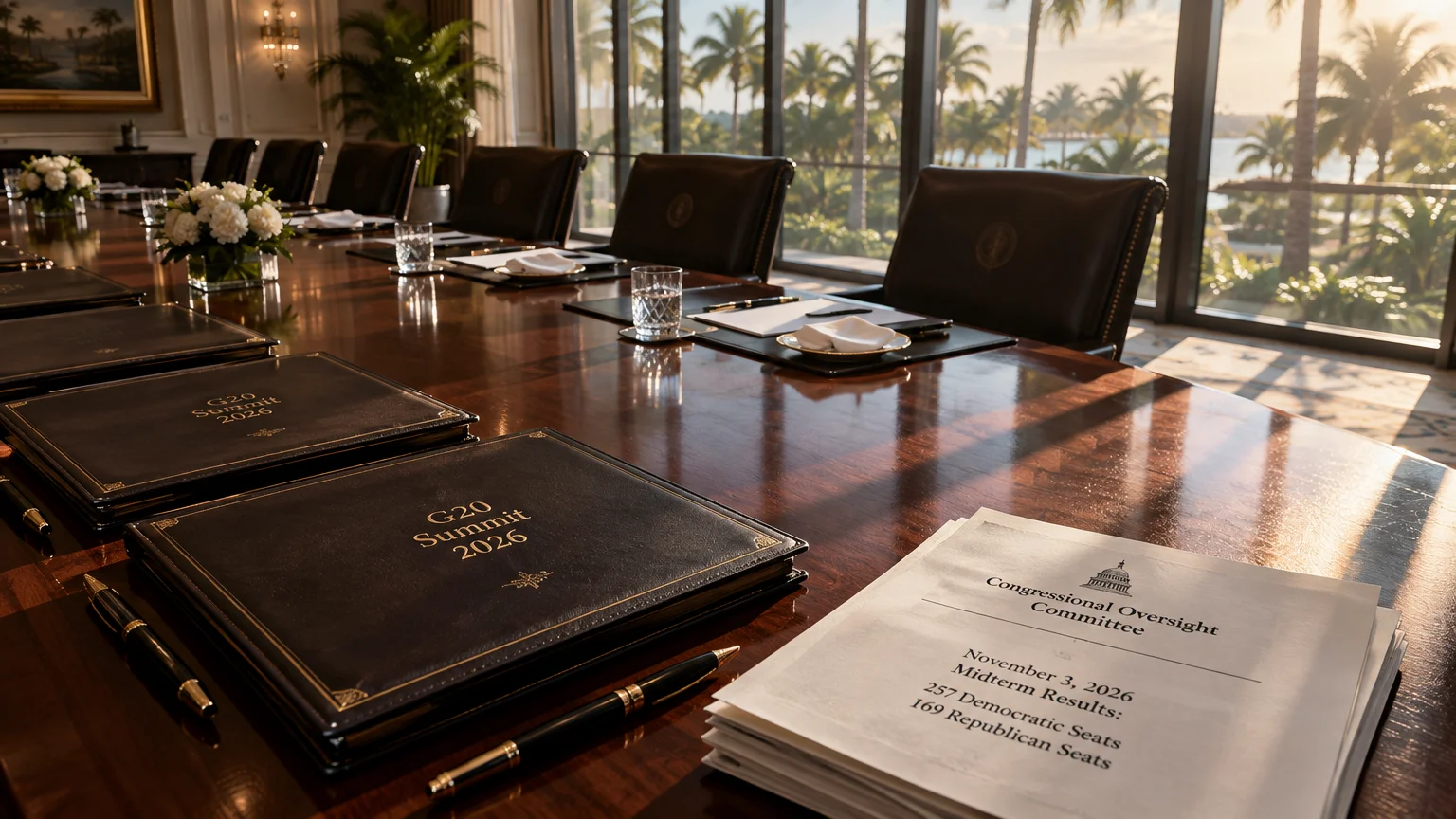
President Donald Trump entered the second year of his non-consecutive second term by projecting authority abroad while facing intense resistance at home. He hosted the 2026 G20 Leaders’ Summit on December 14–15, 2026, at Trump National Doral in Miami, Florida.
The gathering coincided with the U.S. 250th anniversary celebrations, offering a high-profile platform for his trade and foreign policy doctrines. Yet domestic voters delivered an unmistakable verdict during the November 3, 2026 midterm elections.
Republicans lost control of both the House of Representatives and the Senate in that vote. This dramatic legislative rebuke fundamentally curtailed his domestic legislative ambitions for the remainder of his term.
Voters expressed profound frustration with aggressive tariff policies, rising consumer costs, and sweeping executive orders. The administration had bypassed congressional authorization on trade and border security, triggering extensive court challenges from state attorneys general.
Federal ethics watchdogs scrutinized the summit location choice at his private resort. Critics argued that hosting foreign delegations at his personal property raised ongoing questions about conflicts of interest and constitutional emoluments.
Supporters celebrated his decisive executive actions, noting his rapid implementation of deregulatory mandates across the energy sector. They praised his unapologetic transactional diplomacy during tense bilateral negotiations with global competitors.
The loss of congressional majorities forces the administration into a purely defensive posture heading into 2027. You should expect an onslaught of congressional oversight hearings, subpoena battles, and stalled executive appointments.
Hakeem Jeffries: The Architect of the New House Majority
House Democratic Leader Hakeem Jeffries transformed his disciplined caucus into a formidable midterm operation. His national strategy flipped the U.S. House of Representatives on November 3, 2026, securing at least 257 seats against the Republicans’ 169.
Jeffries is now poised to succeed outgoing Republican Speaker Mike Johnson in January 2027. His historic rise will make him the first Black Speaker of the U.S. House of Representatives.
Speaker Johnson announced that he will not run for minority leader following his party’s devastating defeat. That vacuum leaves House Republicans searching for a coherent leadership strategy amid internal ideological civil wars.
Jeffries built this sweeping majority by recruiting moderate candidates in competitive suburban districts while maintaining high turnout across urban bases. He focused campaign messaging entirely on pocketbook economics, healthcare protection, and reproductive freedoms.
Campaign finance filings show that Democratic committees out-raised their opponents by significant margins in critical swing districts. Grassroots donors contributed record sums, responding directly to threats against federal entitlement programs and environmental regulations.
Progressive caucuses within the party occasionally criticized his cautious, institutionalist approach to floor strategy. However, his ability to enforce caucus discipline proved indispensable in passing unified alternative budget resolutions.
You can track every upcoming vote and floor initiative through the official House clerk records as the new legislative session opens. Jeffries faces the immediate challenge of governing with an assertive, diverse coalition.
Chuck Schumer: Reclaiming the Senate Gavel
Senator Chuck Schumer engineered a remarkable legislative rebound during the 2026 midterm cycle. Republicans had entered the election holding a 53–47 majority under Senate Majority Leader John Thune.
Democrats flipped control of the chamber by capturing a net gain of eight Senate seats on November 3, 2026. This decisive victory guarantees Schumer will reclaim the role of Senate Majority Leader on January 3, 2027.
The election coincided with a net gain of six governorships nationwide for his party, cementing broad regional strength. Schumer capitalized on voter dissatisfaction with federal judicial confirmations and controversial roll-call votes advanced by Senate conservatives.
Throughout his time in the minority, Schumer kept his caucus virtually unbroken during high-stakes confirmation battles. He skillfully deployed procedural delays to highlight contentious administrative nominees and stall conservative statutory overhauls.
Watchdog groups tracked heavy spending from independent political action committees backing Schumer’s frontline candidates in battleground states. Campaign transparency disclosures revealed substantial investments from labor organizations, clean energy advocates, and civil rights coalitions.
Critics within the conservative movement accused Schumer of weaponizing Senate procedures to obstruct legitimate executive branch appointments. Meanwhile, left-wing activists urged him to eliminate the filibuster entirely once he assumes power.
Citizens can review past floor tallies and committee assignments through the Senate roll call database before the 120th Congress convenes. Schumer must now manage expectations while navigating strict statutory budget constraints.

Marco Rubio: Redefining American Diplomacy
As U.S. Secretary of State, Marco Rubio exerted immense influence over foreign policy and multilateral security pacts throughout 2026. He advanced an assertive national security agenda that prioritized regional containment and strategic economic competition.
Rubio showcased this assertive foreign policy while hosting the G20 Foreign Ministers’ Meeting in Atlanta, Georgia, on October 30–31, 2026. He utilized the gathering to press international allies on technology export restrictions and maritime supply chain security.
His departure from the legislative branch had triggered a critical political vacancy. His former Senate seat in Florida was decided during a high-profile special election on November 3, 2026.
That election occurred concurrently with the special election for Vice President JD Vance’s former Senate seat in Ohio. Both races served as critical barometers of voter sentiment toward the administration’s broader geopolitical and trade initiatives.
Rubio faced sustained criticism from European allies over unilateral tariff declarations and skepticism toward international climate pacts. Conversely, supporters praised his uncompromising posture against authoritarian expansion across Latin America and the Indo-Pacific.
Ethics monitors examined the State Department’s resource distribution, questioning whether diplomatic staffing cuts damaged critical embassy operations. Despite these concerns, Rubio maintained tight control over diplomatic messaging and executive negotiations.
You can examine international treaties, bilateral communiqués, and official remarks directly via the State Department diplomatic archives. Rubio must now defend his diplomatic budget before newly empowered congressional committees.
Luiz Inácio Lula da Silva: Defending Brazilian Democracy
President Luiz Inácio Lula da Silva solidified his enduring political legacy by winning an unprecedented fourth non-consecutive presidential term in 2026. The 80-year-old statesman demonstrated remarkable political resilience against an aggressive conservative opposition.
The initial national voting occurred on October 4, leading directly into a fierce runoff election on October 25, 2026. Lula defeated right-wing Senator and Trump ally Flávio Bolsonaro, the son of former president Jair Bolsonaro.
Official returns certified that Lula secured 51.79 percent of the vote, representing 64.25 million ballots. Flávio Bolsonaro captured 48.21 percent, representing 59.82 million ballots, illustrating a deeply divided nation.
Bolsonaro refused to accept the election outcome and promptly mounted sweeping legal challenges before judicial tribunals. His unsubstantiated allegations of voter fraud stoked civil unrest and renewed concerns over democratic institutional resilience.
Supporters rallied behind Lula’s commitment to Amazon rainforest preservation, social safety net expansions, and re-industrialization initiatives. Indigenous leaders and environmental advocates credited his regulatory agencies with curbing illegal mining and deforestation operations.
Business federations and conservative legislators criticized his state-led industrial spending, arguing it fueled inflationary pressures. Furthermore, conservative majorities in the Brazilian Congress restricted his ability to implement sweeping fiscal overhauls.
Voters can inspect certified regional tallies through the Tribunal Superior Eleitoral certification system. Lula must now govern through persistent partisan polarization and defend his razor-thin mandate.
Péter Magyar: Dismantling Hungary’s Illiberal Supermajority
Péter Magyar orchestrated one of the most stunning political transformations in modern European history on April 12, 2026. His reformist Tisza party decisively ended Prime Minister Viktor Orbán’s 16-year rule.
Hungarian citizens participated in extraordinary numbers, driving a record post-1990 voter turnout of 78 percent. Magyar’s coalition shattered the ruling establishment by capturing a two-thirds constitutional supermajority, winning 141 of 199 parliamentary seats.
Magyar had defected from the ruling elite earlier to expose entrenched political patronage and judicial interference. His swift political ascent mobilized hundreds of thousands of disillusioned citizens through massive anti-corruption rallies.
His electoral platform promised immediate judicial restoration, transparency in state contracts, and freedom for independent journalists. Critics within the outgoing regime dismissed him as an opportunist backed by foreign powers and multinational corporations.
Independent watchdogs praised his commitment to unfreezing billions of euros in European Union funding withheld over rule-of-law violations. Magyar immediately pledged full cooperation with the European Public Prosecutor’s Office to root out public corruption.
This historic shift reshuffled geopolitical dynamics within NATO and the European Union regarding defense aid for Ukraine. Magyar decisively broke with Orbán’s pro-Moscow positioning, aligning Hungary firmly with core European democratic alliances.
You can verify constituency results and legal election challenges on the National Election Office portal. Prime Minister-Designate Magyar faces the enormous task of dismantling deeply entrenched institutional monopolies.

Sanae Takaichi: Japan’s New Defense and Economic Doctrine
Sanae Takaichi solidified her place in global history as Japan’s first female prime minister after taking office in late October 2025. She proved her decisive political instincts by calling a snap general election on February 8, 2026.
Her calculated gamble resulted in a historic landslide for the ruling Liberal Democratic Party. The party won 316 of the 465 seats in the House of Representatives, securing an absolute two-thirds supermajority.
This victory marked the first time since World War II that a single political party achieved a two-thirds majority alone. Parliament formally reappointed Takaichi as Prime Minister on February 18, 2026, granting her an overwhelming governing mandate.
Takaichi moved swiftly to fulfill her core national security commitments. She accelerated Japan’s strategic target to hit 2 percent of GDP in military spending by March 2026, months ahead of previous schedules.
Her policy framework emphasizes economic statecraft, securing semiconductor manufacturing networks, and deterring regional maritime aggression. Conservative defense analysts lauded her resolve to bolster counterstrike capabilities and enhance joint operational readiness with allied nations.
Opposition critics raised alarms regarding ballooning public debt and escalating diplomatic frictions across East Asia. Civil liberties organizations also questioned proposals aimed at broadening state surveillance over critical technological infrastructure.
Takaichi now possesses the legislative power required to pursue long-sought constitutional amendments regarding Japan’s Self-Defense Forces. How she deploys this unprecedented mandate will shape regional security for decades.
Benjamin Netanyahu: Power on the Brink
Prime Minister Benjamin Netanyahu confronted his most perilous political landscape during Israel’s October 27, 2026 legislative election. The national ballot marked the country’s first parliamentary vote since the devastating attacks of October 7, 2023.
Israeli voters handed his ruling right-wing coalition a severe electoral setback. Netanyahu’s right-wing bloc collapsed to 53 seats, falling far short of the 61 seats required for a majority in the 120-seat Knesset.
His Likud party managed to capture only 27 seats as public frustration over security failures and prolonged conflict peaked. Netanyahu’s close allies immediately raised unsubstantiated fraud claims, attempting to contest voting irregularities in competitive urban zones.
Critics and legal watchdogs condemned these fraud narratives as desperate maneuvers designed to shield Netanyahu from his ongoing corruption trials. Opponents demanded his immediate resignation, citing his inability to unite the country or secure post-war diplomatic stability.
Right-wing loyalists defended his record, arguing that uncompromising military posture was vital to neutralizing regional threats. They claimed that removing Netanyahu would weaken Israeli deterrence during critical negotiations over regional security treaties.
The election result plunged the Knesset into a tense governing deadlock as of November 2026. Netanyahu faces intense pressure from military veterans, hostage advocacy groups, and business leaders demanding political accountability.
His future now hinges on legal challenges, fragile temporary alliances, and parliamentary maneuverings. You should monitor how these legal proceedings and coalition talks directly affect Middle Eastern peace negotiations.

Gadi Eisenkot: The Pragmatic Challenger in Jerusalem
Former military chief of staff Gadi Eisenkot emerged as the central pillar of Israel’s political opposition throughout 2026. His newly formed Yashar party won 21 seats during the high-stakes October 27, 2026 legislative election.
Eisenkot organized and steered a broader opposition bloc that captured 48 total seats in the Knesset. This disciplined performance successfully deprived Netanyahu’s right-wing government of its long-standing parliamentary dominance.
The election witnessed an unprecedented political development as Arab parties secured a record 19 Knesset seats. This historic turnout created complex mathematical possibilities for building a functioning, stable governing coalition.
Eisenkot campaigned on public integrity, structural military reorganization, and rebuilding trust between citizens and their defense institutions. Having lost family members during the conflict, his personal moral authority resonated deeply with moderate and security-conscious voters.
Right-wing opponents attacked him for entertaining parliamentary cooperation with Arab factions to block Netanyahu from power. Meanwhile, progressive groups urged him to articulate a more definitive roadmap for regional peace and Palestinian self-determination.
Watchdog groups lauded his transparent campaign accounting and steadfast refusal to accept support from unregulated foreign political funds. Eisenkot maintained that restoring ethical leadership remained essential to national security and internal cohesion.
He now navigates delicate multiparty negotiations in an attempt to break the severe governing impasse. His choices will determine whether Israel can form an inclusive government or face yet another round of snap elections.
Emmanuel Macron: Multilateralism at the G7 Summit
French President Emmanuel Macron utilized the international spotlight to defend multilateralism in an era of surging nationalism. As holder of the 2026 G7 Presidency, he hosted the 52nd G7 Summit in Évian-les-Bains, France.
The summit took place from June 15–17, 2026, after organizers pushed back the opening date by one day. That strategic scheduling change prevented a direct conflict with an event celebrating President Trump’s birthday.
Macron guided summit discussions toward resolving critical global economic imbalances and securing resilient critical mineral supply chains. He also championed stringent international safety benchmarks for artificial intelligence and coordinated European defense financing for Ukraine.
Domestically, Macron faced persistent challenges from divided parliamentary factions and vocal public resistance to fiscal consolidation. Labor unions and opposition parties continued to criticize his economic reforms and budgetary restraints.
Diplomatic observers praised his ability to bridge communication gaps between traditional transatlantic partners and developing nations. His administration worked aggressively to prevent trade disputes from unraveling existing carbon reduction agreements and multilateral security accords.
Transparency monitors continued to review public consulting expenditures and administrative contracting practices within his executive departments. Macron defended his governance model, insisting that robust technocratic efficiency protected France’s sovereignty and competitive edge.
Macron’s final presidential phase hinges on keeping European alliances unified amid shifting political leadership across the Atlantic. You can assess his diplomatic legacy by monitoring how European institutions implement the Évian summit resolutions.
Global Power Networks and Campaign Finance Dynamics
The political battles of 2026 demonstrated the unprecedented influence of private capital, grassroots micro-donations, and cross-border digital messaging. In the United States, midterm spending eclipsed past records as non-profit advocacy organizations saturated swing media markets.
Independent campaign filings revealed a sharp divergence in resource allocation strategies between the two dominant American parties. Democratic candidates relied heavily on hundreds of millions of dollars from small-dollar donors through digital fundraising portals.
Republican efforts drew substantial underwriting from energy executives, commercial real estate developers, and large political action committees. However, that financial firepower could not fully insulate incumbents from intense public dissatisfaction over inflation and administrative overreach.
Internationally, campaign finance laws played decisive roles in shaping electoral fairness and executive accountability. In Brazil, strict public electoral fund allocations prevented corporate takeovers of congressional races despite deep ideological tensions.
In Hungary, Péter Magyar’s grassroots movement overcame extensive state-funded advertising campaigns through decentralized civic crowdfunding. His success demonstrated that disciplined digital mobilization can bypass state-controlled traditional media channels.
Global watchdogs warn that foreign information operations and opaque funding networks continue to target democratic institutions worldwide. Citizens must remain vigilant, cross-referencing campaign finance registries to identify who finances public policy debates.
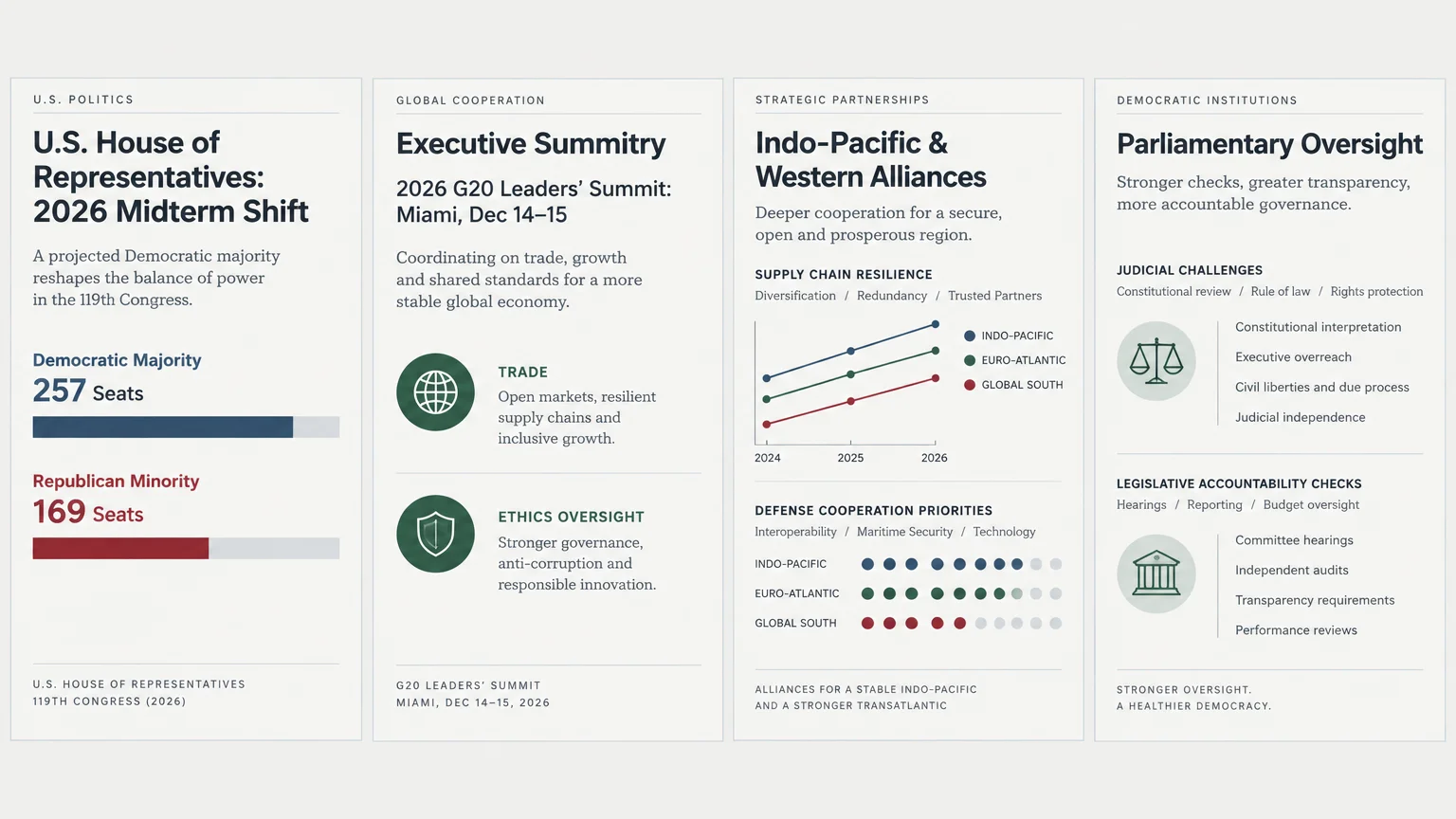
Accountability Snapshot Across World Capitals
Institutional watchdogs and judicial bodies faced extreme pressure throughout 2026 as leaders tested constitutional boundaries. In multiple nations, political figures challenged election outcomes or attempted to delegitimize independent courts to preserve personal power.
The legal challenges mounted by Flávio Bolsonaro in Brazil and Likud allies in Israel exemplified this growing trend. In both instances, nonpartisan electoral commissions and judicial panels maintained standard verification protocols despite public disinformation.
In Hungary, the incoming parliamentary majority initiated audits into state procurement contracts awarded under the previous administration. Magyar’s anti-corruption agenda underscores the importance of restoring judicial autonomy to qualify for international recovery funds.
Within the United States, congressional oversight powers will expand dramatically once the 120th Congress convenes in January 2027. Lawmakers have already signaled aggressive probes into executive agency appointments, government contracting, and regulatory enforcement shifts.
Ethical governance requires proactive citizen engagement and continuous public verification of institutional behavior. Tracking official ethics disclosures and public registries enables you to hold elected officials accountable to their statutory oaths.
The events of 2026 demonstrate that democratic resilience depends less on individual personalities than on durable, transparent institutional safeguards. Protecting these watchdog structures remains an urgent priority across every democratic society.
Frequently Asked Questions About the 2026 Political Landscape
How do political leaders manage succession plans during unexpected power shifts?
Succession planning requires balancing party stability with grassroots enthusiasm. In the U.S. House, Hakeem Jeffries spent years mentoring newer lawmakers and unifying disparate factions to ensure a seamless leadership transition.
Conversely, Mike Johnson’s decision to step down from minority leadership created immediate internal confusion among House Republicans. Transparent succession frameworks reduce governance disruption when unexpected electoral defeats reshape legislative balances.
In parliamentary democracies like Japan and Hungary, party bylaws and constitutional protocols dictate rapid transitions to prevent executive vacuums. Clear succession pathways allow incoming leaders to execute their legislative mandates without debilitating internal disputes.
Which economic and defense policies will dominate the upcoming legislative cycles?
Legislative bodies worldwide will prioritize supply chain security, inflation management, and targeted defense spending increases throughout 2027. Japan’s rapid achievement of 2 percent of GDP defense spending establishes a precedent across Pacific democracies.
In Washington, divided government will produce intense standoffs over federal appropriations, foreign aid packages, and tax policy renewals. The new Democratic majorities will challenge administrative tariffs while demanding protective guardrails for domestic social safety nets.
European leaders will focus on critical mineral supply chains, common defense financing, and cross-border energy grids. These shared economic priorities will force leaders to negotiate pragmatic compromises despite divergent ideological stances.
How did voter turnout and demographic changes shift electability in 2026?
Voter turnout surged in elections where citizens perceived democratic norms or personal economic stability were directly at stake. Hungary’s extraordinary 78 percent turnout illustrated how high civic participation can overcome structural advantages held by long-ruling incumbents.
In Brazil, high voter participation across working-class districts propelled Lula to a hard-fought runoff victory against right-wing forces. Similarly, American midterms saw elevated engagement among suburban moderates and young voters dissatisfied with aggressive federal executive actions.
Israel’s election highlighted the decisive influence of demographic shifts, evidenced by Arab parties capturing a record 19 Knesset seats. Candidates must now cultivate broader coalitions rather than relying strictly on traditional ideological loyalists to secure power.
Where can citizens track campaign finance reports and official ethics disclosures?
Citizens can review comprehensive campaign finance disclosures through national regulatory portals established by law. In the United States, the Federal Election Commission provides publicly accessible databases detailing candidate receipts, expenditures, and political action committee disbursements.
International bodies such as Brazil’s Superior Electoral Court and Hungary’s National Election Office maintain digital portals publishing official candidate filings. Accessing these civic resources allows you to scrutinize donor networks and detect potential conflicts of interest.
Independent investigative watchdogs and civic advocacy organizations also publish nonpartisan analyses of personal financial disclosures and legislative lobbying registrations. Utilizing these public platforms empowers you to evaluate whether public officials serve public rather than private interests.
What Lies Ahead: Critical Decisions for 2027
The dramatic elections and diplomatic summits of 2026 have set the stage for contentious legislative battles in 2027. In Washington, the convening of the 120th Congress will immediately redefine executive-legislative dynamics through aggressive oversight and budget negotiations.
Globally, newly elected governments in Hungary, Japan, and Brazil must translate sweeping campaign rhetoric into measurable governing achievements. Prime Minister-Designate Péter Magyar faces the challenge of repairing European alliances, while Prime Minister Sanae Takaichi implements expanded defense structures.
In Jerusalem, continuing parliamentary deadlock tests institutional resilience as opposition leaders and incumbent factions contest governing authority. How these leaders resolve ongoing coalition disputes will dictate stability across the entire Middle East.
You should actively follow these developments by reviewing roll-call votes, inspecting campaign finance disclosures, and demanding accountability from your representatives. Informed civic engagement remains the most effective tool for shaping the policies that govern your daily life.