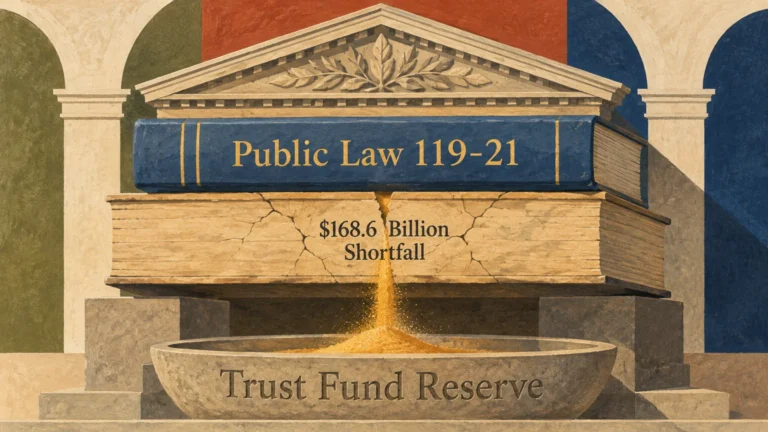
A November 2026 Senate Budget Committee memo from Chairman Ron Johnson alleges that politicians from both parties misled Americans for decades about Social Security’s finances. That flashpoint arrives just six years before projected trust fund depletion.
Federal trustees and congressional budget analysts now warn that automatic benefit cuts could hit your retirement check by 2032. Understanding what is true about those warnings helps you plan your household finances and track coming legislative battles.
This report maps the legislative players, decodes the trust fund rules, and separates political rhetoric from verified federal accounting. You will see what happens to your payroll taxes and future benefits under current law.
The November 2026 Hearing Flashpoint and Competing Narratives
On November 19, 2026, Senate Budget Committee Chairman Ron Johnson released a hearing memo titled Social Security: The Reality… a Legal Ponzi Scheme. The Wisconsin Republican wrote that politicians from both parties “have misled the American public for decades” about how the system stores surplus cash.
Johnson argued that lawmakers falsely promoted a “lockbox” invested in real assets. According to his memo, federal officials instead spent payroll surpluses alongside general revenues and placed special-issue Treasury bonds in Parkersburg, West Virginia.
One day before the hearing, Johnson sharpened that critique during a Fox Business appearance. He told viewers that Social Security “is a Ponzi scheme” that you cannot fix and must instead shut down while trying to recover money.
Hours later, during the November 18 Senate Budget Committee session, Johnson walked back that remark. Calling his earlier phrasing “imprecise language,” the senator stated that he was not proposing to shut down Social Security.
That same day, Johnson introduced the Stop Scaring Seniors Act to shield retirees from automatic cuts once reserves run dry. His bill would authorize monthly transfers from the Treasury’s general fund while exempting any related borrowing from the federal debt limit.
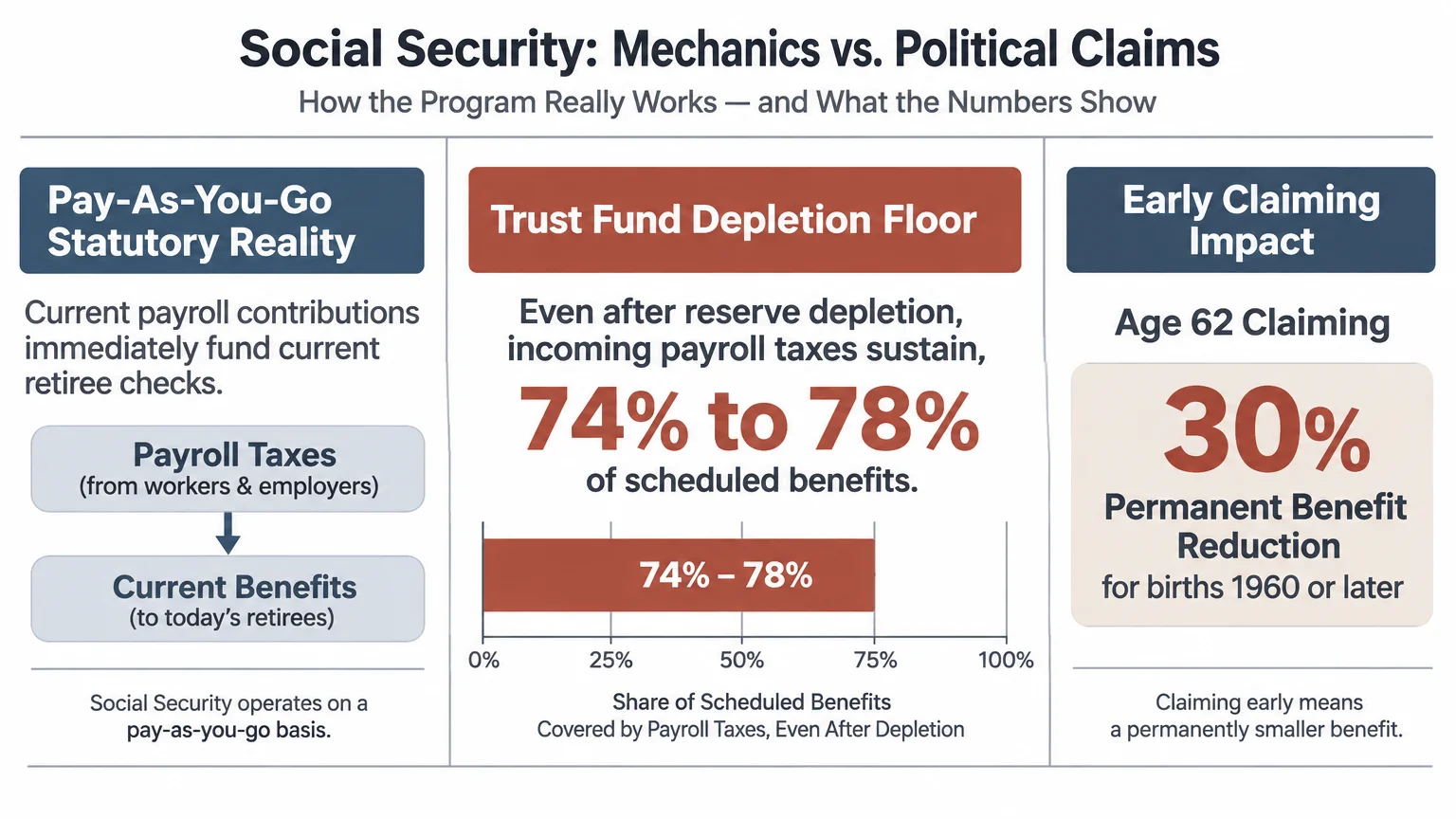
Budget watchdogs and pension analysts quickly challenged the premise behind Johnson’s label. Unlike a fraudulent private scheme, Social Security operates as a transparent, statutory pay-as-you-go insurance program backed by federal law.
Analyses from the Social Security Administration, the Congressional Budget Office, and Morningstar also emphasize that trust fund depletion does not zero out monthly checks. Incoming payroll taxes immediately cover between 74% and 78% of scheduled retirement benefits.
For your own retirement planning, separating political theater from statutory mechanics is essential. Hearing soundbites can trigger panic claiming at age 62, which permanently shrinks your monthly payout by 30% for births in 1960 or later.
Players, Coalitions, and Fiscal Strategy on Capitol Hill
The November 2026 clash exposed a three-way divide among Washington fiscal hawks, conservative reformers, and social-insurance advocates. Each bloc brings distinct assumptions about debt, taxes, and congressional leverage to the negotiating table.
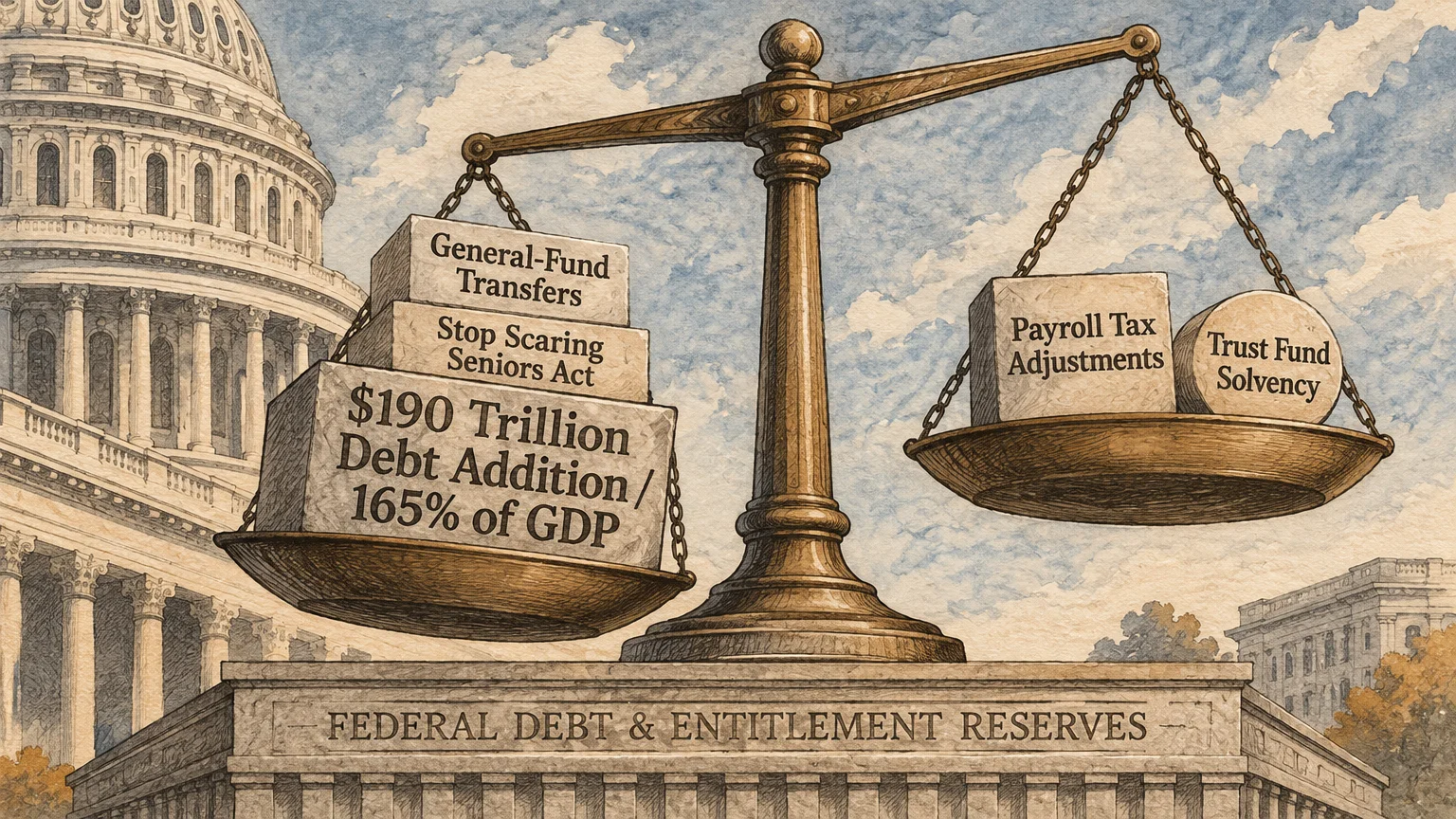
Johnson’s Stop Scaring Seniors Act aims to neutralize election-year attacks over benefit cuts without raising payroll taxes. By walling off general-fund transfers from statutory debt-ceiling fights, the bill shifts Social Security shortfalls directly onto federal borrowing.
Nonpartisan budget analysts immediately sounded alarms over that borrowing path. On November 19, 2026, the Committee for a Responsible Federal Budget estimated that Johnson’s proposal would add $190 trillion to the national debt over 75 years in inflation-adjusted terms.
That debt surge equals 165% of gross domestic product, according to the Committee for a Responsible Federal Budget. The group also cited prior analysis showing that general-revenue funding could push 10-year Treasury yields up by 2.6 percentage points, from 4% to 6.6%.
Higher borrowing costs across the Treasury market would ripple directly into your mortgage, auto loan, and small-business credit rates. Even lawmakers who reject payroll tax increases must weigh that broader interest-rate risk.
Free-market analysts at the Cato Institute also criticized borrowing to avoid structural reforms. On November 19, 2026, Cato’s Romina Boccia cited data derived from the Congressional Budget Office showing massive debt growth between 2026 and 2056.
Maintaining scheduled benefits solely through borrowing would add $46.41 trillion to federal debt over those three decades, Boccia noted. That total combines $25.39 trillion in cash-flow shortfalls with $21.01 trillion in added interest payments.
Defenders of the existing payroll-tax structure push back from the opposite direction. Analysts at the Economic Policy Institute and the Center on Budget and Policy Priorities view Treasury reserves as ironclad federal obligations, not empty accounting tricks.
Under that view, calling trust fund bonds worthless ignores the legal guarantee behind every U.S. government security. Those organizations typically favor lifting taxes on high earners rather than cutting benefits or borrowing endlessly.
As you follow upcoming committee hearings, watch whether lawmakers pair benefit guarantees with specific revenue offsets. Bills lacking tax increases or benefit formulas rarely advance past messaging hearings in a divided Congress.
Policy Breakdown: How the Trust Funds Actually Work
Special-Issue Treasury Bonds Versus the Lockbox Myth
To understand why both parties argue over trust fund accounting, look at Section 201(d) of the Social Security Act. That statute requires the Treasury to invest daily payroll-tax surpluses in special-issue U.S. Treasury securities.
Both the Social Security Administration and the Economic Policy Institute note that these securities carry the full faith and credit of the United States. Principal and interest are guaranteed and redeemable at face value whenever benefit outlays exceed tax collections.
Critics like Johnson focus on the cash flow inside the broader federal budget. Because the Treasury borrows those Social Security surpluses to fund other federal programs today, paying back the bonds tomorrow requires future taxes, spending cuts, or public borrowing.
That dual reality explains why voters often feel misled by simplified campaign slogans. The trust funds hold genuine legal claims on the Treasury, yet redeeming them still strains the unified federal budget.
What the 2026 Trustees and CBO Reports Project
Two major federal reports released in 2026 narrowed the timeline before Congress must act. On June 9, 2026, the Social Security Board of Trustees moved the Old-Age and Survivors Insurance (OASI) depletion date forward by one quarter.
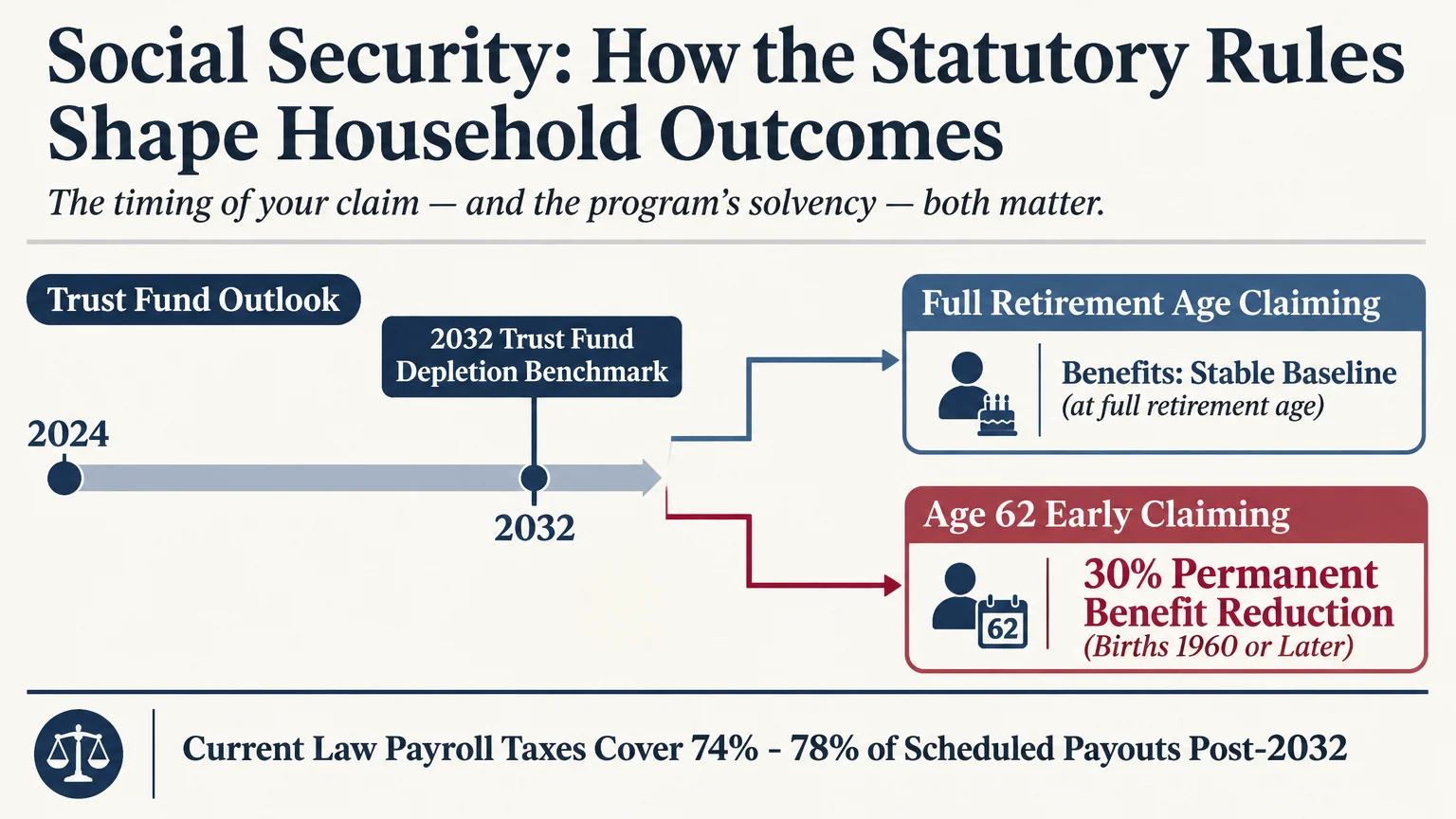
Under the Trustees’ projections, retirement and survivor reserves run out in the fourth quarter of 2032. At that moment, incoming revenue covers only 78% of scheduled benefits, forcing an automatic 22% across-the-board cut.
That payable share gradually erodes over the rest of the century, dropping to 62% by 2100. Your household budget would feel that initial 22% drop immediately unless lawmakers change the statute before late 2032.
By contrast, the Disability Insurance (DI) trust fund remains financially healthy. The Board of Trustees projects that disability reserves can pay 100% of scheduled benefits through 2100, carrying a positive 75-year actuarial balance of 0.13% of taxable payroll.
Analysts often combine both funds on paper to show overall system health, though federal law keeps them separate. On a hypothetical combined basis, reserves run out in the third quarter of 2034, triggering an immediate 17% cut that deepens to 35% by 2100.
Long-term deficits widened sharply in the 2026 Trustees Report. The combined 75-year actuarial deficit reached 4.42% of taxable payroll, while the retirement-only deficit hit 4.55%, according to the Board of Trustees and the Brookings Institution.
For historical context, the Brookings Institution notes that the combined deficit stood at 1.89% of payroll in 2000. Over the 2026–2100 window, the open-group unfunded obligation reached $29.3 trillion in present value, up from $25.1 trillion in the 2025 report.
That 75-year shortfall equals 1.5% of gross domestic product, up from 1.3% just one year earlier. Measured over the infinite horizon, the Trustees calculate an unfunded obligation of $71.9 trillion, or 5.7% of taxable payroll.
Independent forecasts from the Congressional Budget Office paint an even tighter picture. Released on September 17, 2026, the agency’s report assumes slower near-term economic growth than the Trustees projected.
The Congressional Budget Office projects OASI exhaustion in fiscal year 2032—mid-2032 according to the Committee for a Responsible Federal Budget—with combined exhaustion arriving in fiscal year 2033. Like the Trustees, budget analysts expect the disability fund to stay solvent past 2100.
Under Congressional Budget Office math, retirement trust fund depletion triggers a steeper 26% benefit cut in 2033. That reduction widens to 29% by 2036, eases temporarily to 24% in the late 2040s, and reaches 40% by 2100.
Even on a hypothetical combined basis, budget analysts project a 23% cut in 2034. Both federal projections confirm that lawmakers now have roughly six years—not a decade—to craft a bipartisan fix.
Recent Laws That Pulled Depletion Forward
Current federal law bars the Social Security Administration from borrowing money or shifting surplus cash out of the disability fund into retirement accounts. Without explicit congressional action, the agency cannot pay a dollar beyond incoming revenue once reserves hit zero.
Two major statutes enacted in 2025 accelerated that 2032 deadline. In January 2025, Congress passed the Social Security Fairness Act, repealing the Windfall Elimination Provision and the Government Pension Offset.
That repeal raised monthly payouts for roughly 2.8 million public-sector retirees and survivors, including teachers, firefighters, and police officers. The Congressional Budget Office estimated the law adds $195.7 billion in benefit outlays over 10 years.
Six months later, on July 4, 2025, the One Big Beautiful Bill Act—Public Law 119-21—became law. That legislation extended the 2017 individual tax cuts and created a temporary additional standard deduction for taxpayers over age 65 from 2025 through 2028.
Because a portion of income taxes paid on Social Security benefits flows back into the trust funds, lower senior tax bills reduce program revenue. The 2026 Trustees Report explicitly cited that revenue drop as a driver pulling OASI depletion into 2032.
The Committee for a Responsible Federal Budget estimates that Public Law 119-21 trims trust fund income by roughly $30 billion per year. Meanwhile, closing the entire 75-year gap immediately in 2026 via payroll taxes alone would have required a 4.25 percentage-point hike, according to the Congressional Research Service.
Knowing how recent tax and benefit bills shortened the timeline helps you evaluate new promises on Capitol Hill. Any proposal that expands benefits or narrows taxation of benefits without new funding moves the cut date even closer.
Constituent Impact: What Depletion and Tax Caps Mean for You
Your Monthly Check and Household Reliance
While Washington debates trust fund accounting, automatic inflation adjustments continue shaping near-term household budgets. On October 14, 2026, the Social Security Administration announced a 3.6% cost-of-living adjustment for 2027.
That 3.6% boost reaches nearly 72 million Social Security beneficiaries in January 2027, alongside about 7.3 million Supplemental Security Income recipients on December 31, 2026. Accounting for dual recipients, 76 million Americans see higher payments.
For the average retired worker, monthly checks climb by $75, rising from $2,095 in 2026 to $2,170 in January 2027. Workers retiring at Full Retirement Age with maximum career earnings see their monthly cap rise from $4,152 to $4,188.
Those inflation gains show just how painful a 22% trust fund cut would feel in 2032. The Committee for a Responsible Federal Budget estimates that a 22% reduction equals roughly $500 per month for the average beneficiary.
Most older households lack large private cushions to absorb a sudden $6,000 annual income drop. A Senior Citizens League survey cited in November 2026 found that two-thirds of older Americans rely on Social Security for more than half their income.
Even more strikingly, 27% of older Americans depend on Social Security for 100% of their retirement income, according to that survey. Without reliable monthly checks, millions of retirees would face immediate housing, food, and healthcare shortfalls.
Historical poverty data underscores how much sits at stake in this policy fight. According to Center on Budget and Policy Priorities data cited in October 2026, elderly poverty fell from over 50% in 1935 to roughly 10% today.
Payroll Taxes, Wage Caps, and Demographic Pressures
If you are still working, Social Security’s funding squeeze also shows up on your paycheck stub through rising wage caps. Employees and employers each pay 6.2% in Social Security taxes, while self-employed workers pay 12.4% up to the annual taxable limit.
Those payments sit alongside Medicare hospital insurance taxes of 1.45% each for workers and employers, or 2.9% for self-employed filers, across all earnings. High earners also pay an extra 0.9% Medicare surtax above $200,000 for single filers or $250,000 for joint returns.
In 2026, Social Security payroll taxes apply to wages up to $184,500, capping an employee’s annual contribution at $11,439.00. On October 14, 2026, the Social Security Administration set the 2027 taxable wage cap at $192,300.
That 2027 cap raises the maximum employee tax to $11,922.60 and pushes the maximum self-employed Social Security bill to $23,845.20. Every October, you should check that new threshold to estimate next year’s take-home pay and quarterly tax withholding.
Two structural shifts analyzed by the Bipartisan Policy Center explain why existing payroll taxes no longer keep pace with benefit promises. First, America’s workforce is aging rapidly relative to the retired population.
On June 9, 2026, the Bipartisan Policy Center noted that covered workers per beneficiary dropped from more than 5-to-1 in 1960 to 2.9-to-1 today. By the 2070s, analysts project that support ratio will narrow to 2.2 workers per beneficiary.
Second, growing earnings inequality above the taxable cap has eroded the share of national wages subject to the 12.4% tax. The Bipartisan Policy Center reports that covered wages subject to payroll tax fell from 90% in 1983 to 83% today.
Because compensation grew fastest for workers earning well above $184,500, a larger slice of U.S. payroll sits outside Social Security’s tax base. Lawmakers frequently target that 7-point erosion when drafting tax-cap expansion bills.
You can prepare your personal finances today regardless of how Congress splits the burden between higher taxes and slower benefit growth. Stress-testing your retirement budget against a hypothetical 20% benefit trim helps you gauge whether you need higher private savings.
Checking your Full Retirement Age—age 67 for everyone born in 1960 or later—also protects your lifelong income floor. Delaying past age 62 avoids the permanent 30% early-claiming penalty that compounds if Congress ever trims benefits across the board.

Oversight, Database Audits, and Fact-Checking Common Claims
Public trust in Social Security suffers when viral claims about waste or demographics go unchecked by officials. Sorting confirmed agency audits from misleading talking points gives you clearer footing as reform debates intensify.
In February 2025, President Donald Trump and Elon Musk claimed that millions of centenarians were improperly receiving Social Security checks. Independent reviews by the Associated Press and FactCheck.org debunked those assertions, showing the figures stemmed from misread database fields with missing death dates.
Still, those outdated records prompted a sweeping internal cleanup inside the agency’s master files. On October 20, 2026, Social Security Commissioner Frank J. Bisignano announced that staff had corrected nearly 15% of active Social Security numbers across roughly 330 million citizens and 390 million total records.
During that cleanup, the agency added 17 million missing dates of death and updated 25 million citizenship records, Bisignano reported. Updating administrative records strengthens program integrity, though missing death entries rarely represented active check payments to deceased centenarians.
Another recurring claim used to justify sharp retirement-age hikes centers on 1935 life expectancy. Some commentators argue that early workers rarely lived to age 65, implying the retirement threshold is overdue for an aggressive jump.
The Social Security Administration points out that those comparisons rely on life expectancy at birth, which early-20th-century infant mortality heavily depressed. Looking at adults who actually reached age 65, remaining life expectancy has risen by an average of about five years since 1940.
Congress already adjusted the system once for longer lifespans through the landmark 1983 amendments. Those changes phased the Full Retirement Age up from 65 to 67 for anyone born in 1960 or later.
You can protect yourself against record errors by logging into your online Social Security account once a year. Verifying your annual earnings history catches employer reporting mistakes early, before missing wage credits reduce your eventual retirement formula.
Frequently Asked Questions on Social Security’s Future
Will Social Security stop paying benefits completely in 2032?
No, Social Security will not stop paying benefits or go bankrupt in 2032. Even after OASI reserves run out in late 2032, ongoing payroll taxes continue funding 74% to 78% of scheduled monthly checks.
Depletion means the agency loses its reserve cushion to cover the gap between outgoing benefits and incoming taxes. For your household, the real threat is an abrupt 22% to 26% pay cut, not a zero-dollar check.
Why can’t the Disability Insurance surplus automatically cover retirement checks?
Federal law keeps the Old-Age and Survivors Insurance fund and the Disability Insurance fund legally separate. Even though disability reserves stay solvent past 2100, the Social Security Administration cannot shift a single dollar between accounts without an act of Congress.
Lawmakers have temporarily reallocated payroll tax shares between the two funds in past decades to buy extra time. Reallocating funds today would push OASI depletion back only slightly, to roughly 2033 or 2034, without solving the long-term deficit.
Has Congress ever fixed a trust fund shortfall at the last minute before?
Yes, Congress famously waited until the trust fund stood months from insolvency before enacting the bipartisan 1983 Social Security amendments. That package combined gradual retirement-age increases, accelerated payroll tax hikes, and new taxes on benefits for higher-income retirees.
However, waiting until 2032 carries far steeper costs today than in 1983 because the 75-year shortfall is much larger. Delaying action shrinks the phase-in window, forcing sharper tax increases or deeper benefit adjustments on current workers and near-retirees.
Should you claim benefits early at 62 to beat potential cuts?
Claiming early out of fear of 2032 cuts usually backfires mathematically for healthy retirees. Taking benefits at age 62 instead of age 67 permanently reduces your baseline monthly payout by 30%.
If Congress ever implements across-the-board adjustments, those cuts would likely apply proportionally to whatever benefit you already receive. Locking in a higher baseline benefit through patience—while keeping emergency savings—gives you stronger protection against inflation and longevity.
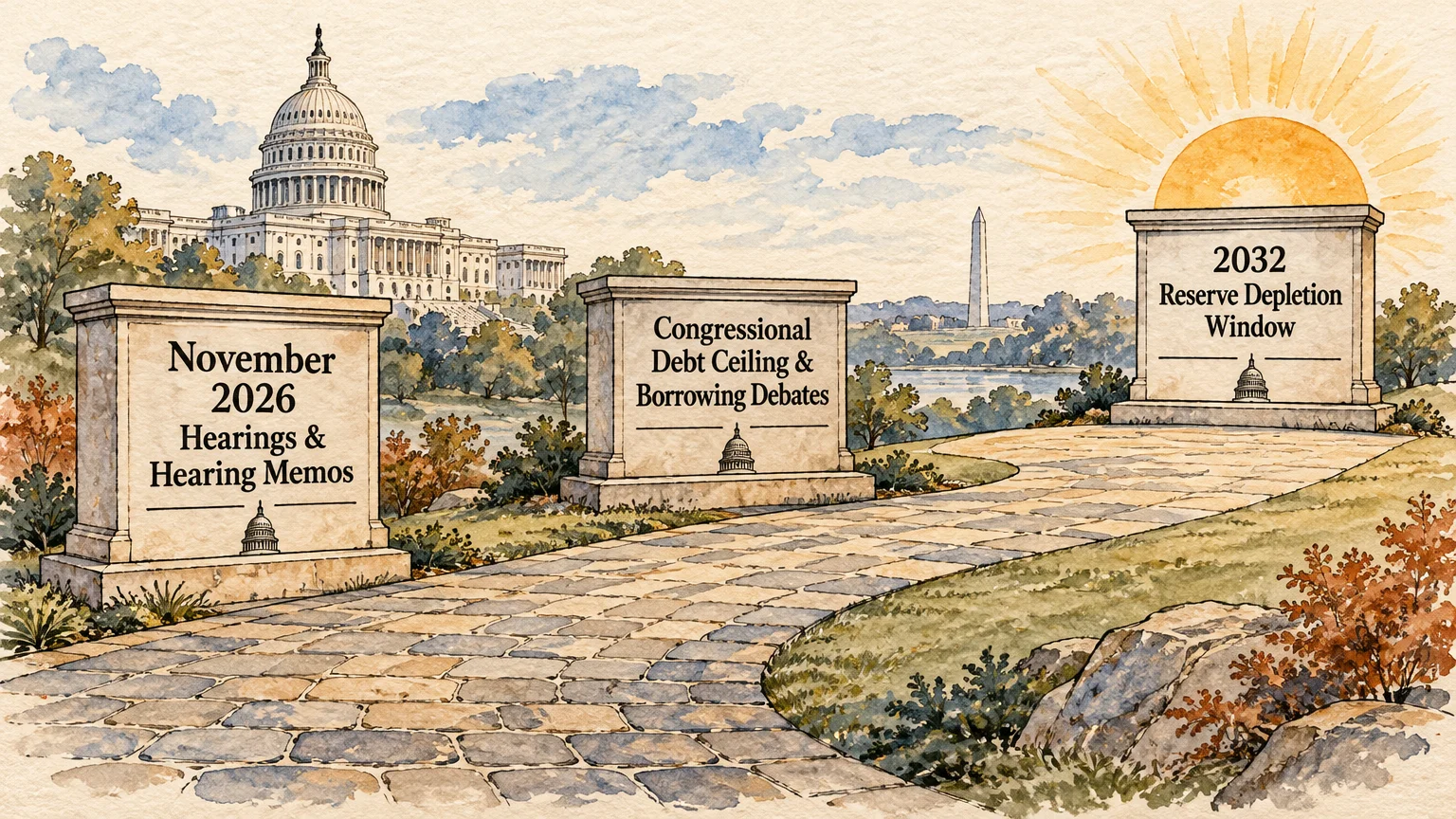
Outlook: Legislative Milestones to Monitor Next
Between 2027 and 2032, a clear sequence of fiscal deadlines will show whether Congress intends to negotiate or stall. First, watch how lawmakers handle the temporary senior standard deduction under Public Law 119-21 when it expires after 2028.
Extending that deduction without replacing lost trust-fund tax revenue would keep draining roughly $30 billion annually from Social Security accounts. Allowing it to expire, or routing general funds to replace the shortfall, becomes an early test of congressional seriousness.
Second, monitor each spring’s Social Security Trustees Report and annual Congressional Budget Office updates for further shifts in the 2032 cutoff. Slight changes in wage growth, inflation, or interest rates can pull that deadline forward by months.
Third, watch whether Senate Finance and House Ways and Means leaders authorize a temporary OASI-DI tax-rate reallocation before 2032. A reallocation bill would signal that Congress is buying two extra years—until 2033 or 2034—to negotiate a broader package.
Finally, track whether bipartisan working groups pair payroll tax cap adjustments with targeted benefit protections for low-income seniors. Until a bill clears both chambers with real revenue math, build your own retirement cushion around the 2032 warning date.