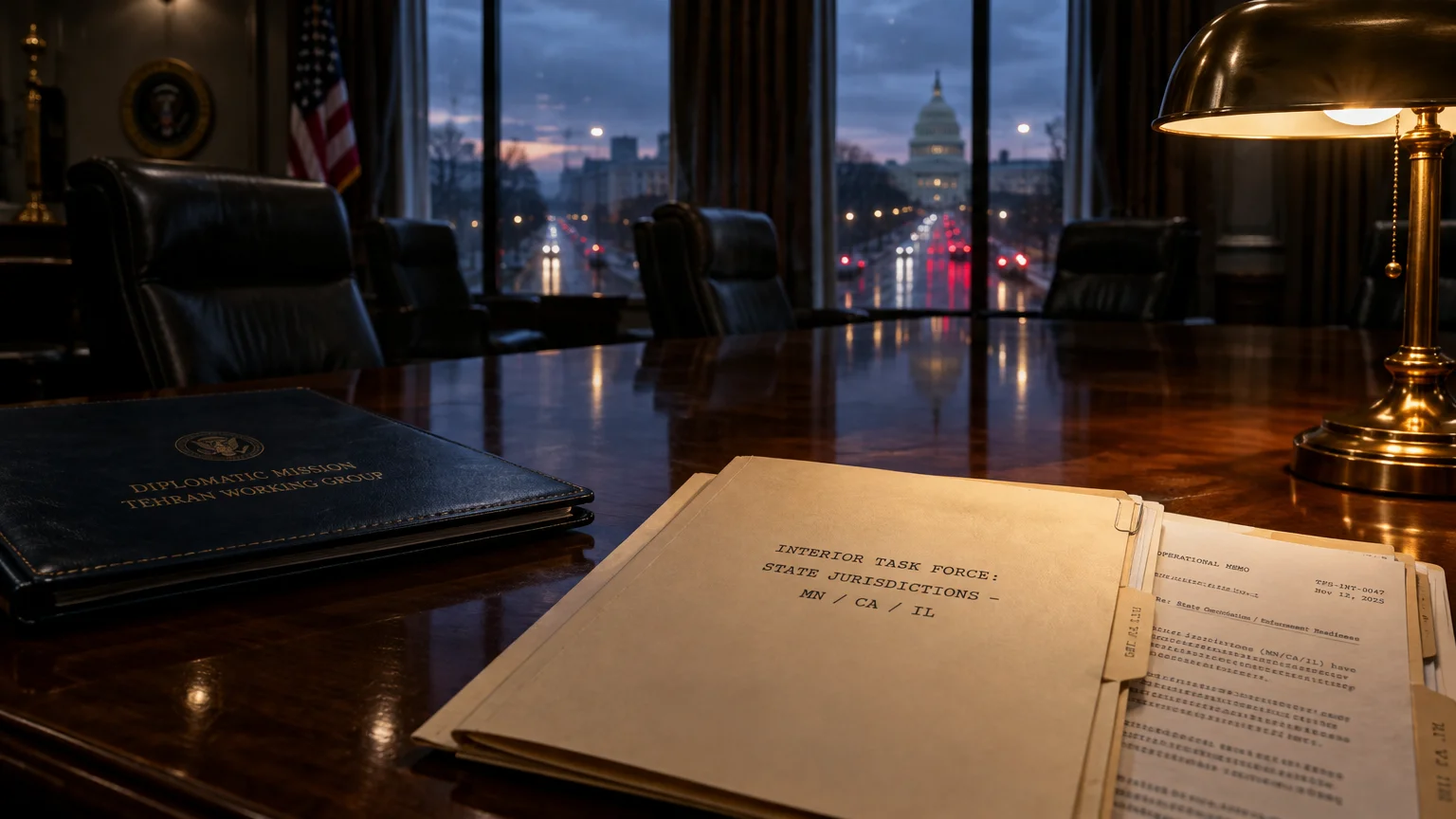
On November 12, 2026, President Donald Trump publicly pulled Vice President JD Vance off U.S. diplomatic talks with Iran. That decision came nine days after Republicans lost both chambers of Congress in sweeping midterm elections.
Trump ordered Vance to pivot full-time toward alleged corruption and crime in Democratic-led states. Meanwhile, deep divisions over the Iran war and rising household prices had already fractured their White House coalition.
Understanding this reassignment helps you track where federal power is shifting next. You can see how White House foreign policy stalls when domestic political pressure collides with an unresolved naval blockade.
The Flashpoint Behind the November 12 Reassignment
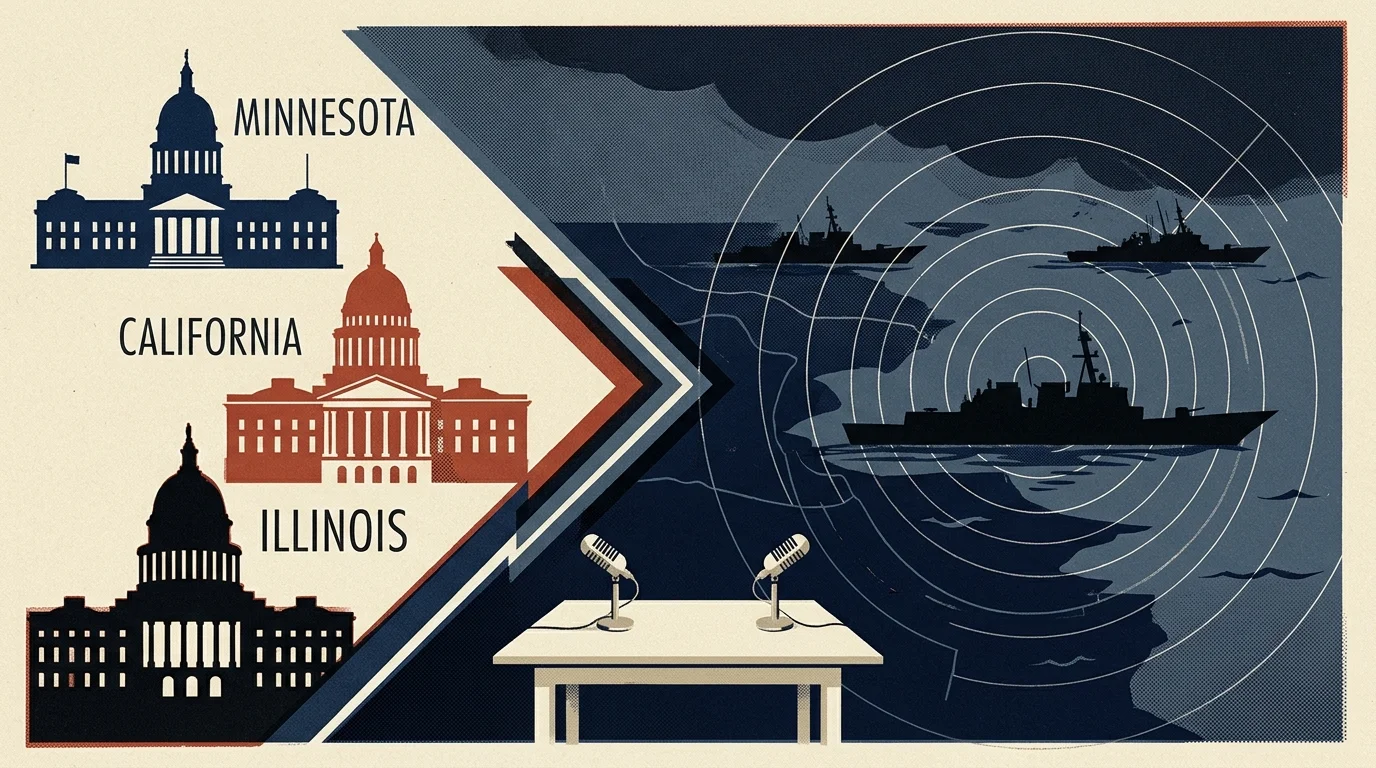
Trump announced the shift in a November 12, 2026 Truth Social post, as reported by the Associated Press, CNN, The Washington Post, and Newsweek. He told followers that Vance must move away from Tehran to confront domestic targets.
Trump wrote that Vance would “focus his complete and total attention on the Massive Corruption and Crime taking place in Democrat run Cities and States throughout the U.S.” The post explicitly singled out Minnesota, California, and Illinois for immediate scrutiny.
Trump coupled that reassignment with a sharp rejection of diplomacy, declaring: “We don’t need a deal with Iran. Those days have long since passed.”
He added a sweeping claim about American leverage over Tehran. Trump wrote, “We’ve got their money, Hundreds of Billions of Dollars, and we’ve got their Strait!”
That statement followed Trump’s November 10 remark that the war was militarily “effectively over.” Yet U.S. warships continue enforcing an active naval blockade on Iranian ports, keeping American forces deployed and global energy markets on edge.
If you watch only social media posts, the pivot looks like a sudden, permanent break. Behind closed doors, however, Vance’s operational role remains more nuanced than Trump’s public message suggests.
Later on November 12, Vance still attended a high-level Oval Office war meeting alongside key national security principals. Secretary of State Marco Rubio, Defense Secretary Pete Hegseth, CIA Director John Ratcliffe, and newly promoted White House Chief of Staff Stephen Miller all joined that session.
A U.S. official told the New York Post that Vance was not permanently removed from the Iran portfolio. According to that official, Vance could re-engage with Tehran if a “reasonable agreement” suddenly becomes viable.
For readers following federal power dynamics, that distinction carries practical weight. White House announcements often serve domestic political messaging first while keeping quiet institutional channels open behind the scenes.
To understand why Trump sidelined his own vice president publicly, you have to examine the election losses and diplomatic setbacks that built up over the preceding months.
Players and Strategy: Inside the Post-Midterm White House Rift
The political earthquake came on November 3, 2026, when voters handed Democrats control of both the House and the Senate. Data tracked by Decision Desk HQ and Ballotpedia shows the scale of that electoral reversal for Republicans.
As of November 15, Democrats had captured 254 House seats—representing 60 percent of the 421 called races—while Republicans held 167 seats. Democrats flipped 47 seats with 14 races still uncalled, moving well past the 218-seat threshold needed for a majority.
In the Senate, Democrats won 21 of 35 contested races as of November 12 and flipped eight Republican seats. Those flips included Texas, Ohio, Iowa, Kansas, Maine, North Carolina, and South Carolina, according to Decision Desk HQ and Ballotpedia.
That wave gave Democrats 53 seats alongside two independents who caucus with them, compared with 44 seats for Republicans. Only Alaska remained uncalled at that count, locking in a durable Senate majority for the incoming Congress.
One day after the election, on November 4, Vance publicly broke with Trump’s messaging in a blunt post on X. He pinned the party’s defeat squarely on the Middle East conflict.
Vance wrote: “The reason we lost is the war. The president himself said so last night.”
He challenged administration defenders directly, adding: “If you’d like to argue it was worth it, that losing the Senate for the next 6 years was worth it, then do so.”
Vance argued that voters who backed the Trump-Vance ticket in 2024 switched to Democrats over four specific grievances. He listed ending the Iran war, the cost of living and inflation, “America First” priorities, and the U.S. relationship with Israel.
Trump responded cautiously in public that day, telling reporters that Vance’s post was “fine.” Privately and in interviews with The Wall Street Journal and The New York Times, however, Trump insisted he had no regrets.
Trump maintained that launching the war was a “very wise decision.” Instead of blaming military policy, he attributed the Republican midterm losses to his own absence from the ballot.
That divergence reflects a deeper strategic struggle inside the West Wing between negotiation-minded officials and hardline blockade supporters. Two U.S. officials told The Wall Street Journal on November 11 and 12 that Trump had soured on Vance’s earlier diplomatic work.
According to those officials, Trump privately criticized the June agreement Vance helped broker, calling it a mistake that allowed Iran to regroup and earn oil revenue. Meanwhile, Marco Rubio and Stephen Miller urged Trump to keep squeezing Tehran until it concedes.
According to The Wall Street Journal and Reuters, Rubio and Miller favored maintaining the naval blockade over pursuing a negotiated compromise. Their posture gained leverage once Vance’s late diplomatic push hit a wall in early November.
On November 3, Vance told reporters that he and Trump felt “pretty good” about reaching a settlement with Tehran. By November 11, The Wall Street Journal reported that Vance had eclipsed envoys Steve Witkoff and Jared Kushner on the Iran file.
Vance was reportedly weighing face-to-face talks with Mohsen Rezaei, secretary-general of Iran’s Supreme National Security Council. Yet Rezaei undercut that momentum on November 10, publicly stating there were no plans to meet Vance.
Rezaei dismissed what he called “imaginary talks” and declared that Iran would not remove “even a single particle of enriched nuclear material.” With Tehran rejecting direct engagement and hawks dominating the Oval Office, Trump sidelined the diplomatic track altogether.
When you monitor White House personnel shifts, watch who controls the chief of staff and State Department seats alongside the president. When hardliners hold those choke points, a vice president’s diplomatic channel rarely survives a stalled negotiation.
Policy Breakdown: From the Islamabad MOU to Executive Order 14395
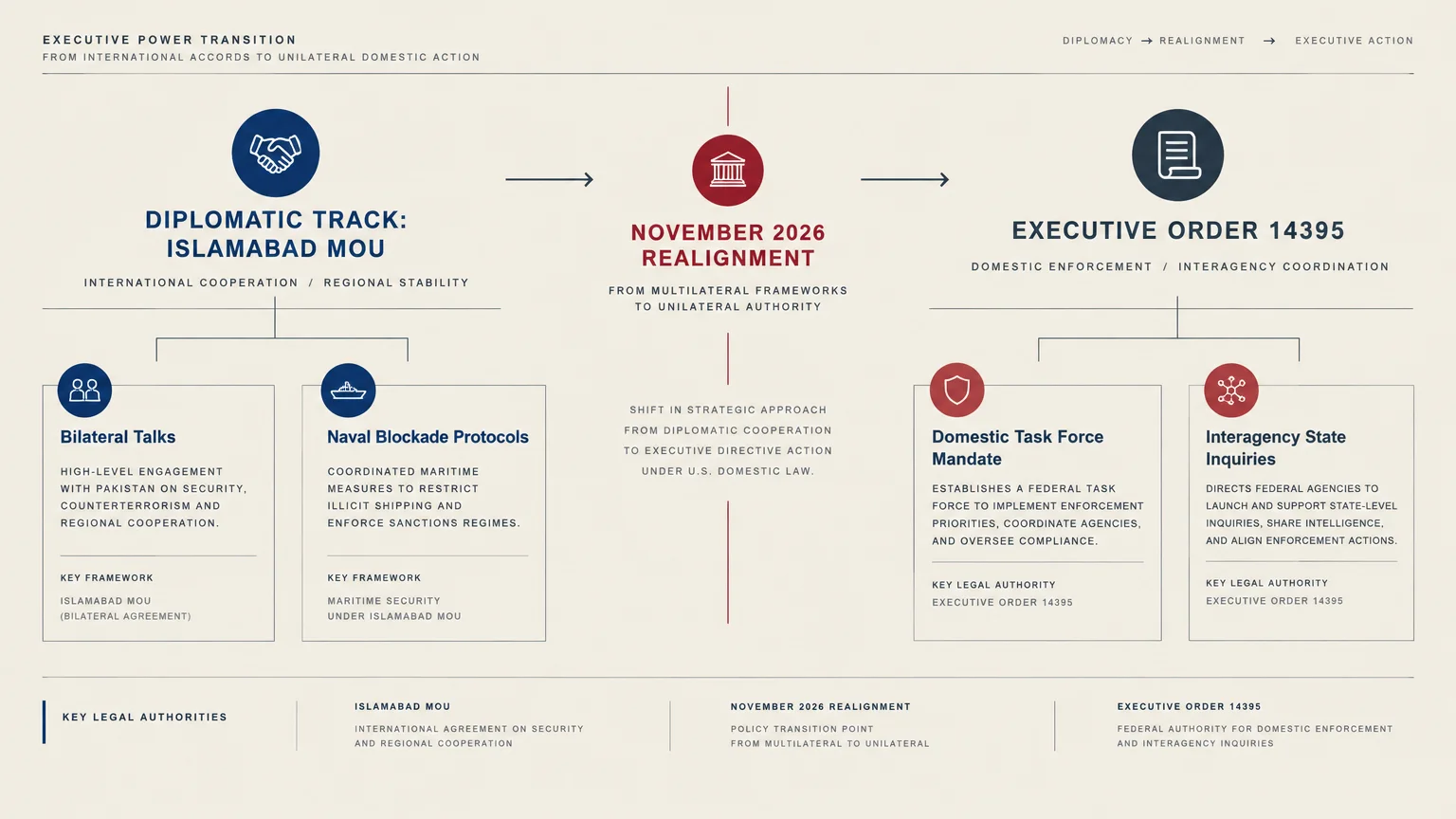
Understanding Vance’s reassignment requires tracing how two major policy frameworks collided in 2026. The first was a fragile diplomatic agreement in South Asia; the second is a sweeping domestic enforcement directive built around federal grant conditions.
The military conflict began on February 28, 2026, when U.S. and Israeli forces launched strikes against Iran under Operation Epic Fury. According to Congressional Research Service report R48887, cited by Quartz, an initial ceasefire took hold on April 7 and 8.
Five days later, on April 13, 2026, the United States imposed a naval blockade on Iranian ports. To break that deadlock, Vance helped negotiate the 14-point Islamabad Memorandum of Understanding in June 2026.
Trump signed the MOU from Versailles and Iranian President Masoud Pezeshkian signed from Tehran on June 17, following electronic signatures on June 14 and 15. Pakistan mediated the pact alongside Qatar, Saudi Arabia, Turkey, and Egypt.
The Islamabad MOU opened an extendable 60-day negotiating window scheduled to close on August 17, 2026. Negotiators aimed to reopen the Strait of Hormuz, weigh sanctions relief, and explore a proposed $300 billion Gulf-funded reconstruction plan alongside nuclear talks.
Crucially, however, the MOU did not lock in binding nuclear limits from Tehran. That gap left the deal vulnerable to rapid collapse once military friction returned on the ground.
Fighting resumed when U.S. strikes hit targets on June 26 and July 7, 2026. On July 8, Trump declared the MOU “over,” and the United States reinstated the naval blockade on July 14, according to the Congressional Research Service report.
Once diplomacy collapsed, Trump pivoted Vance toward the domestic portfolio he had already placed under the vice president’s command months earlier. On March 16, 2026, Trump signed Executive Order 14395, titled “Establishing the Task Force to Eliminate Fraud.”
Executive Order 14395 names Vance as chair of the interagency task force and Federal Trade Commission Chairman Andrew Ferguson as vice chair. The panel links nearly a dozen federal agencies under a single enforcement umbrella.
The Justice Department’s Fraud Division joined the effort on April 7, followed by the General Services Administration on May 28 and the National Fraud Detection Center in August 2026. Together, these offices audit state-administered safety-net spending for alleged abuse.
Executive Order 14395 targets alleged fraud across Medicaid, the Supplemental Nutrition Assistance Program, housing aid, cash assistance, and disability programs. More importantly, it grants federal officials authority to pause federal funds flowing to states deemed non-compliant.
The March order explicitly named six states for heightened scrutiny: Minnesota, California, Illinois, New York, Maine, and Colorado. Trump’s November 12 Truth Social post narrowed the immediate spotlight to Minnesota, California, and Illinois.
In practical terms, this structure turns the vice president from a foreign envoy into a domestic gatekeeper over state grant compliance. Instead of negotiating sanctions relief abroad, Vance now oversees federal leverage over state-run social programs at home.
If you track state budgets or administer local service programs, watch agency deferral notices rather than just presidential speeches. Federal grant pauses begin through administrative determinations at partner agencies before courts review them.
Constituent Impact: Fuel Costs, Maritime Risk, and State Aid Freezes
Beyond West Wing rivalries, the standoff over Iran and federal spending hits household budgets and state services directly. Public polling before and after the midterms shows why economic pain drove voters away from the administration’s war strategy.
A November 6 through 9 Reuters/Ipsos poll of 1,705 U.S. adults, carrying a two-point margin of error, put Trump’s overall approval at 32 percent. That score sat just one point above his career low of 31 percent recorded in mid-October 2026.
Voters rated Trump’s economic stewardship even lower in that same survey. Only 21 percent approved of his handling of the cost of living, and just 25 percent approved of his management of the broader economy.
That economic frustration translated into broad bipartisan demand to close out the conflict. The Reuters/Ipsos poll found that 71 percent of Americans—including 93 percent of Democrats and 51 percent of Republicans—want the incoming Democratic-led Congress to pass legislation ending the Iran war.
Pre-election data showed the same consumer priority. An October 29 through November 2 poll by YouGov and the Institute for Global Affairs at Eurasia Group surveyed 1,000 U.S. adults with a 3.4-point margin of error.
In that YouGov survey, Americans chose avoiding higher domestic prices over achieving military objectives in Iran by more than two to one. Voters were also more than three times less likely—44 percent versus 13 percent—to back a pro-war candidate.
Separately, the Quincy Institute cited voter data showing 74 percent of voters called the Iran war a crucial or major factor in their midterm choice. Those numbers explain why fuel and heating costs dominated kitchen-table conversations this autumn.
Brent crude oil spiked near $118 per barrel in late March 2026 after strikes began, traded above $100 in late July, and climbed to $109 in early September. By November 13, Brent closed at $95.84 per barrel, down roughly 7.5 percent from Election Day.
On Election Day, November 3, Brent had traded at $103.60 per barrel, while West Texas Intermediate crude stood at $86 per barrel on November 10, according to Marketplace. Even with that partial pullback, fuel prices stayed elevated compared with pre-war levels.
Regular gasoline hit nearly $4 per gallon and diesel topped $5 per gallon in July 2026, according to AAA data. Regular gas only dipped back below $4 per gallon nationally by November 10, Marketplace reported.
Heating bills posed an even sharper strain heading into winter. Data from the U.S. Energy Information Administration showed residential heating oil averaging $5.915 per gallon during the week of November 9, 2026.
For households relying on heating oil, prices near six dollars per gallon squeeze monthly cash flow immediately. You can monitor weekly EIA retail heating oil updates to anticipate delivery surges before winter peaks.
Meanwhile, Vance’s domestic task force carries real financial stakes for states named in Executive Order 14395. Ahead of that order, on February 25, 2026, the Centers for Medicare and Medicaid Services deferred $259.5 million in Minnesota Medicaid funds.
According to Newsweek and legal analyses from Mayer Brown, that deferral followed an investigation into roughly $250 million in alleged children’s nutrition program fraud in Minnesota. When federal agencies freeze matching funds, state lawmakers face sudden budget holes across hospitals and clinics.
Oversight, Fact-Checks, and Legal Challenges
As Vance transitions from Tehran negotiations to domestic grant enforcement, independent data contradicts several headline claims driving White House messaging. Checking the public record helps you separate verifiable leverage from political rhetoric.
First, examine Trump’s November 12 claim that the United States holds “Hundreds of Billions of Dollars” of Iranian money. Reporting from Newsweek and Reuters notes that this figure is disputed and carries major caveats.
Iranian officials estimate roughly $100 billion of their assets remain frozen abroad, while independent estimates sit significantly lower. Most of those funds sit in overseas accounts rather than inside U.S. banks, limiting Washington’s direct unilateral control over the money.
Second, test the administration’s assertion that “we’ve got their Strait!” Roughly one-fifth of global oil trade passes through the Strait of Hormuz, making any disruption felt worldwide.
Although U.S. naval operations restored partial tanker transit between September and November 2026, the waterway remains hazardous for commercial crews. The UK Maritime Trade Operations logged 11 ships hit and three sunk in its early-November weekly report.
Violence along those shipping lanes has not stopped since the midterm election. A seafarer was killed off Qatar on November 5, and the IRGC claimed new tanker strikes on November 8, 12, 14, and 15.
Drone attacks targeting U.S. assets in Bahrain were also intercepted on November 13 and 15. Those incidents show that military escalation risks persist even while the White House describes major combat as effectively finished.
Third, scrutinize the evidence behind Vance’s new domestic mandate. On November 12, Trump claimed that “Billions of Dollars is being stolen each and every month” in Democratic-led states and argued that stopping it would “quickly” balance the federal budget.
Reporting by Newsweek and El País confirms that Trump offered no evidence to substantiate those monthly loss figures or that budget projection. Even the roughly $250 million alleged Minnesota nutrition fraud under investigation falls far short of monthly multibillion-dollar drains.
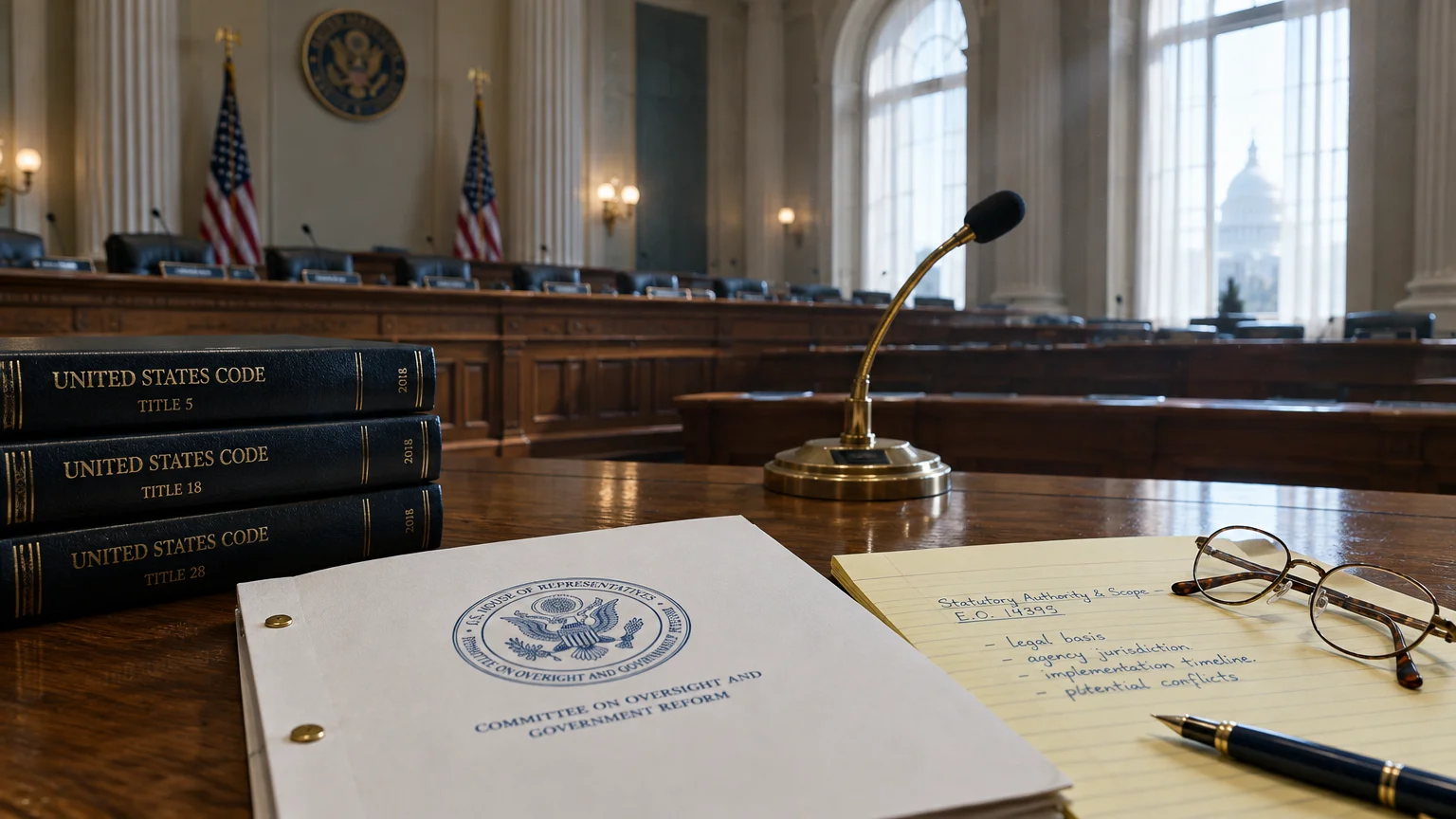
That evidentiary gap sets up major legal and oversight clashes when enforcement ramps up. Governors and state attorneys general in targeted jurisdictions can challenge federal Medicaid or SNAP deferrals if agencies skip statutory procedures or withhold funds without documented audits.
On Capitol Hill, incoming Democratic committee chairs in both chambers will hold subpoena power over both policy tracks. Lawmakers can demand testimony from Task Force to Eliminate Fraud officials alongside classified briefings on Strait of Hormuz shipping losses.
If you want to verify federal claims yourself, cross-check White House statements against weekly UKMTO maritime advisories and CMS deferral notices. Primary agency records show whether enforcement reflects audited violations or broader partisan pressure on state budgets.
Frequently Asked Questions
Is JD Vance permanently removed from U.S. diplomacy with Iran?
No, Vance’s removal from day-to-day Iran outreach is not necessarily permanent. He attended the November 12 Oval Office war meeting alongside Rubio, Hegseth, Ratcliffe, and Miller immediately after Trump’s Truth Social announcement.
A U.S. official told the New York Post that Vance could re-engage if a “reasonable agreement” becomes viable. Still, his return to talks depends on Iran shifting its stance and hawkish advisors softening their blockade-first strategy.
What can the incoming Democratic-controlled Congress do about the Iran conflict?
With 254 House seats already called and 53 Senate seats plus two allied independents, Democrats will control legislative calendars when the new Congress convenes. That gives leadership power to schedule floor votes restricting war funding or mandating new military authorizations.
Public pressure backs legislative action across party lines, with 71 percent of respondents in the Reuters/Ipsos poll—including 51 percent of Republicans—supporting a bill to end the war. Any binding bill, however, still faces a potential presidential veto.
How does Executive Order 14395 affect federal aid in targeted states?
Executive Order 14395 empowers Vance’s task force and partner agencies like the Justice Department and GSA to audit state safety-net spending. Agencies can pause federal reimbursements for Medicaid, SNAP, housing, cash aid, and disability programs when states fail compliance checks.
Minnesota, California, Illinois, New York, Maine, and Colorado are specifically named in the order. Before the order even took effect, CMS deferred $259.5 million in Minnesota Medicaid funding, showing how quickly grant pauses can hit state treasuries.
Could the Strait of Hormuz crisis push gas and heating prices higher again?
Yes, energy markets remain sensitive because roughly 20 percent of global oil trade transits the Strait of Hormuz. Although Brent crude eased to $95.84 per barrel on November 13 and regular gas fell below $4 per gallon, maritime attacks persist.
New IRGC tanker strikes claimed between November 8 and 15 show commercial shipping remains exposed to disruption. Watch EIA weekly heating oil reports—recently $5.915 per gallon—and maritime incident logs for early signs of another winter price spike.
Outlook: Key Milestones to Monitor
Several concrete milestones over the next few months will show whether Trump’s reassignment of Vance reshapes policy or merely rearranges White House optics. Tracking these checkpoints helps you anticipate economic and legislative shifts early.
First, watch the final certification of the 14 uncalled House seats and the uncalled Alaska Senate race. Those margins will determine how easily Democratic leaders can pass war-powers resolutions or riders limiting blockade funding when the new Congress convenes.
Second, follow enforcement notices from the Task Force to Eliminate Fraud in Minnesota, California, and Illinois. Any new CMS Medicaid deferrals or SNAP holds will likely trigger immediate federal lawsuits from state attorneys general.
Third, monitor commercial shipping and fuel benchmarks in the Persian Gulf. If tanker strikes in the Strait of Hormuz escalate further, global oil prices could rebound above $100 per barrel and erase November’s modest relief at the gas pump.
Finally, watch whether Rubio and Miller sustain support for an open-ended naval blockade once Democratic committee investigations begin. If economic pressure mounts again, the White House could quietly reopen the diplomatic backchannel Vance left behind.