You interact with decades-old legislative compromises before you even finish your morning coffee. When lawmakers draft bills, they focus on immediate crises; however, the longest-lasting impacts are usually the unintended behavioral shifts and market reactions that follow. Understanding these hidden mechanisms empowers you to evaluate the real stakes behind today’s congressional debates and regulatory filings. Every local zoning ruling, tax code tweak, and infrastructure package eventually dictates where you live, how you travel, and what you pay for basic goods. By tracing these accidental historical consequences, you gain a sharper perspective on how governance truly operates and how pending legislation might quietly alter your personal trajectory in the years ahead.
Background and Timeline: How Policy Shapes Reality
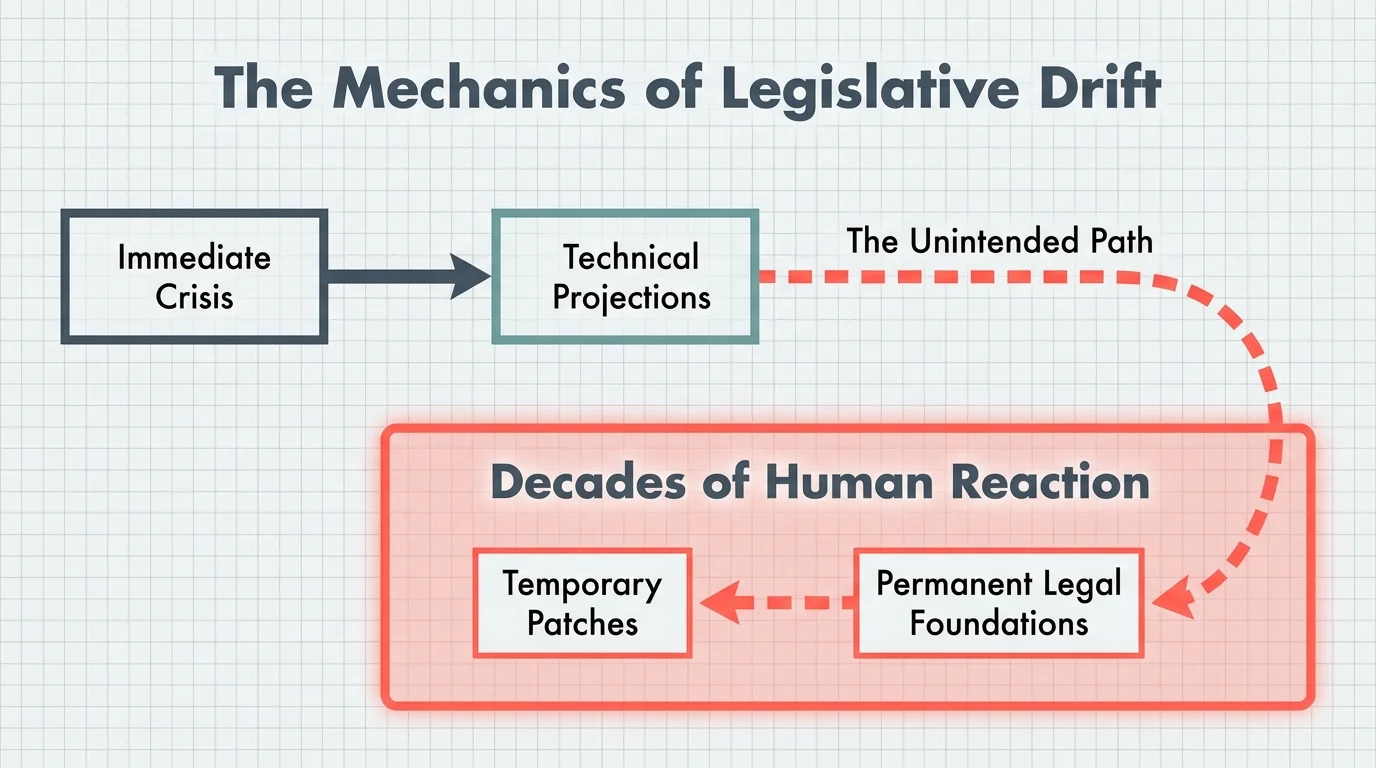
To understand how accidental policy shifts happen, you must look at the mechanics of legislative drafting. Lawmakers routinely draft complex bills under immense pressure to solve immediate, highly visible crises. During these compressed legislative windows, congressional staffers rely heavily on technical projections to gauge immediate financial impacts. Organizations can calculate direct costs and tax revenues, yet predicting human behavior over decades remains nearly impossible. Consequently, minor provisions inserted to secure a single swing vote often bloom into massive societal structures.
You can trace this recurring phenomenon back to wartime emergency measures and rapid industrial expansion policies. When lawmakers capped wages to control inflation, or mapped out defense highways, they viewed these choices as temporary patches or strictly functional infrastructure. Time, however, transforms temporary patches into permanent legal foundations. Over decades, entire industries spring up around these legal frameworks, making them nearly impossible to dismantle once the initial emergency fades from public memory.

Core Analysis: The Ten Decisions That Rewrote Daily Life

The Revenue Act of 1942 and Employer-Tied Healthcare
During World War II, the federal government imposed strict wage controls to prevent runaway inflation while factories ramped up wartime production. To attract scarce workers without legally raising salaries, employers began offering fringe benefits like health insurance. In 1943, an administrative ruling decided these insurance contributions did not count as taxable income. A decade later, the Internal Revenue Code codified this exemption permanently. This wartime loophole directly explains why you likely depend on your employer for medical coverage today. Instead of developing a universal or individual market system, the United States built a massive healthcare apparatus around a temporary inflation-control measure, leaving millions scrambling for coverage whenever they change jobs.
The Federal-Aid Highway Act of 1956 and Suburban Sprawl
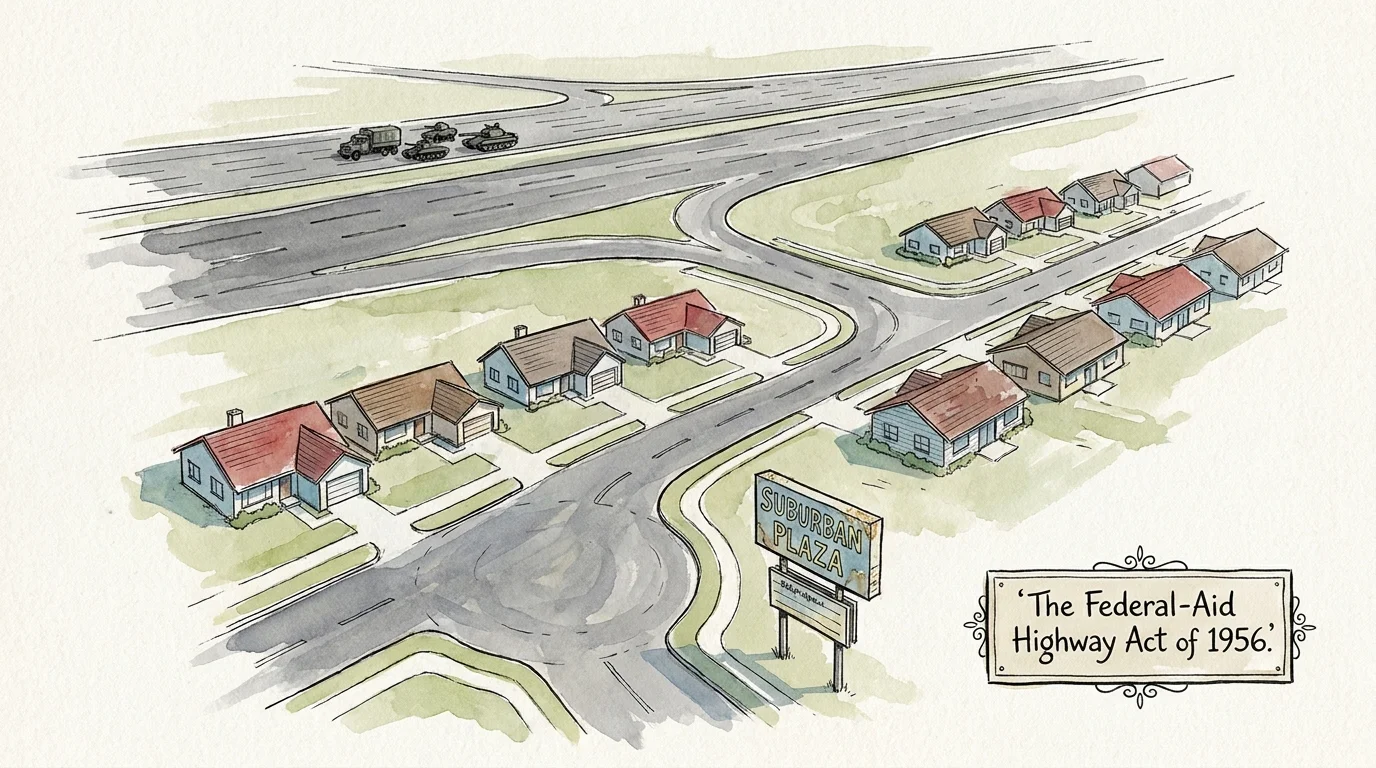
President Dwight D. Eisenhower championed the interstate highway system primarily as a national defense project, designed to move troops and military supplies efficiently. Lawmakers envisioned a strategic network of concrete arteries connecting major hubs. However, this massive public works project unintentionally subsidized the creation of modern suburbia. By making it fast and affordable to commute from outside the urban core, the highway system encouraged developers to build sprawling residential tracts far from city centers. This shifted tax bases away from downtown districts, fueled a deep reliance on personal automobiles, and reshaped the retail landscape into strip malls. Your daily commute and neighborhood layout stem directly from this Cold War strategy.
Section 230 of the Communications Decency Act and the Modern Internet
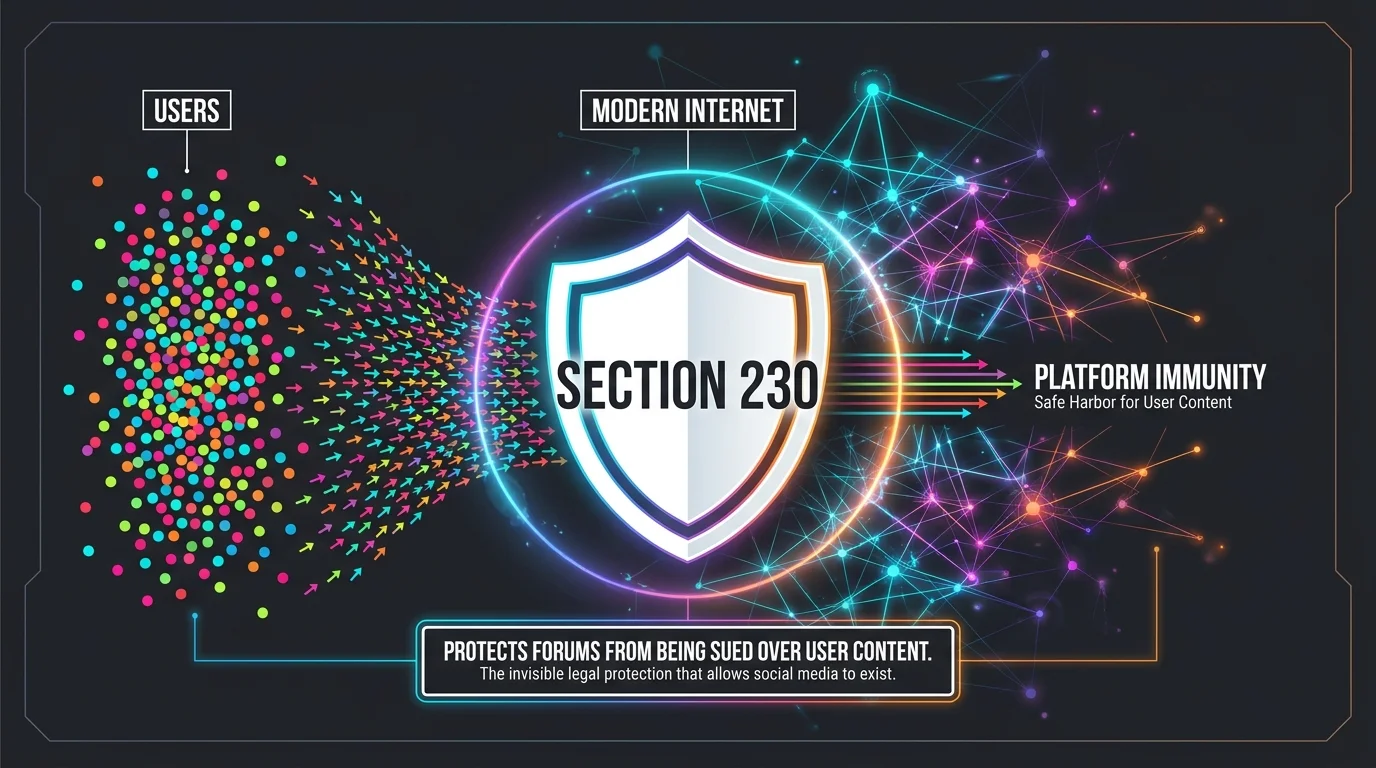
In 1996, legislators inserted a short provision into a telecommunications bill to protect nascent web forums from being sued over content posted by their users. Lawmakers intended to encourage digital platforms to moderate offensive material without assuming the legal liability of traditional publishers. Instead, Section 230 laid the foundational legal framework for the entire modern internet. By shielding companies from devastating lawsuits regarding user-generated content, this policy allowed social media giants and video-sharing platforms to scale exponentially. The law protects the vibrant digital communities you engage with daily, but it accidentally paved the way for algorithmic amplification of misinformation.

The Revenue Act of 1978 and the Accidental Invention of the 401(k)
Congress passed the Revenue Act of 1978 to clarify minor tax rules regarding deferred compensation for high-level executives. A benefits consultant noticed a brief clause, Section 401(k), and realized companies could use it to create tax-advantaged retirement accounts for all employees, complete with employer matching. Lawmakers never intended to dismantle the traditional pension system. Yet, as companies realized they could shift retirement risk and funding burdens entirely onto workers, they rapidly abandoned guaranteed pensions in favor of these individual investment accounts. Today, your ability to retire comfortably hinges almost entirely on market performance and your personal savings rate, a shift triggered by a practically unnoticed paragraph.
The Airline Deregulation Act of 1978 and the Hub-and-Spoke System
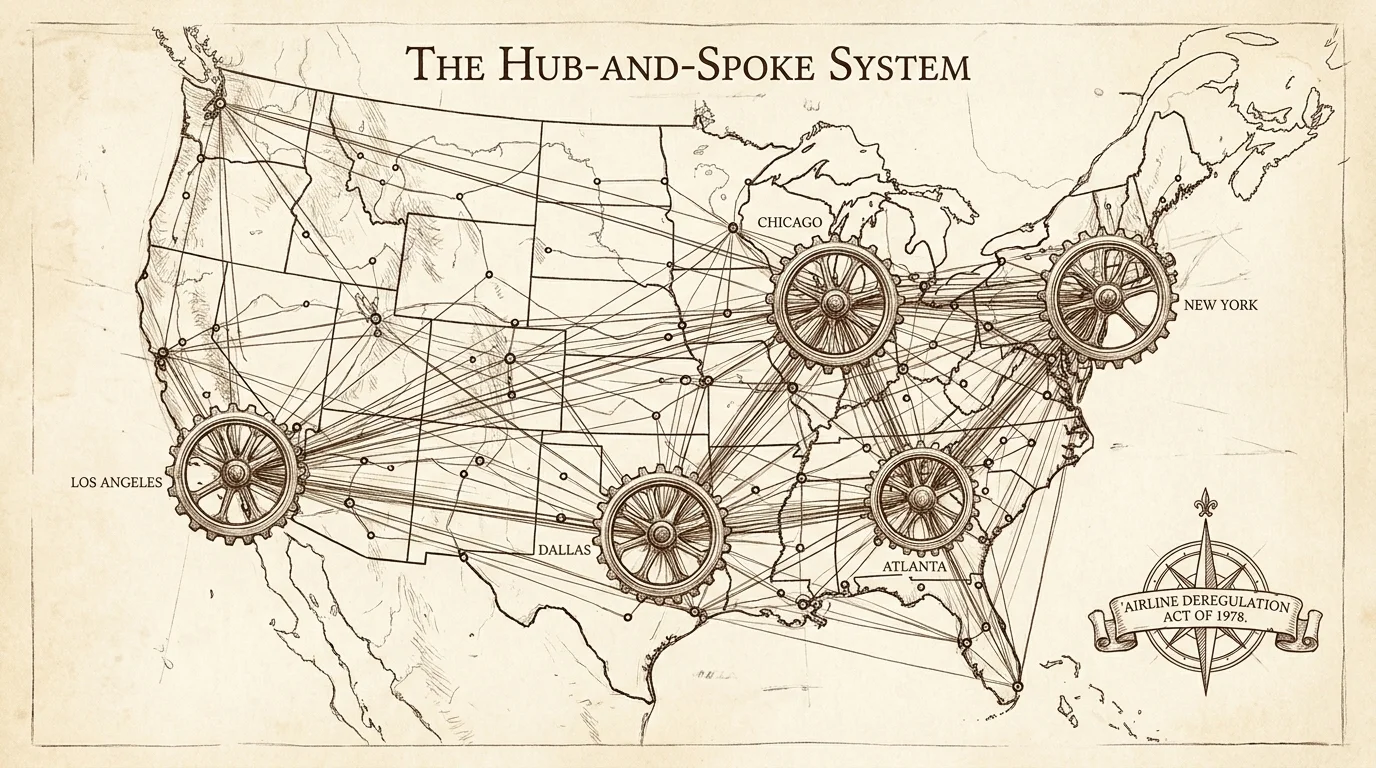
Before 1978, the federal government dictated where airlines could fly and what they could charge, treating air travel almost like a public utility. Bipartisan lawmakers pushed deregulation to spur competition and lower prices for consumers. The legislation succeeded in making air travel financially accessible to the masses, but it fundamentally changed the logistics of flying. Freed from government route maps, airlines abandoned direct flights between smaller cities and adopted the highly efficient hub-and-spoke model. This strategy drastically reduced ticket prices but introduced the era of cramped seating, endless layovers in massive mega-airports, and unbundled services. The reason you pay extra for a checked bag traces back to this specific policy push.

The Uniform Time Act of 1966 and Standardized Daylight Saving Time
For decades, local municipalities decided independently whether to observe Daylight Saving Time, creating a confusing patchwork of time zones that tormented the transportation and broadcasting industries. Congress passed the Uniform Time Act to impose order, establishing consistent start and end dates across the country. While intended simply to streamline train schedules and television programming, this legislative standard deeply disrupted daily human circadian rhythms. By enforcing biannual clock shifts, the law unintentionally triggers documented spikes in traffic accidents, workplace injuries, and minor health crises twice a year. Your groggy morning commute every March is the direct byproduct of a mid-century bureaucratic effort to keep commercial rail networks on time.
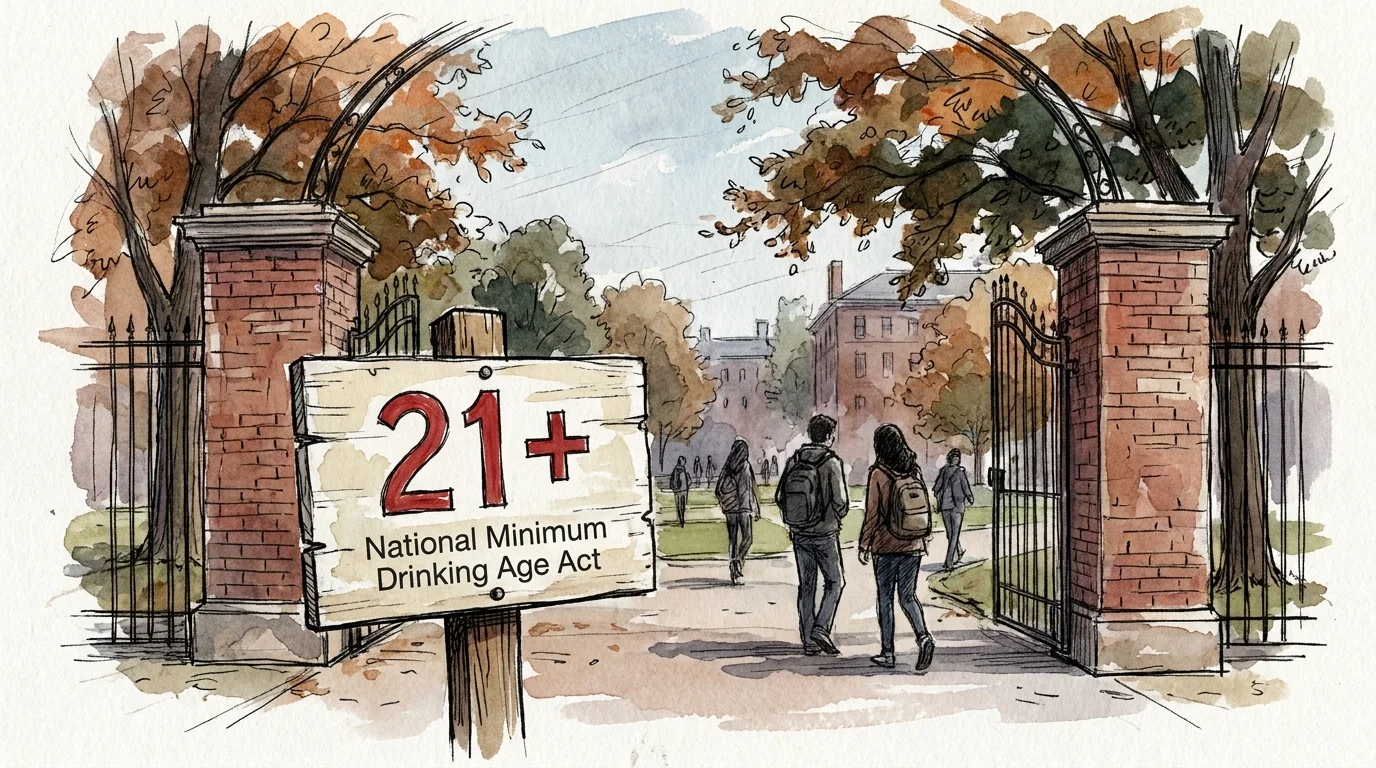
The National Minimum Drinking Age Act of 1984 and Campus Culture
Rather than explicitly outlawing alcohol sales to adults under twenty-one, the federal government effectively forced states to raise their drinking ages by threatening to withhold federal highway funding. Lawmakers primarily sought to reduce drunk driving fatalities among teenagers. The policy succeeded in lowering traffic deaths, but it completely transformed young adult social dynamics. By driving underage drinking out of regulated public spaces like taverns, the law pushed consumption into private, unsupervised environments. This shift inadvertently fueled the rise of dangerous binge drinking cultures and underground house parties. The legislation achieved its public safety goal on the roads while accidentally creating complex new public health challenges on college campuses.
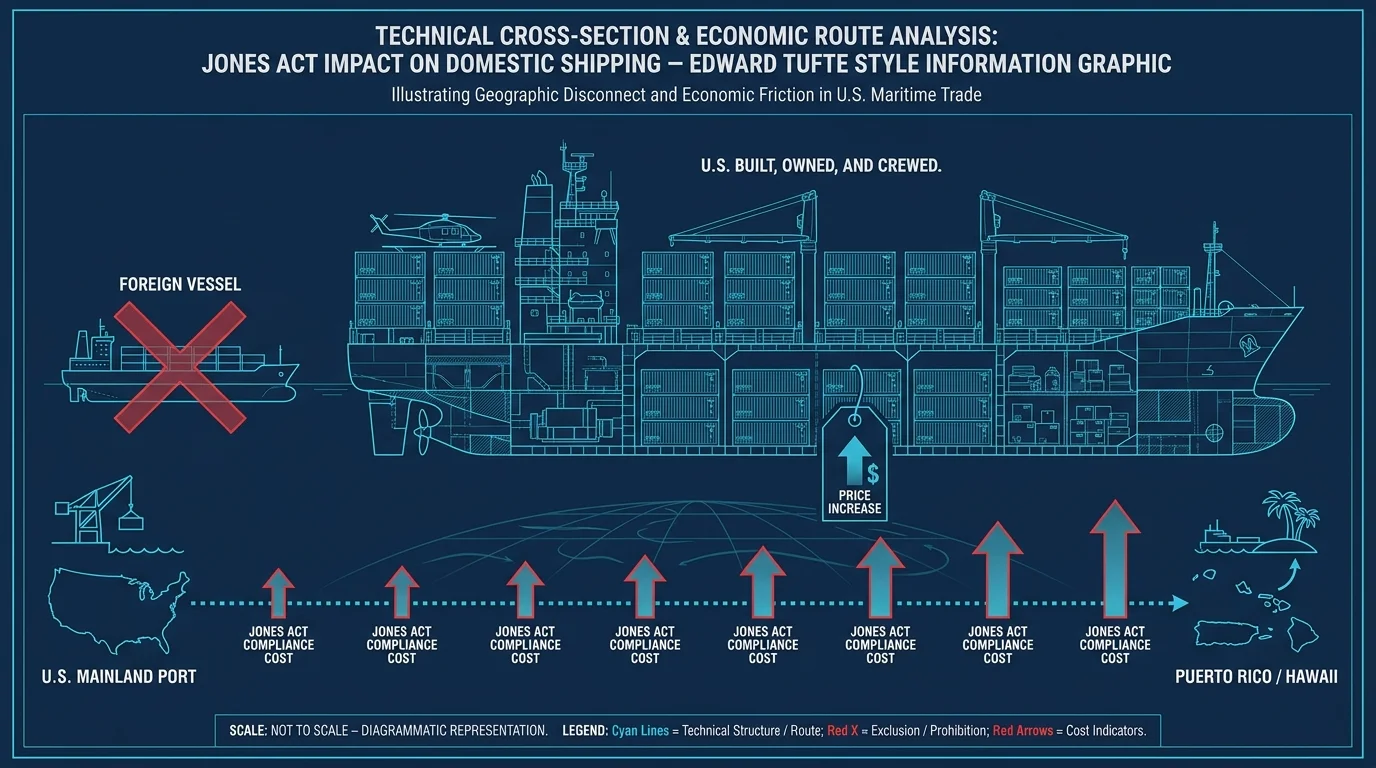
The Jones Act of 1920 and the Cost of Island Living
Following World War I, Congress passed the Merchant Marine Act, commonly known as the Jones Act, to ensure the United States maintained a robust domestic shipbuilding industry for national security purposes. The law requires that all goods transported by water between U.S. ports be carried on U.S.-flagged ships constructed, owned, and crewed by American citizens. While it preserved a critical maritime fleet, it dramatically inflated the cost of living for residents in non-contiguous states and territories. If you live in Hawaii, Alaska, or Puerto Rico, you pay significantly higher prices for basic groceries, energy, and building materials because of this century-old shipping restriction. A policy designed to secure borders operates today as an invisible tax.

The Fair Labor Standards Act of 1938 and the Standard Weekend
Labor organizers fought for decades to secure humane working conditions, but the federal codification of the standard workweek changed American leisure permanently. By mandating overtime pay for non-agricultural work exceeding forty hours, the Fair Labor Standards Act effectively priced employers out of demanding six-day workweeks. Lawmakers aimed to reduce severe exploitation and spread available jobs among more workers during the Great Depression. The unintentional side effect was the creation of the modern two-day weekend. This guaranteed block of free time birthed massive new consumer markets, from weekend travel and recreational sports to the entertainment industry. Your weekend plans exist largely because of this Depression-era labor protection.
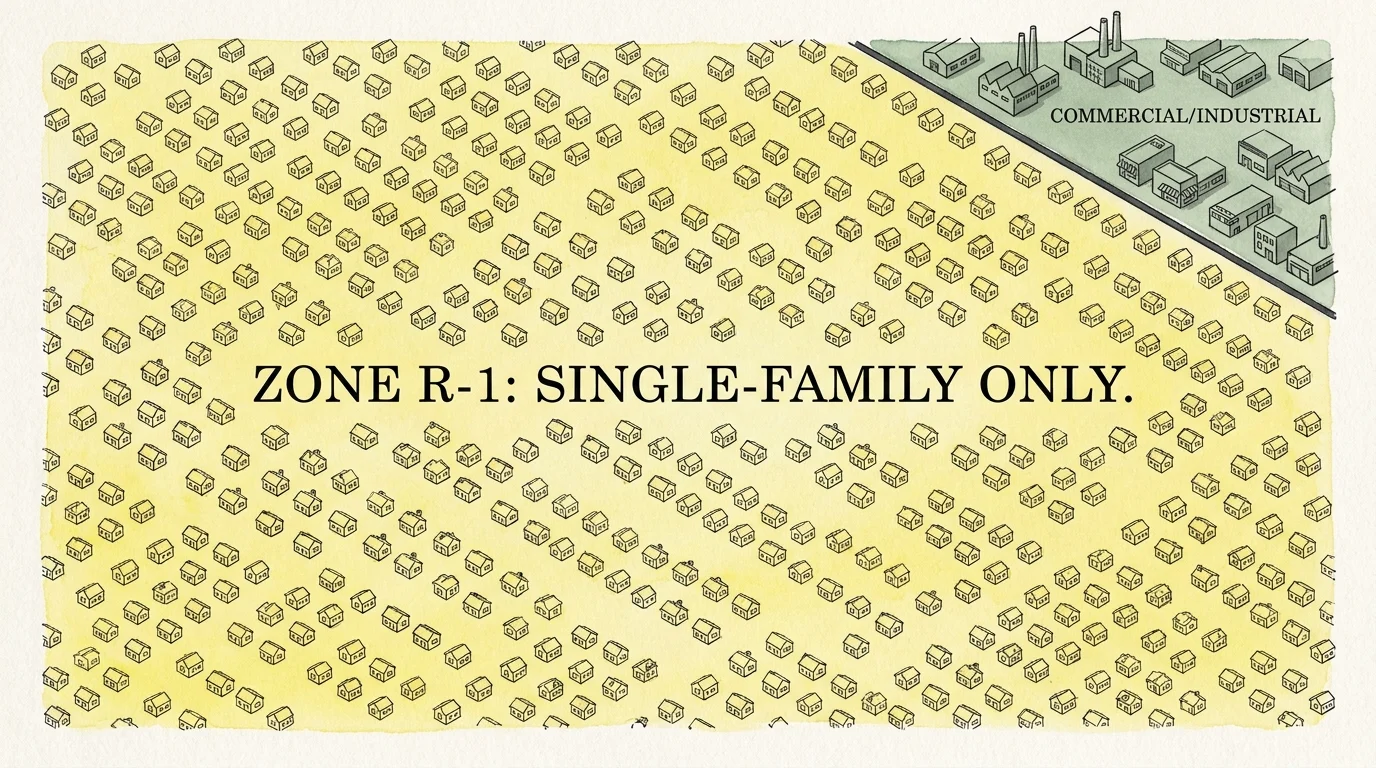
Euclid v. Ambler (1926) and Single-Family Zoning
While not a congressional act, the Supreme Court decision in Village of Euclid v. Ambler Realty Co. validated the concept of local zoning ordinances. A small Ohio town wanted to prevent industrial encroachment on residential neighborhoods, a seemingly practical civic defense. However, local governments nationwide weaponized this legal precedent to strictly separate housing types, outright banning duplexes and apartments in vast swaths of suburban America. Planners used these regulations to engineer neighborhood demographics and property values. Today, this sweeping legal authorization directly contributes to the severe housing affordability crisis. Your struggle to find an affordable starter home stems from a nearly century-old ruling about industrial pollution.
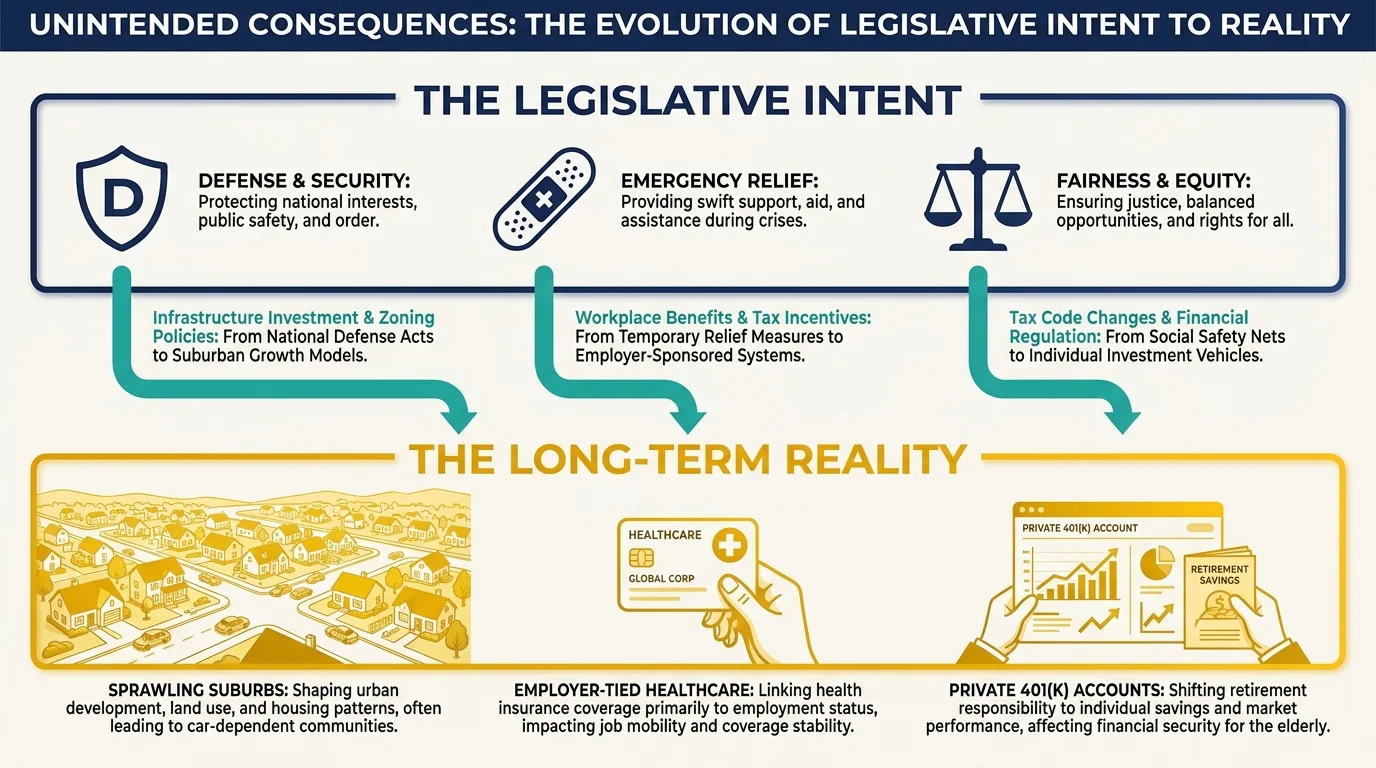
Impact Lens: Economic and Community Consequences
When you zoom out from individual statutes, the collective economic and community consequences of these accidental impacts become staggering. The Congressional Budget Office analysis frequently requires revisions for long-term economic projections because secondary market reactions completely eclipse primary legislative goals. For example, tying healthcare to employment effectively traps millions of Americans in jobs they dislike, stifling small business entrepreneurship and wage growth. Similarly, Brookings Institution research demonstrates that rigid zoning laws restrict housing supply where jobs are most plentiful, draining localized economic vitality and pushing lower-income workers into punishing, long-distance commutes.
These structural shifts heavily dictate the financial health of your household. You pay hidden premiums daily in the form of higher shipping costs, inflated real estate prices, and out-of-pocket healthcare expenses. Beyond pure economics, these policies structurally isolate communities. Highway systems physically bifurcated thriving urban neighborhoods, while algorithmic media silos actively fracture civic dialogue. Recognizing these impacts allows you to cut through superficial partisan rhetoric. When politicians debate new regulations, the true cost rarely appears in the headline figures; it manifests years later in your grocery bills, your rent checks, and the very layout of your neighborhood.

Accountability Check: Oversight and Transparency Gaps
Retroactive accountability for unintended legislative side effects remains a systemic weakness in American governance. The Government Accountability Office reports frequently produce thorough audits of flawed federal programs, yet identifying a structural failure does not guarantee a legislative fix. Congress struggles to reform entrenched systems because entire industries build highly profitable business models around these policy loopholes. Once a policy creates a new economic sector—such as benefits consulting for 401(k) plans or data mining on social platforms—those stakeholders aggressively lobby to protect the profitable status quo.
Transparency gaps further complicate these reform efforts. Legislative riders often pass during late-night sessions inside massive omnibus spending bills, evading robust committee debate and public scrutiny. You frequently only discover the implications of a new policy long after it takes structural effect. Stronger oversight requires mandatory retrospective reviews, forcing lawmakers to actively reauthorize regulations based on real-world data rather than leaving outdated laws to run on autopilot indefinitely.
Frequently Asked Questions About Policy Precedents
How do unintended policy consequences usually come to light?
Policy flaws typically emerge through independent economic research, investigative journalism, and localized public outcry. Think tanks and academic researchers track long-term data trends, eventually proving that a specific law caused an unexpected behavioral shift. You will often see these issues surface first in specialized trade publications before they hit mainstream political discourse.
Can Congress easily reverse a law once unexpected side effects appear?
Reversing established law is notoriously difficult due to structural legislative hurdles like the Senate filibuster and intense lobbying pressure. Once a law generates a financial benefit for a specific demographic or corporate group, that group will fight aggressively to maintain it. Consequently, Congress usually opts to pass minor corrective patches rather than executing the comprehensive overhauls required to fix the root problem.
What role do federal courts play in checking legislative side effects?
Judges interpret the text of the law as written, not the original intent or the subsequent societal fallout. Unless a law directly violates constitutional rights, the judiciary generally defers to the legislative branch to correct its own mistakes, a pattern consistently reflected on the Supreme Court docket. However, courts frequently strike down administrative agency rules if they determine the agency expanded a law beyond what Congress explicitly authorized.
How can voters track the long-term impacts of current legislative proposals?
You can monitor ongoing policy impacts by reading analyses from nonpartisan organizations like the Congressional Research Service. Engaging with civic organizations that translate dense regulatory filings into plain language also helps you spot critical red flags before a bill officially becomes established law.
Forward Look: Upcoming Elections and Legislative Deadlines
Looking ahead, lawmakers face critical deadlines that will dictate the next generation of unintended consequences. Congress must regularly debate the reauthorization of massive aviation, agricultural, and technology bills, each containing obscure provisions that could dramatically alter consumer pricing and national infrastructure priorities. Furthermore, looming expirations of major tax cuts enacted in recent years will force urgent legislative action, opening the door for entirely new loopholes and rapid policy shifts.
As election cycles accelerate, candidates will undoubtedly pitch sweeping, simple solutions to complex systemic problems. You must scrutinize these proposals by looking past the immediate political promises and asking what secondary behaviors those policies will inevitably incentivize. Understanding the history of accidental political impacts equips you to demand better legislative drafting, tougher institutional oversight, and true transparency from the leaders actively asking for your vote.