Understanding which campaign commitments survive the transition to the Oval Office empowers you to vote based on track records rather than rhetoric. Politicians routinely abandon their highest-profile promises once they face legislative gridlock, economic constraints, or shifting partisan priorities. Examining these political promises broken reveals the mechanics of governance and helps you filter out empty election day promises ignored by the victors. When you analyze the data of unfulfilled campaign pledges, you uncover a predictable cycle of compromise and strategic amnesia. Recognizing this pattern equips you to demand genuine accountability during the next election cycle and focus your civic advocacy on policies with realistic paths to implementation rather than comforting political theater.
The Structural Origins of Forgotten Pledges
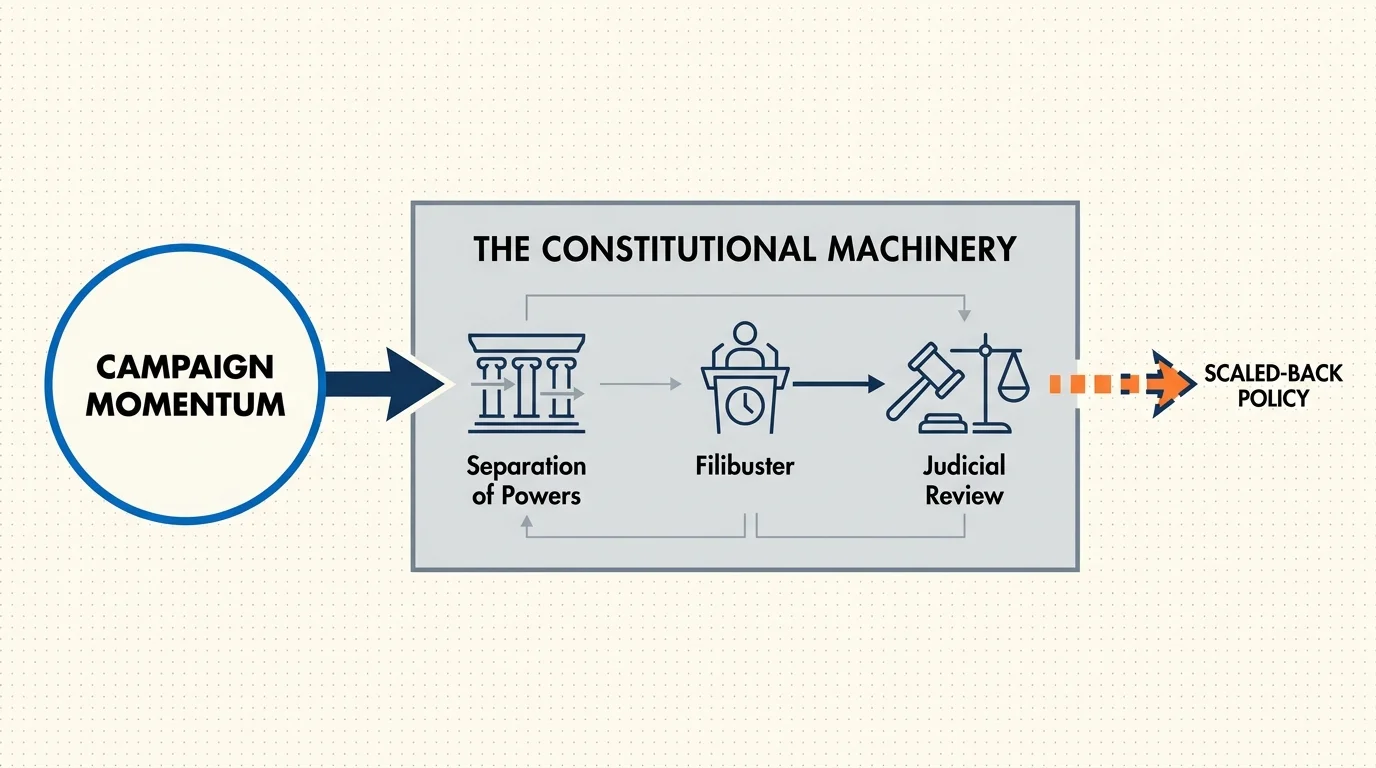
Elections generate intense momentum; governing demands painstaking compromise. When candidates traverse the country seeking your vote, they design policy proposals to energize their political base and capture headlines. However, the American system of government intentionally impedes rapid, unilateral action. Once a candidate takes the oath of office, they immediately collide with the separation of powers, fiercely guarded congressional procedures, and the sprawling federal bureaucracy.
Candidates often pitch solutions that sound spectacular on a debate stage but lack a viable legislative roadmap. They underestimate the influence of filibusters, judicial review, and competing budget priorities. Consequently, politicians break promises not always out of pure deception, but because the constitutional machinery forces them to scale back their ambitions. By examining historical precedents, you can better distinguish between a realistic policy framework and an empty slogan designed purely for electoral advantage.
10 High-Profile Pledges Abandoned by the Victors
History provides ample evidence of candidates prioritizing electability over feasibility. The following ten examples illustrate how leaders across the political spectrum have discarded their most recognizable commitments shortly after claiming victory.

1. The Definitive Tax Pledge of 1988
During the 1988 Republican National Convention, George H.W. Bush delivered one of the most famous declarations in modern political history, emphatically promising voters he would reject any new taxes. The rhetoric galvanized conservative voters and helped secure his presidency. Yet, by 1990, a sluggish economy and a swelling federal deficit forced a severe course correction. Faced with a Democratic-controlled Congress demanding revenue increases, Bush compromised. He signed the Omnibus Budget Reconciliation Act of 1990, which raised the top income tax rate to 31 percent and increased levies on gasoline and tobacco. This reversal infuriated his political base and played a massive role in his subsequent defeat four years later.

2. The Elusive Middle-Class Tax Cut of 1992
Bill Clinton campaigned aggressively on a platform centered around a targeted tax cut for middle-class families. He positioned himself as a different kind of Democrat who would relieve the financial burden on working Americans. However, shortly after taking office in 1993, his economic advisors presented stark projections regarding the ballooning national deficit. Conceding to economic realities, Clinton completely abandoned the middle-class tax cut. Instead, he championed the Deficit Reduction Act of 1993, which raised taxes on the wealthiest earners and increased the federal gas tax. While the legislation ultimately helped balance the budget later in the decade, the original promise to everyday voters simply evaporated.

3. The Rejection of Nation-Building in 2000
George W. Bush spent his 2000 campaign criticizing the expansive foreign policy interventions of the previous administration. He promised a more humble foreign policy and explicitly argued against deploying the United States military for nation-building exercises abroad. The terrorist attacks of September 11, 2001, violently upended this doctrine. His administration soon launched massive, decades-long military campaigns in both Afghanistan and Iraq. According to ongoing research by the Costs of War project at Brown University, these interventions forced the United States to spend trillions of dollars restructuring foreign governments—the exact scenario Bush initially promised to avoid.

4. The Vow to Close Guantanamo Bay in 2008
Barack Obama made the closure of the Guantanamo Bay detention camp a central pillar of his 2008 campaign, framing it as a necessary step to restore American moral authority. On his second day in office, he confidently signed an executive order mandating the facility’s closure within one year. The reality of complex international law and domestic political resistance quickly stalled the effort. Congress actively blocked funding required to transfer detainees to facilities on the American mainland, and diplomatic challenges hindered the repatriation of prisoners to other countries. Although his administration significantly reduced the population, the facility remains operational today, standing as a glaring example of unfulfilled campaign pledges.
5. The Health Care Retention Promise of 2010
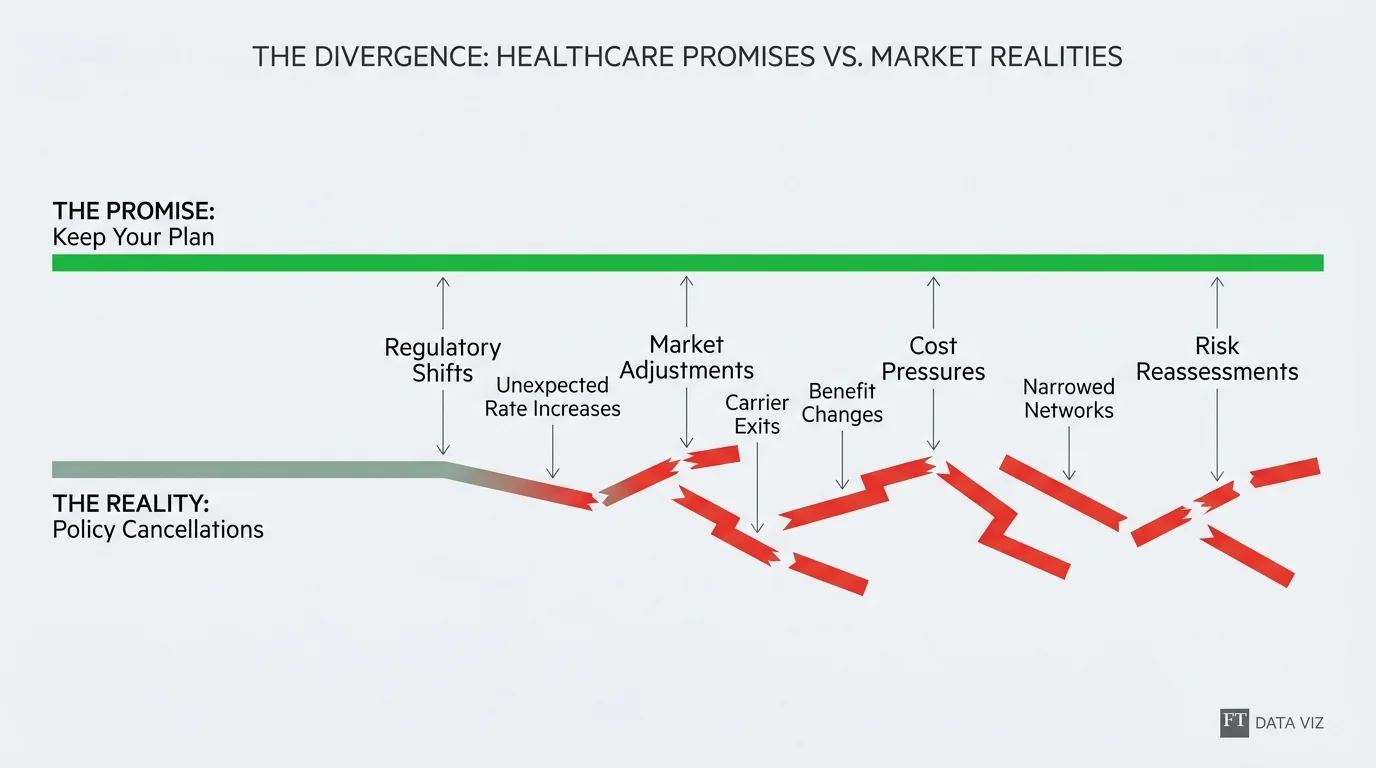
To sell the Affordable Care Act to a skeptical public, President Obama repeatedly assured Americans that if they liked their current health care plan, they could keep it. The administration used this absolute phrasing to quell fears of government overreach. When the law took full effect, however, insurance providers sent millions of cancellation notices to consumers whose existing plans failed to meet the new, stricter coverage mandates established by the ACA. The fallout was immediate and severe, forcing the administration to issue apologies and temporary administrative fixes. PolitiFact eventually designated the original guarantee as its Lie of the Year, highlighting the danger of oversimplifying complex regulatory overhauls.
6. The Border Wall Funding Guarantee of 2016
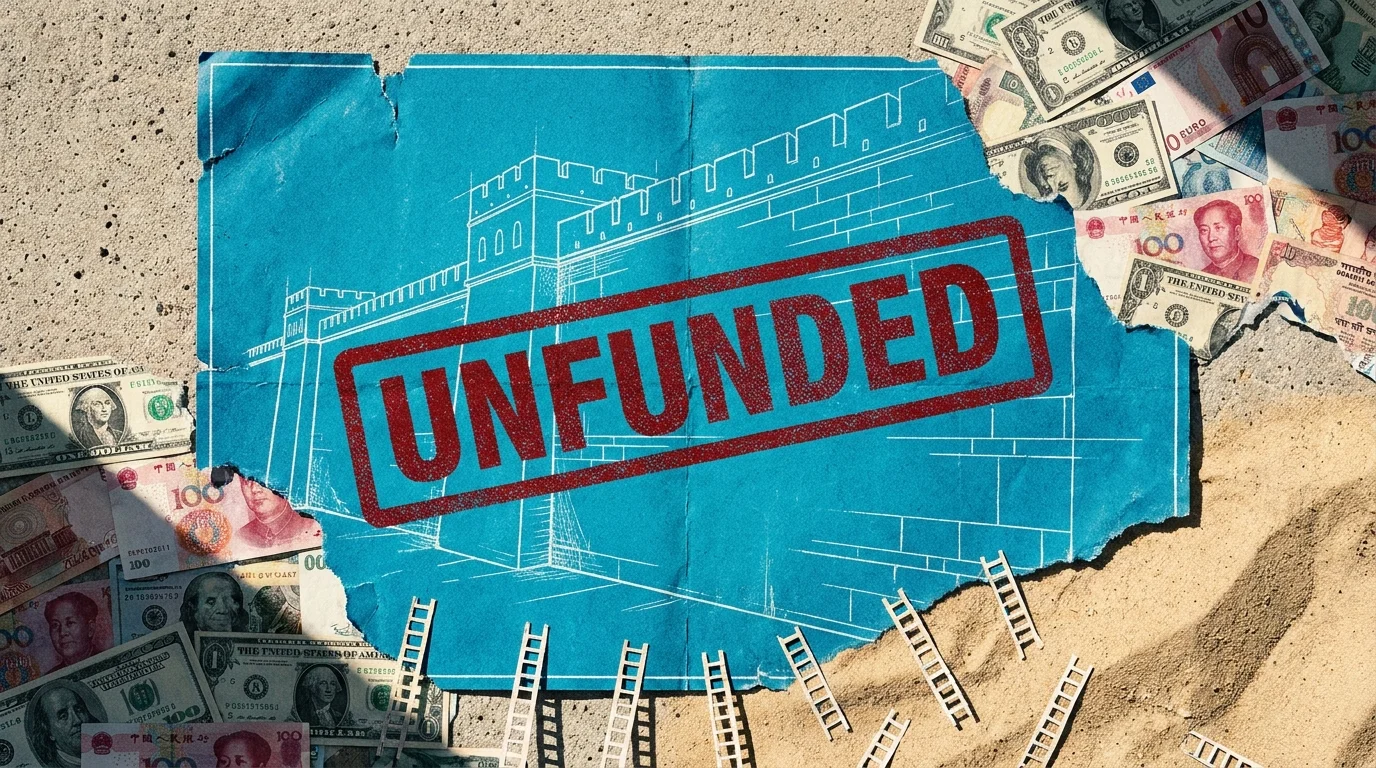
Donald Trump dominated the 2016 primary and general elections with a singular, easily digestible promise: he would build a wall along the southern border and force the Mexican government to pay for it entirely. The pledge electrified his supporters. Once in office, Mexico categorically refused to provide any funding. To construct portions of the barrier, the Trump administration engaged in fierce battles with Congress and ultimately resorted to declaring a national emergency to divert billions of dollars from the Department of Defense budget. American taxpayers and the military—not Mexico—footed the bill, marking one of the most prominent political promises broken in recent memory.
7. The Commitment to Eliminate the National Debt in 2016
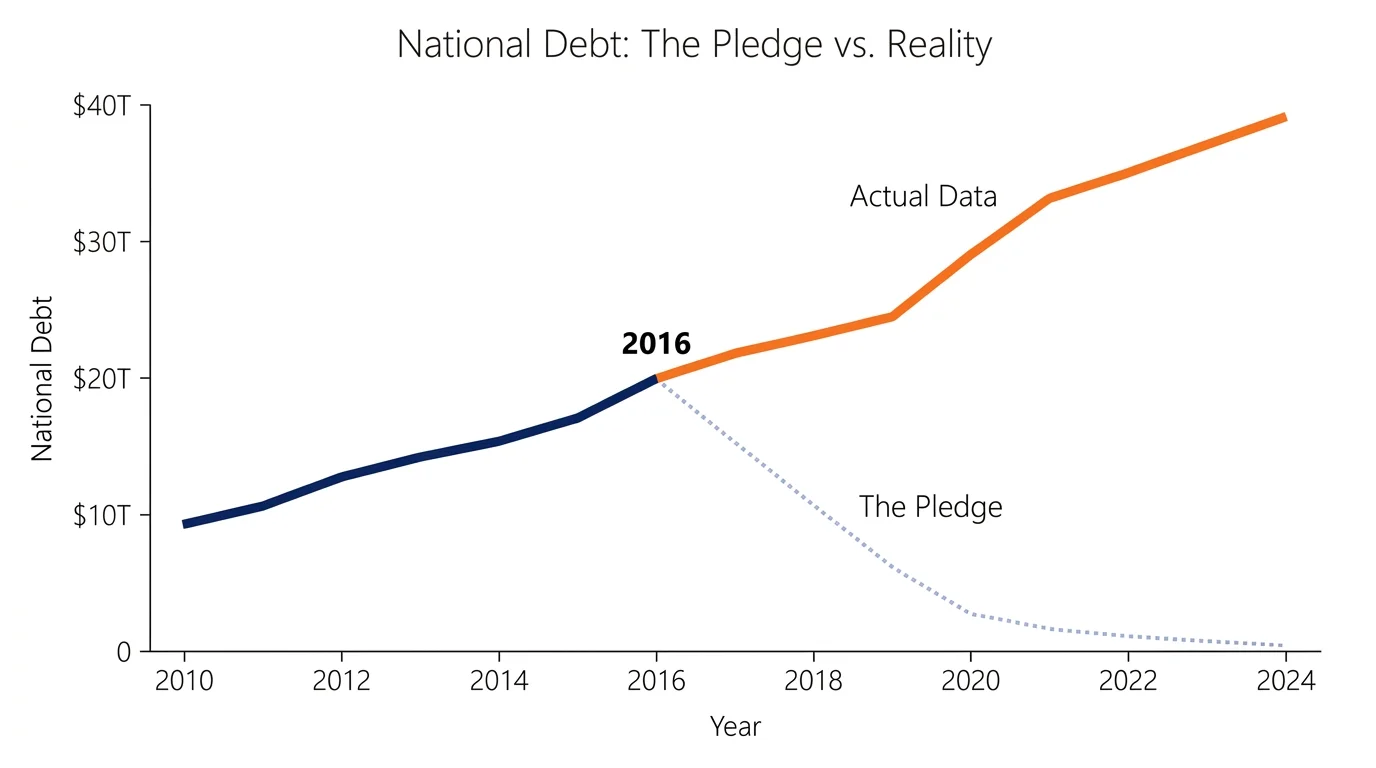
During his first presidential run, Donald Trump promised voters he would eliminate the nation’s $19 trillion national debt within eight years through aggressive trade negotiations and economic growth. The mathematical reality of federal spending made this pledge virtually impossible from the outset. Instead of reducing the debt, his administration passed the Tax Cuts and Jobs Act of 2017, which significantly reduced corporate revenues. Combined with subsequent massive spending packages aimed at pandemic relief, the national debt actually surged by nearly $7.8 trillion during his single term. This stark contrast between campaign rhetoric and fiscal reality underscores how easily politicians ignore math on the campaign trail.

8. The Pledge to End Public Land Drilling in 2020
Appealing directly to young voters and climate activists, Joe Biden promised a complete ban on new oil and gas permitting on public lands and waters. He presented this environmental pledge as a non-negotiable step to combat climate change. While his administration initially paused new leases, intense legal challenges from energy-producing states quickly dismantled the moratorium. The most significant fracture of this promise occurred when the Department of the Interior formally approved the massive Willow project in Alaska, allowing an energy company to drill hundreds of new wells on federal land over the next few decades.

9. The Immediate Student Debt Cancellation of 2020
Candidate Joe Biden energized younger demographics by promising to immediately cancel a minimum of $10,000 in student debt per person through congressional action. Upon taking office, he faced a divided Senate and opted to bypass lawmakers entirely, attempting to execute a broader $400 billion cancellation program via executive authority. The judicial system swiftly intervened. The Supreme Court of the United States ultimately struck down the sweeping executive action, ruling that the administration lacked the statutory authority to bypass Congress. Today, millions of borrowers remain heavily indebted as the administration pivots toward narrower, piecemeal relief efforts.
10. The Secret Plan to End the War in 1968
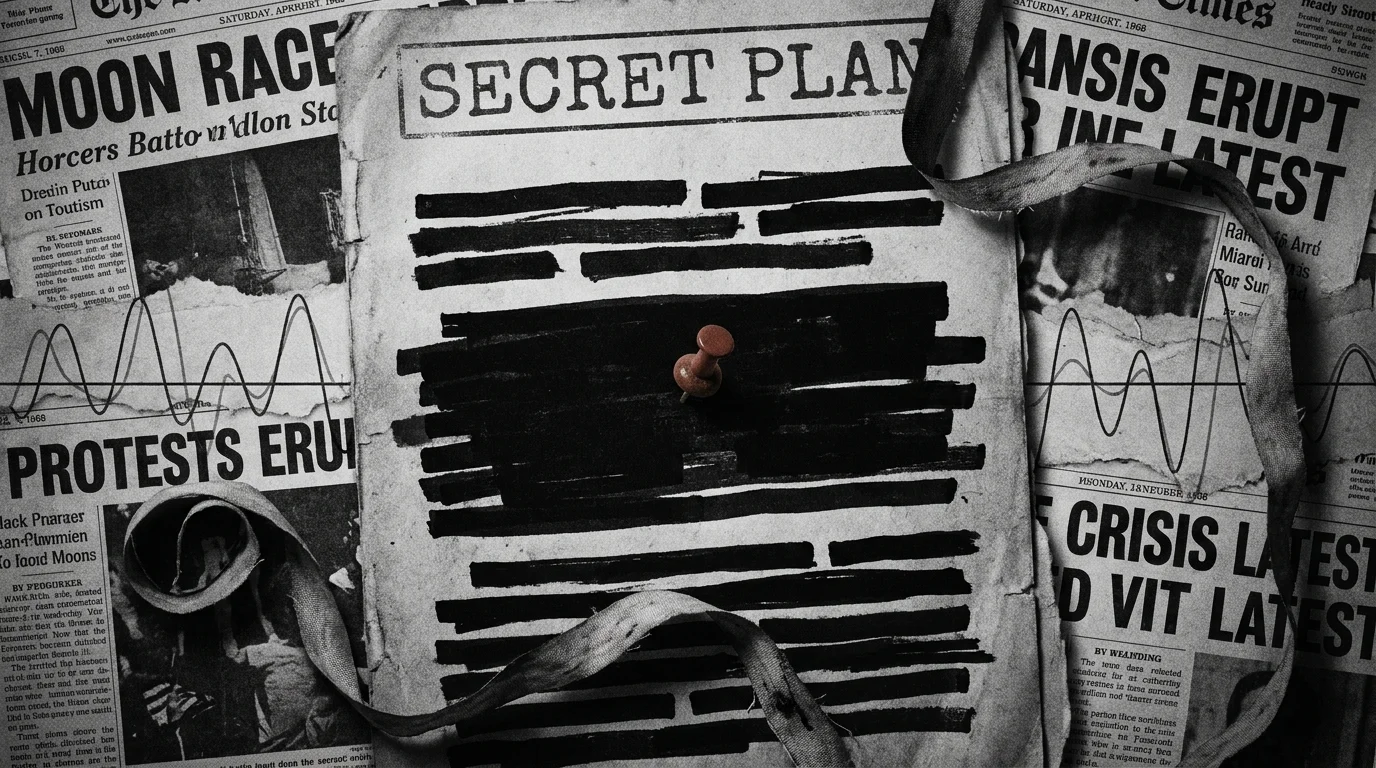
During the chaotic 1968 election, Richard Nixon heavily implied to the American electorate that he possessed a secret plan to rapidly and honorably end the ongoing conflict in Vietnam. Exhausted by years of casualties, voters handed him the presidency. Rather than initiating a swift end to the hostilities, Nixon actually expanded the conflict by secretly bombing neutral Cambodia and launching incursions into Laos. The war dragged on for another agonizing four years, costing tens of thousands of additional American and Southeast Asian lives before the Paris Peace Accords were finally signed. The mythical secret plan remains a textbook case of election day promises ignored.

The Human and Economic Consequences of Discarded Policies
When politicians break promises, the damage extends far beyond the news cycle; it inflicts tangible harm on communities and the economy. Small business owners make hiring and investment decisions based on promised tax structures. Families calculate their monthly budgets based on assurances regarding healthcare costs or student loan relief. When those policies fail to materialize, individuals face financial shockwaves they cannot easily absorb.
Furthermore, this cycle fundamentally degrades civic participation. As voters repeatedly watch their chosen candidates abandon core pledges, cynicism takes root. Independent research consistently demonstrates that public trust in the federal government currently hovers near historic lows. When you lose faith in the basic transactional nature of voting—the idea that supporting a platform yields actual policy results—voter turnout drops, and extreme partisanship fills the void. Maintaining a healthy democracy requires a baseline level of honesty regarding what the government can realistically achieve.
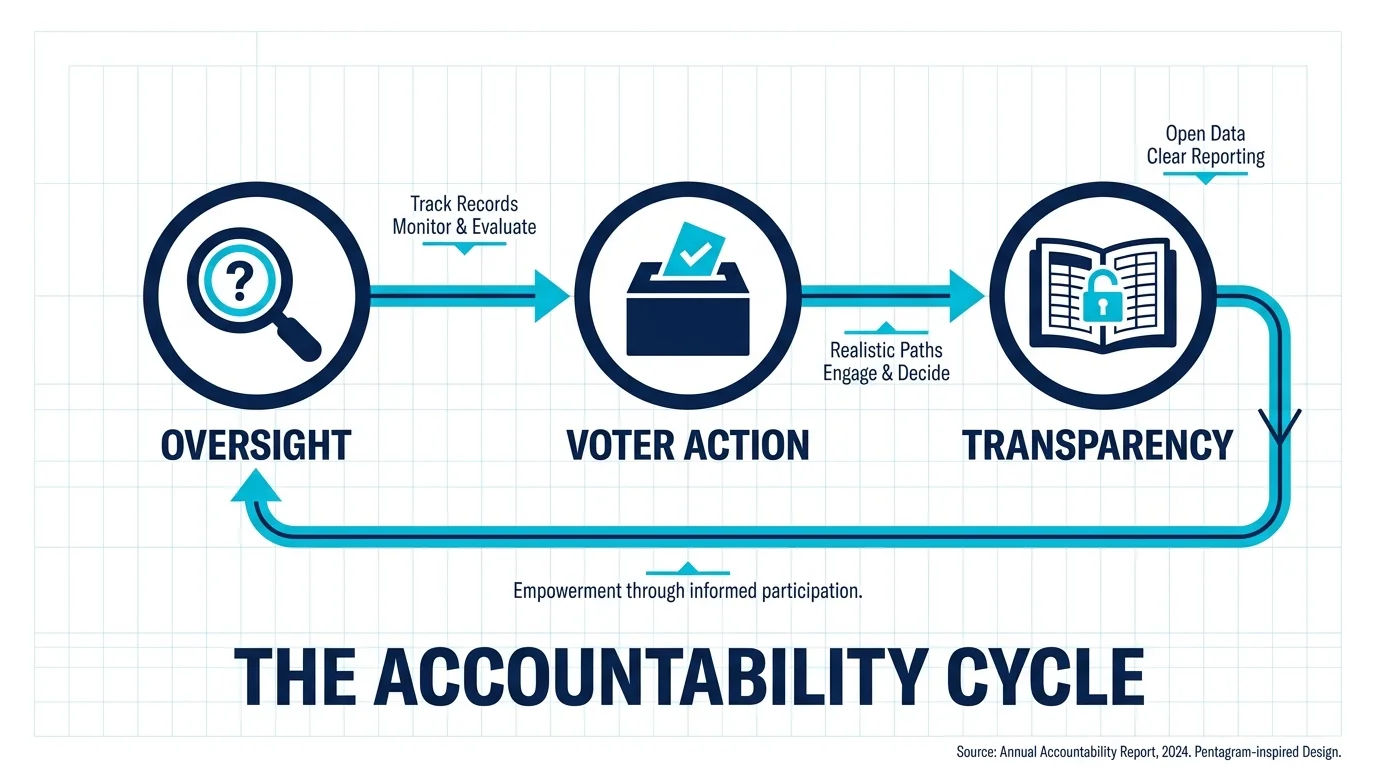
Demanding Transparency and Enforcing Oversight
To combat this pervasive issue, you must leverage independent oversight mechanisms rather than relying on partisan talking points. Professional watchdogs and nonpartisan organizations dedicate significant resources to tracking legislative progress against campaign rhetoric. Organizations frequently publish public trackers that monitor hundreds of specific pledges, categorizing them as fulfilled, compromised, or broken.
You can also rely on deeply researched economic data to verify claims. By reviewing independent analyses published by the Congressional Budget Office, you can cut through the spin and understand the genuine financial impact of a proposed law. Holding officials accountable means demanding clear metrics during town halls, pressing candidates on the specifics of their legislative strategies, and penalizing serial exaggerators at the ballot box.
Frequently Asked Questions About Campaign Accountability
Why do politicians consistently make promises they know they cannot keep?
Campaigns operate on the science of persuasion. Strategists understand that bold, absolute statements perform significantly better in focus groups and television advertisements than nuanced policy white papers. Candidates prioritize winning the immediate election, calculating that voters will eventually forget the specific details of a pledge or accept a compromised version once the administration takes power.
Does the legal system hold elected officials accountable for breaking campaign pledges?
No. Campaign promises are considered protected political speech rather than legally binding contracts. The judicial branch exercises no authority to force a president or a member of Congress to introduce or support specific legislation. The only enforcement mechanism for a broken political promise is the electoral process itself—meaning you must vote them out of office if you feel betrayed.
How do divided governments impact the fulfillment of these pledges?
A divided government serves as the ultimate graveyard for ambitious campaign promises. When one party controls the White House and the opposing party controls even a single chamber of Congress, major legislative overhauls stall. Opposing lawmakers possess strong electoral incentives to block a president’s agenda to ensure the incumbent appears ineffective during the next campaign cycle.
What practical tools exist for citizens to verify whether a pledge was actually met?
You can monitor independent, nonpartisan fact-checking websites that maintain dedicated promise trackers for current administrations. Additionally, you can review roll call votes on official government websites to see exactly how your representatives aligned with their stated platforms. Relying on primary documents—such as finalized agency rules and signed legislation—provides the most accurate assessment of an official’s track record.
Anticipating the Next Wave of Political Rhetoric
As the next major election cycle accelerates, you will undoubtedly face a fresh barrage of guarantees regarding taxes, foreign policy, and domestic reform. The political landscape thrives on generating enthusiasm through grand visions. However, your role as an informed citizen is to demand the architectural blueprints behind those visions. Ask candidates how they plan to bypass filibusters, how they will fund their initiatives without ballooning the deficit, and what compromises they are willing to accept.
By scrutinizing the mechanics of policy proposals rather than simply cheering for the desired outcomes, you elevate the quality of political discourse. A healthy democracy requires voters who remember the past, analyze the data, and refuse to accept the routine abandonment of solemn commitments. Let the historical record of forgotten promises guide your decisions, ensuring your vote supports genuine governance rather than endless campaigning.