The 2026 midterm elections will determine control of Capitol Hill and shape the final two years of federal governance. You will see razor-thin margins tested across both chambers on November 3, 2026.
Republicans hold narrow majorities in both the Senate and the House, leaving legislative leadership hanging on a handful of toss-up races. Every ballot cast will directly influence federal spending, court confirmations, and regulatory policy.
Understanding the battleground districts and states allows you to navigate the competing messages filling your airwaves. Here is how the key races stand heading into Election Day.

The National Political Climate and Governing Stakes
Midterm elections historically serve as a referendum on the sitting president’s party. When you examine past cycles, the president’s party almost always loses seats in Congress during their first midterm.
Heading into the final stretch before the election, the RealClearPolitics polling average records President Donald Trump’s approval rating at 38.1% approve and 59.6% disapprove. This net negative margin creates significant headwinds for Republican incumbents nationwide.
Low presidential approval numbers typically depress turnout among base voters while energizing the opposition. As a voter, you will notice these dynamics reflected in the candidates’ campaign ads and public appearances.
Vulnerable incumbents often attempt to create distance between themselves and the top of the ticket. Meanwhile, challengers highlight national economic concerns and executive branch decisions to mobilize undecided voters.
These national currents affect local contests directly, turning previously safe districts into fiercely contested territory. You can see this pattern unfolding across both rural communities and suburban neighborhoods.
Unprecedented Turnover in the 120th Congress
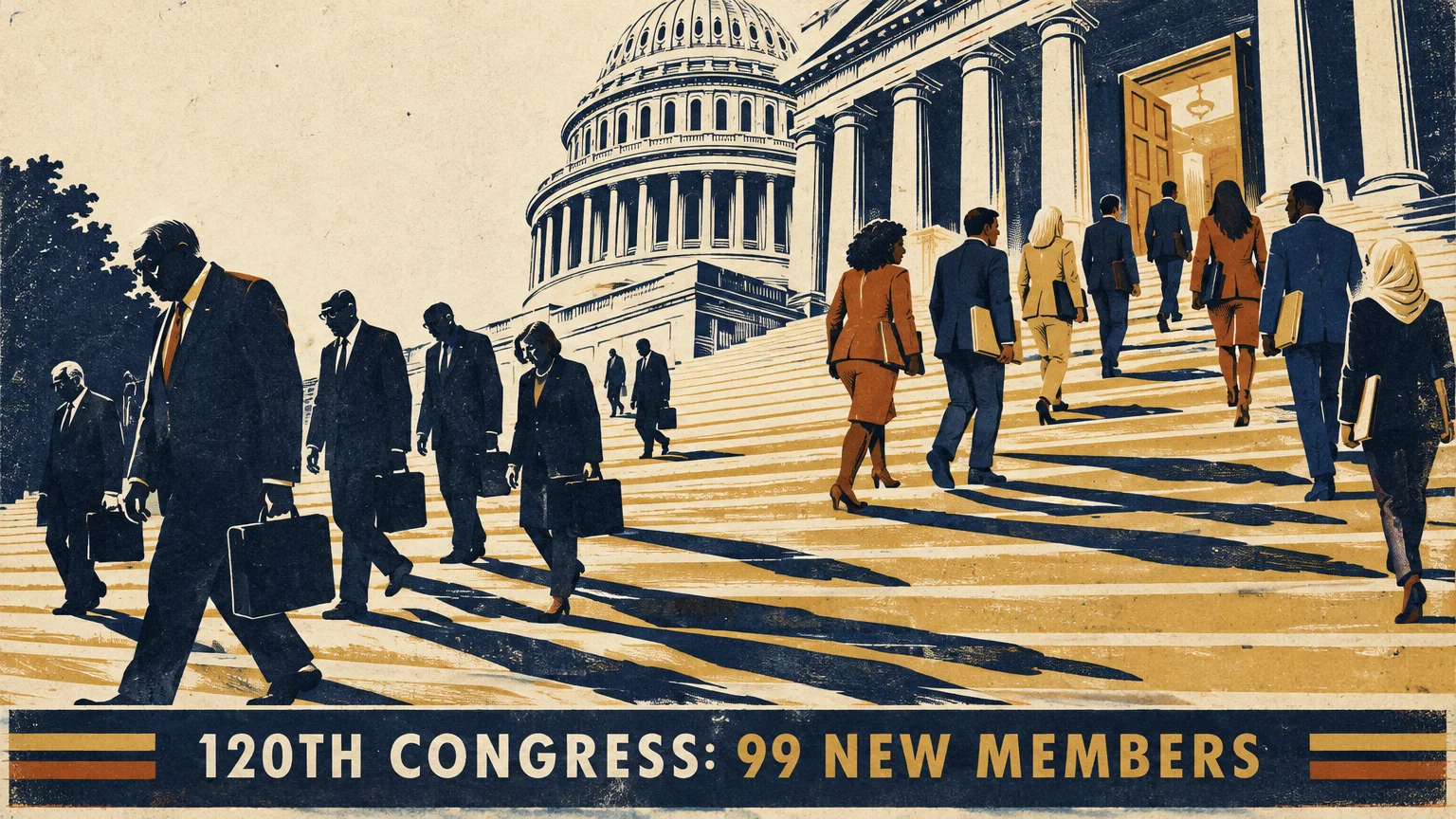
Regardless of which party takes the gavel, the legislative branch will look substantially different next year. At least 99 new members will join Congress when the 120th United States Congress convenes on January 3, 2027.
This massive personnel shift stems from 83 retirements or departures alongside 16 mid-term resignations or deaths during the 119th Congress. You will witness a fresh cohort of lawmakers shaping federal committee assignments and floor debates.
The primary season, which began on March 3, 2026, and concluded on September 15, 2026, produced historic intraparty turbulence. Grassroots voters used primary ballots to reject long-serving establishment figures.
Two incumbent Republican senators, Bill Cassidy of Louisiana and John Cornyn of Texas, lost renomination in their respective primaries. This outcome marks the first time since 2010 that multiple elected incumbent senators lost primary challenges.
These defeats signal a profound shift in party alignment and ideological expectations. For you, this means newly elected lawmakers will likely demonstrate stricter party loyalty and pursue more confrontational legislative strategies.
The Battle for the Senate Majority
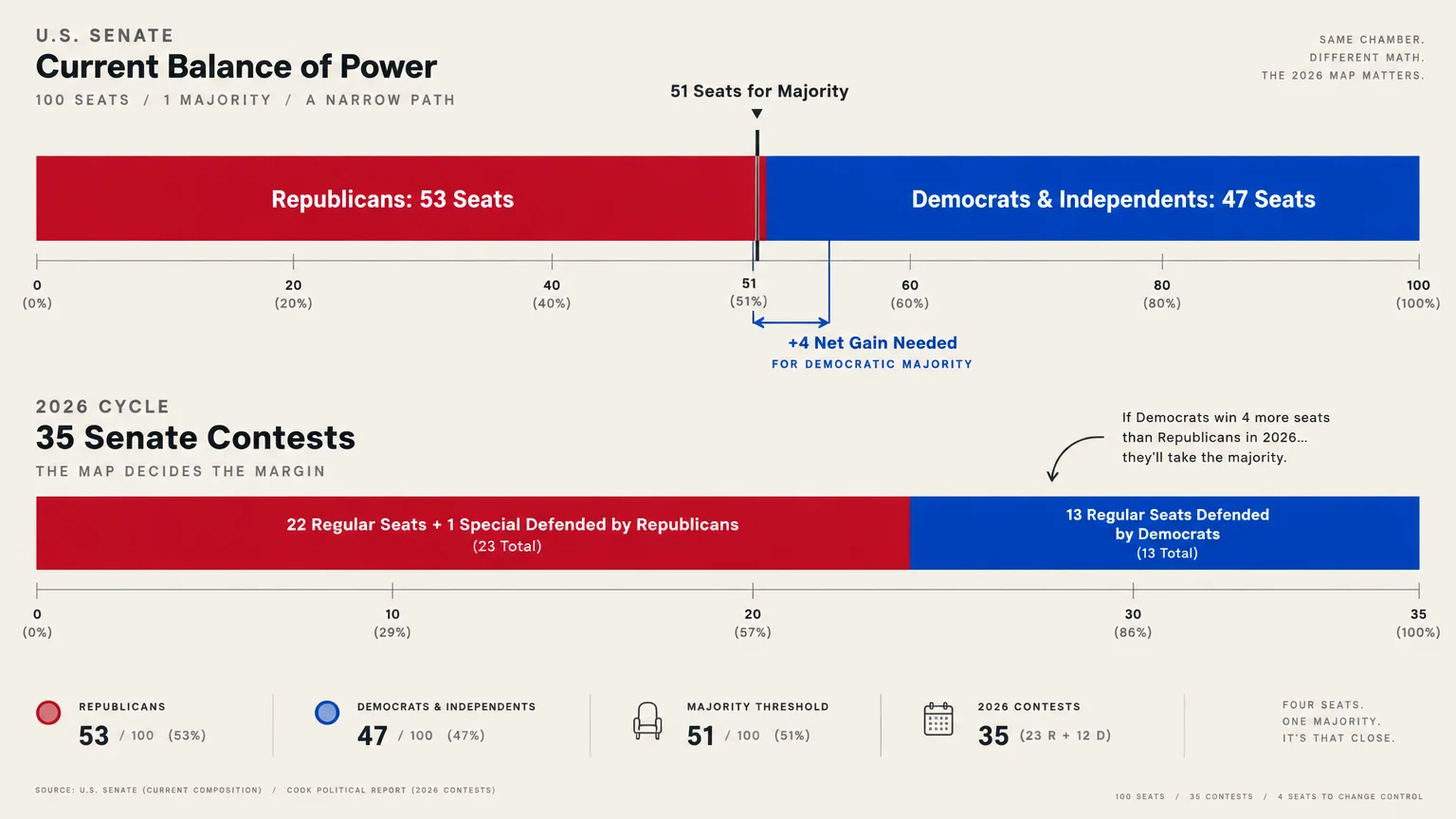
The Senate currently operates under a narrow Republican majority of 53 seats to 47 seats, with Democrats counting two allied independents. Democrats need a net gain of 4 seats to secure a 51-seat majority.
Voters across the country will decide 35 Senate contests this November. This roster includes 33 regular Class 2 elections alongside two high-profile special elections.
Republicans face the challenging task of defending 22 regular seats, or 23 seats when including special elections. In contrast, Democrats defend only 13 seats, giving them an expansive offensive map.
Recent nonpartisan assessments show this battlefield shifting noticeably toward Democratic candidates. The Cook Political Report analysis projects Democrats could achieve a net gain between 2 and 6 Senate seats.
According to comprehensive Ballotpedia tracking data, 12 overarching Senate battlegrounds will determine chamber control. These critical races span Alaska, Georgia, Iowa, Kansas, Maine, Michigan, Nebraska, New Hampshire, North Carolina, Ohio, and Texas.
Heartland Toss-Ups: Ohio, Kansas, and Nebraska
In Ohio, Republican Senator John Husted faces former Democratic Senator Sherrod Brown in a high-stakes special election for the seat vacated by Vice President JD Vance. Analysts recently reclassified this race as a Toss-Up.
Brown brings extensive statewide name recognition and strong appeal among working-class voters to the contest. You can expect this race to serve as a bellwether for the industrial Midwest.
Kansas has also emerged as a surprise battleground, moving from Lean Republican to Toss-Up status in late campaign updates. Independent and moderate suburban voters in Kansas are questioning traditional party loyalties.
Meanwhile, in Nebraska, incumbent Republican Senator Pete Ricketts faces a spirited challenge from Independent Dan Osborn. While Cook rates this contest as Lean Republican, Osborn’s populist labor coalition keeps the outcome competitive.
If you live in these states, outside campaign groups are flooding your local airwaves with record-setting spending. A single victory across these three Heartland contests could determine which party controls judicial nominations.
Sun Belt and East Coast Shifts: Georgia and North Carolina
Democratic prospects have brightened considerably across key Southern battlegrounds. In Georgia, incumbent Democratic Senator Jon Ossoff defends his seat against Republican Representative Mike Collins.
Analysts moved the Georgia contest from Lean Democrat to Likely Democrat following shifts in suburban Atlanta turnout indicators. Ossoff has focused his platform on domestic manufacturing and regional infrastructure projects.
In North Carolina, former Democratic Governor Roy Cooper faces Republican candidate Michael Whatley for an open seat. Cook shifted this race to Likely Democrat, reflecting Cooper’s enduring popularity and strong suburban appeal.
Further north, the New Hampshire Senate contest transitioned from Toss-Up to Lean Democrat as independent voters swung toward the Democratic ticket. These shifts force Republicans to divert funds to previously safe defensive territory.
Florida presents another dynamic front with a special election to replace Secretary of State Marco Rubio. Republican Senator Ashley Moody faces a persistent challenge from Democrat Angie Nixon, drawing intense national scrutiny.
The Fight for the House of Representatives
The fight for the House of Representatives remains equally competitive. Republicans currently hold 218 seats against 214 Democratic seats and 1 independent, with 2 seats remaining vacant.
To win the majority, Democrats need a net gain of 4 seats to reach the required 218-seat threshold. Every single one of the 435 voting congressional districts is on the ballot.
In early October, the Cook Political Report shifted 18 House race ratings toward Democrats, projecting a Democratic net gain of 9 to 19 seats. If realized, that swing would yield a Democratic majority of 224 to 234 seats.
Cook currently tracks 21 districts as Toss-Ups, 12 as Lean Democrat, and 9 as Lean Republican. Another 16 districts sit at Likely Democrat, while 18 are classified as Likely Republican.
Because the current majority rests on a single-seat margin, local candidate quality matters immensely. Your local congressional race could literally decide who holds the Speaker’s gavel.
Crucial House Districts Shifting Toward Democrats
Recent momentum has moved several critical Midwestern and Mid-Atlantic districts toward the Democratic column. In Iowa, two seats held by Republican Representatives Mariannette Miller-Meeks and Zach Nunn moved from Toss-Up to Lean Democrat.
These rural and small-town districts are responding sharply to federal agricultural debates and healthcare access issues. If you reside in Iowa, your vote carries immense weight in deciding chamber control.
In Pennsylvania, districts held by Republican Representatives Ryan Mackenzie and Scott Perry also shifted from Toss-Up to Lean Democrat. Suburban voters around Harrisburg and the Lehigh Valley are driving higher turnout projections.
Out west, Democratic Representative Marie Gluesenkamp Perez saw her competitive Washington district move from Toss-Up to Lean Democrat. Her independent legislative brand has proven resilient against national political headwinds.
Conversely, Iowa’s open 2nd District and North Carolina’s 1st District shifted from Lean Republican to Toss-Up. In North Carolina, Democratic Representative Don Davis remains competitive despite mid-decade redistricting designed to unseat him.
Gubernatorial Elections: Executive Power in the States
State executive offices carry enormous consequences for state budgets, election administration, and education policy. Nationally, Republicans hold 26 state governorships while Democrats hold 24.
This November, 36 states and 3 territories will elect their governors, with 18 seats defended by Republicans and 18 defended by Democrats. Nonpartisan analysts identify 10 top gubernatorial battlegrounds split evenly between the two parties.
Term limits have created exceptional volatility, barring 15 incumbent governors—9 Republicans and 6 Democrats—from seeking reelection. In total, 19 of the 36 state executive races feature open seats without an incumbent on the ballot.
You should pay close attention to seven split-ticket states where governors govern opposite their state’s recent presidential voting history. Five Democratic-governed states won by Trump in 2024 are holding elections: Arizona, Kansas, Michigan, Pennsylvania, and Wisconsin.
At the same time, voters in New Hampshire and Vermont will decide whether to maintain Republican governors in states that backed Kamala Harris. These split-ticket dynamics test whether voters still prioritize local leadership over national party brands.
High-Profile Gubernatorial Clashes
In Arizona, incumbent Democratic Governor Katie Hobbs faces a formidable challenge from Republican Andy Biggs. This race centers heavily on border security, water resource management, and state economic growth.
Florida features an intense open-seat contest following the departure of term-limited Governor Ron DeSantis. Republican Byron Donalds faces Democrat David Jolly in a contest testing Florida’s status as a solidly red state.
California also features an open governor’s race as term limits conclude Gavin Newsom’s tenure. Democrat Xavier Becerra competes against Republican Steve Hilton, spotlighting statewide debates over housing costs and infrastructure.
Other highly competitive gubernatorial contests are playing out in Georgia, Maine, Minnesota, Nevada, New Mexico, and Ohio. Governors chosen in these states will wield veto pens over future legislative enactments and redistricting maps.
A New Era of Campaign Finance
Your media experience during this midterm cycle differs dramatically from previous elections due to a landmark legal transformation. In June 2026, the Supreme Court ruling on coordinated spending struck down federal limits on coordinated political expenditures.
Before this decision, federal law strictly capped the financial resources national political parties could spend in direct coordination with candidate campaigns. Outside super PACs operated under independent expenditure rules, barred from strategizing directly with candidates.
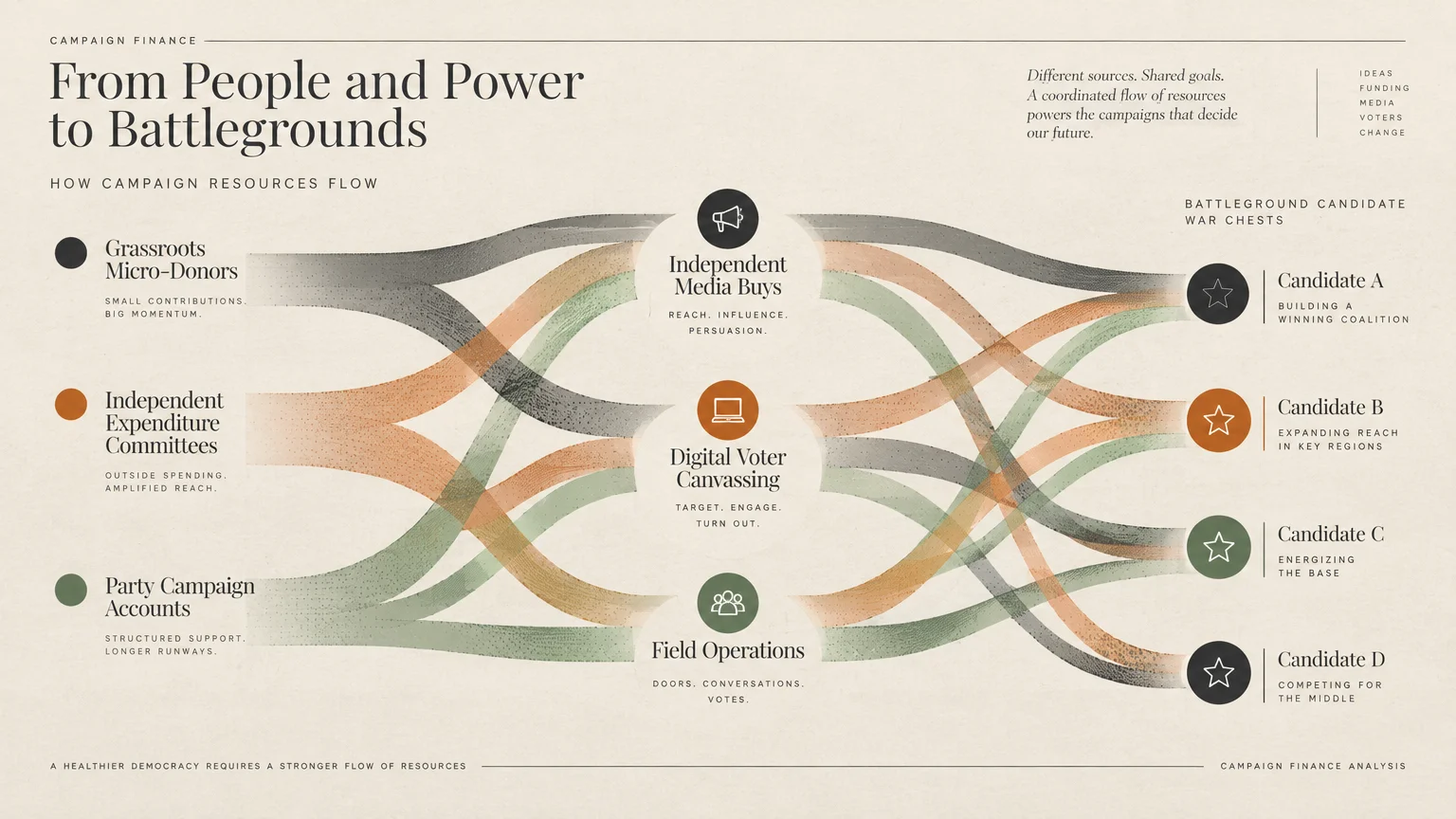
Under the new regulatory environment, national party committees can legally collaborate with candidate campaigns without expenditure ceilings. They can jointly plan advertising buys, share internal polling data, and coordinate grassroots field operations.
This shift consolidates power back into formal party leadership structures, diminishing the relative independence of third-party super PACs. Candidates now exercise direct editorial control over high-dollar ad campaigns funded by national party committees.
For you as a voter, this change translates into more synchronized, disciplined campaign messaging on television and digital feeds. However, it also creates transparency challenges, making it harder to track the original sources of massive funding streams.
Policy Consequences: What Congressional Control Means for You
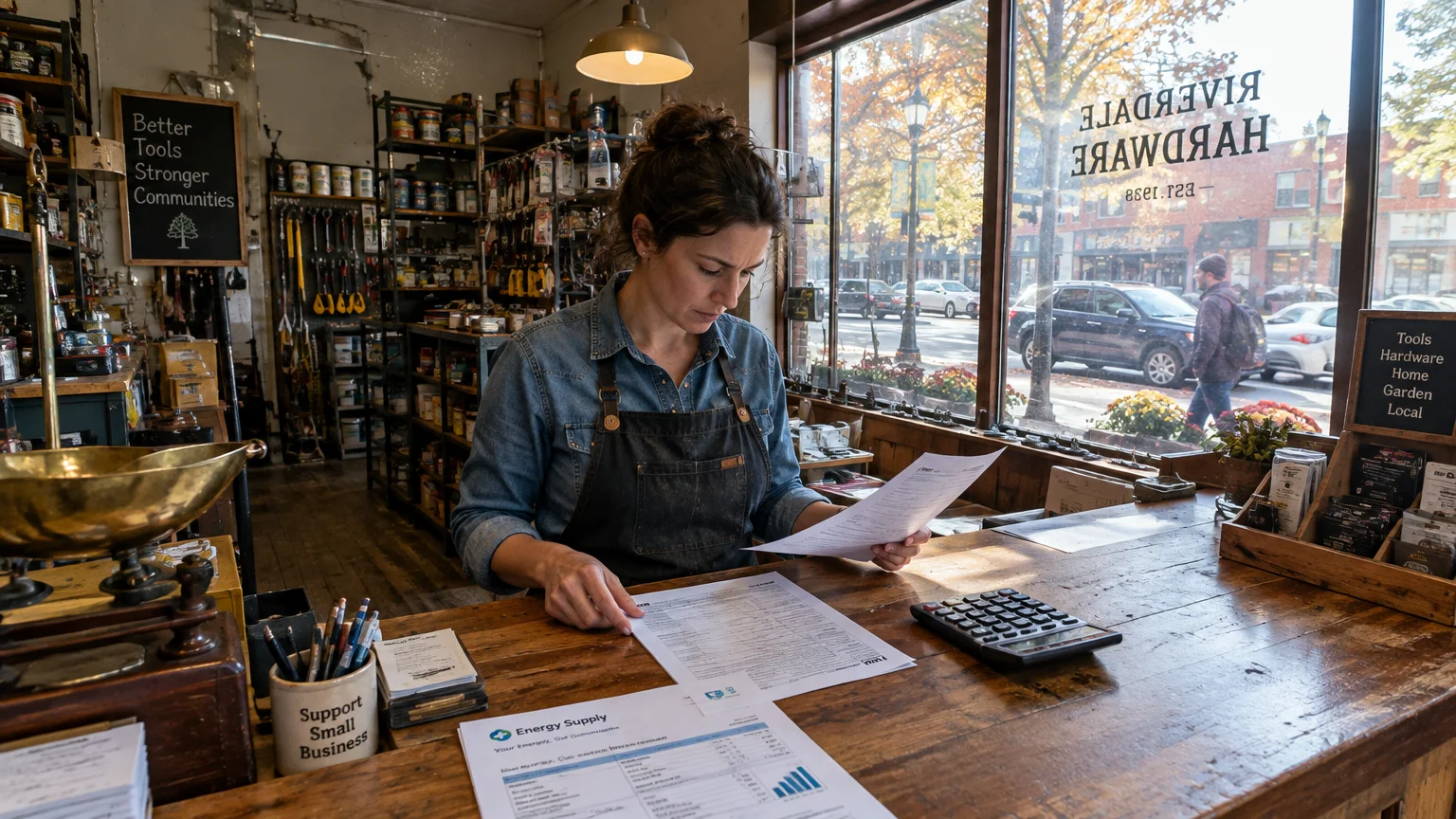
The party that captures majorities in the 120th Congress will hold decisive authority over major economic deadlines. Crucial individual and corporate tax provisions established in prior legislation face statutory expiration dates.
Nonpartisan analysis from the Congressional Budget Office projections shows that extending or repealing these provisions carries multi-trillion-dollar fiscal implications. Your federal income tax brackets, child tax credits, and standard deductions hang in the balance.
A divided government would likely trigger contentious negotiations over the federal debt ceiling and discretionary spending limits. Conversely, a unified government under either party would pave the way for sweeping legislative packages.
Beyond fiscal policy, Senate control dictates the confirmation of federal judges, Cabinet secretaries, and independent regulatory commissioners. If Democrats reclaim the Senate, they can halt or reshape the administration’s judicial appointment pipeline.
In the House, majority status awards full subpoena authority and committee gavels. You will see congressional investigations pivot instantly based on which party directs oversight committees.
Accountability Check: Ethics, Oversight, and Transparency
The unprecedented turnover in Congress creates an urgent need for institutional accountability and public oversight. With nearly 100 freshmen lawmakers arriving in Washington, congressional ethics offices must monitor complex financial portfolios.
You should demand clear transparency regarding personal stock holdings and potential conflicts of interest among incoming members. Bipartisan efforts to restrict congressional stock trading remain pending, and new majorities will decide their fate.
Furthermore, the removal of coordinated spending caps highlights substantial disclosure gaps in digital political advertising. Platforms frequently fail to identify the true organizational backers behind micro-targeted campaign advertisements.
Civic organizations urge voters to cross-reference campaign claims with nonpartisan voting records and official committee transcripts. Holding elected officials accountable begins with identifying the policy commitments they make during competitive campaigns.
When candidates rely heavily on centralized party funds, they may feel greater accountability to national party leaders than to local constituents. You can counteract this pressure by demanding direct engagement through town halls and public debates.
Frequently Asked Questions About the 2026 Midterms
How many seats do Democrats need to win majorities in each chamber?
Democrats need a net gain of 4 seats in the Senate to reach a 51-seat working majority. In the House of Representatives, Democrats also need a net gain of 4 seats to secure the 218 seats required for majority control.
Because Republicans hold narrow majorities in both chambers, a small shift in voter turnout can flip legislative leadership. A handful of competitive districts and states will decide the balance of power.
Why are there so many open gubernatorial races this cycle?
Of the 36 state gubernatorial races on the ballot, 19 are open seats without an incumbent running. This high number is primarily driven by state constitutional term limits, which bar 15 sitting governors from seeking reelection.
These term-limited departures include 9 Republicans and 6 Democrats across the nation. Open-seat contests generally attract wider candidate fields and higher levels of voter interest.
How does the new Supreme Court ruling change political advertising?
The June 2026 Supreme Court decision struck down limits on coordinated spending between political party committees and candidate campaigns. For the first time, parties can directly plan and finance advertising campaigns alongside candidates without spending caps.
This allows candidates to maintain direct message control over millions of dollars in television and digital advertisements. You will see fewer independent attack ads and more candidate-approved party messaging.
When do newly elected members officially take office?
Winners of the federal midterm elections will officially take office on January 3, 2027. On that date, the 120th United States Congress will convene to swear in senators and representatives.
Newly elected governors will take their oaths of office according to their individual state constitutions, typically in early January 2027. Their inaugurations will initiate new state legislative agendas.
Essential Deadlines and How to Prepare Your Ballot
To participate effectively in the midterm elections, you must confirm your voter registration status immediately. Many states close their voter registration portals weeks before Election Day on November 3, 2026.
You can verify your registration status, find your polling place, and review sample ballots through your local county elections office. Knowing your down-ballot candidates ensures you make informed choices on local ballot measures.
If you plan to vote by mail, monitor state deadlines for requesting and returning your absentee ballot. Some states require postmarks on or before Election Day, while others require receipt by the time polls close.
Early in-person voting windows vary widely, with several states opening polling sites as early as mid-October. Taking advantage of early voting helps you avoid long lines and unexpected scheduling conflicts.
The outcomes of these competitive battlegrounds will dictate federal policy through 2028. By reviewing candidate platforms and voting on November 3, 2026, you directly shape the governing direction of the nation.