When you examine the early leaderboard for the 2028 presidential race, the names dominating both major parties—and the official federal filing list—defy conventional political wisdom. Your ballot will soon reflect the most wide-open contest in over a century.
While Vice President JD Vance and former Vice President Kamala Harris top national surveys, unexpected challengers like Secretary of State Marco Rubio, Senator Jon Ossoff, and Donald Trump Jr. are reshaping the early primary math.
Meanwhile, major contenders are delaying formal launches until after the November 2026 midterms; that leaves a former professional basketball player and a television writer among the few officially registered candidates today.
The Historical Vacuum Shaping the 2028 Election
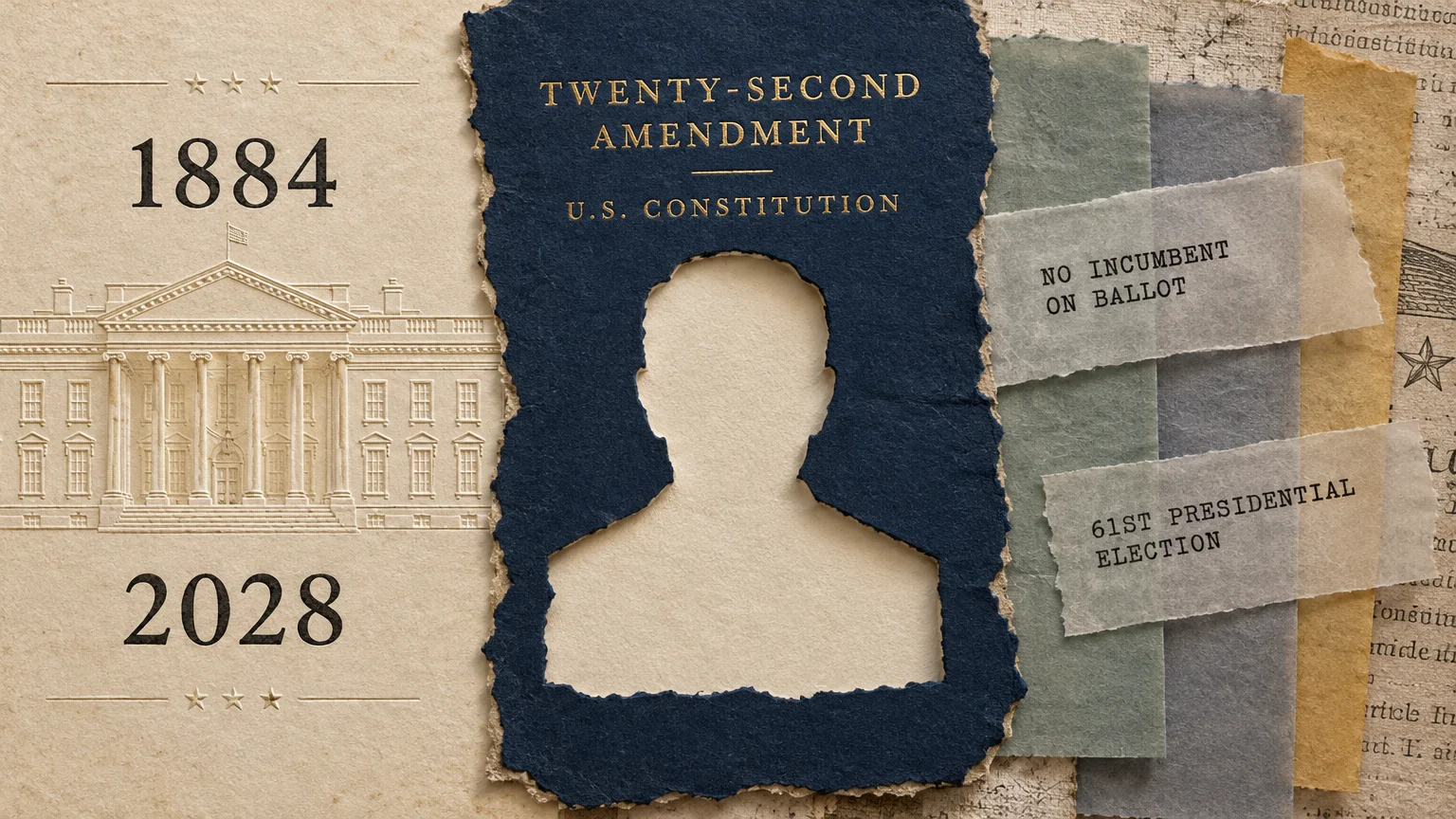
To understand why so many unexpected potential 2028 contenders are testing the waters now, you must examine the rare constitutional vacuum ahead. The 61st presidential election on November 7, 2028, will feature no incumbent president on the ballot.
Under the Twenty-Second Amendment to the U.S. Constitution, incumbent Republican President Donald Trump is legally barred from seeking a third term. Because former President Joe Biden exited the 2024 contest, 2028 marks a historic milestone in American governance.
For the first time since 1884, two consecutive elections will feature no incumbent president, and 2028 marks the first cycle since 2012 without Trump as the GOP nominee. That dual absence removes traditional gatekeepers, letting unexpected contenders gain traction.
Early Filings Versus Shadow Campaigns
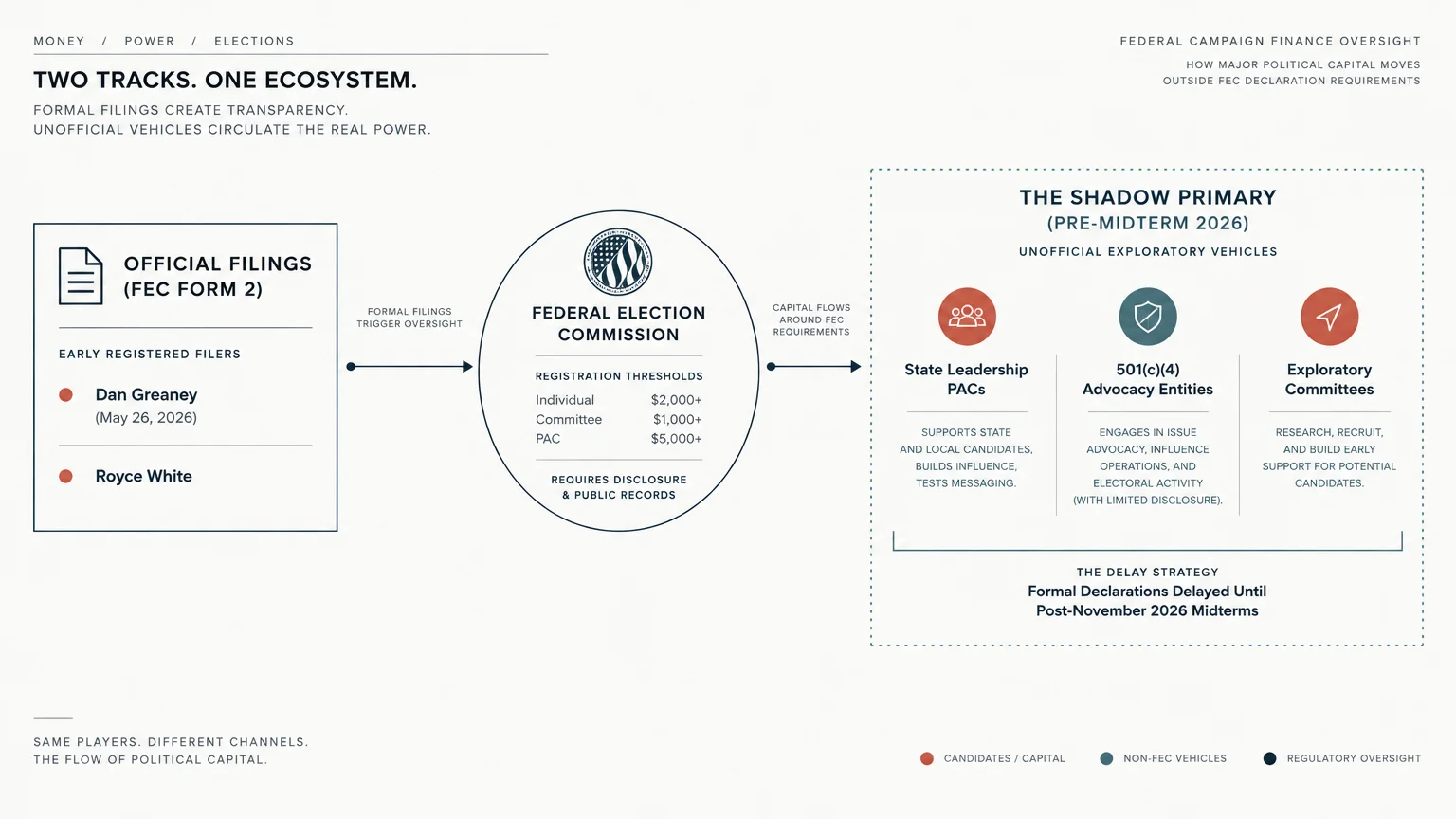
If you search official federal databases right now, you will not find leading poll-toppers listed as formal 2028 presidential candidates. Prominent politicians are deliberately holding off on formal declarations until after the November 2026 midterm elections conclude.
Instead, the early filings feature an unexpected cast of minor and third-party hopefuls who have already submitted paperwork or formed exploratory efforts. Television writer Dan Greaney formally declared as a Republican candidate on May 26, 2026.
Former NBA player and 2024 Minnesota Senate candidate Royce White has also declared a Republican bid, while 2020 Libertarian nominee Jo Jorgensen formed a Libertarian exploratory committee. Even musician Afroman has publicly expressed interest in seeking the 2028 Libertarian presidential nomination.
Breaking Down the Fall 2026 Polling Surprises
While top-tier politicians hold off on formal launches, autumn 2026 polling reveals unexpected challengers outperforming established veterans. A Financial Times and Focaldata poll released October 11–12, 2026, alongside a September 26–28, 2026 Harvard CAPS / Harris Poll, highlights this volatility.
The Republican Succession Battle: Beyond the Heir Apparent
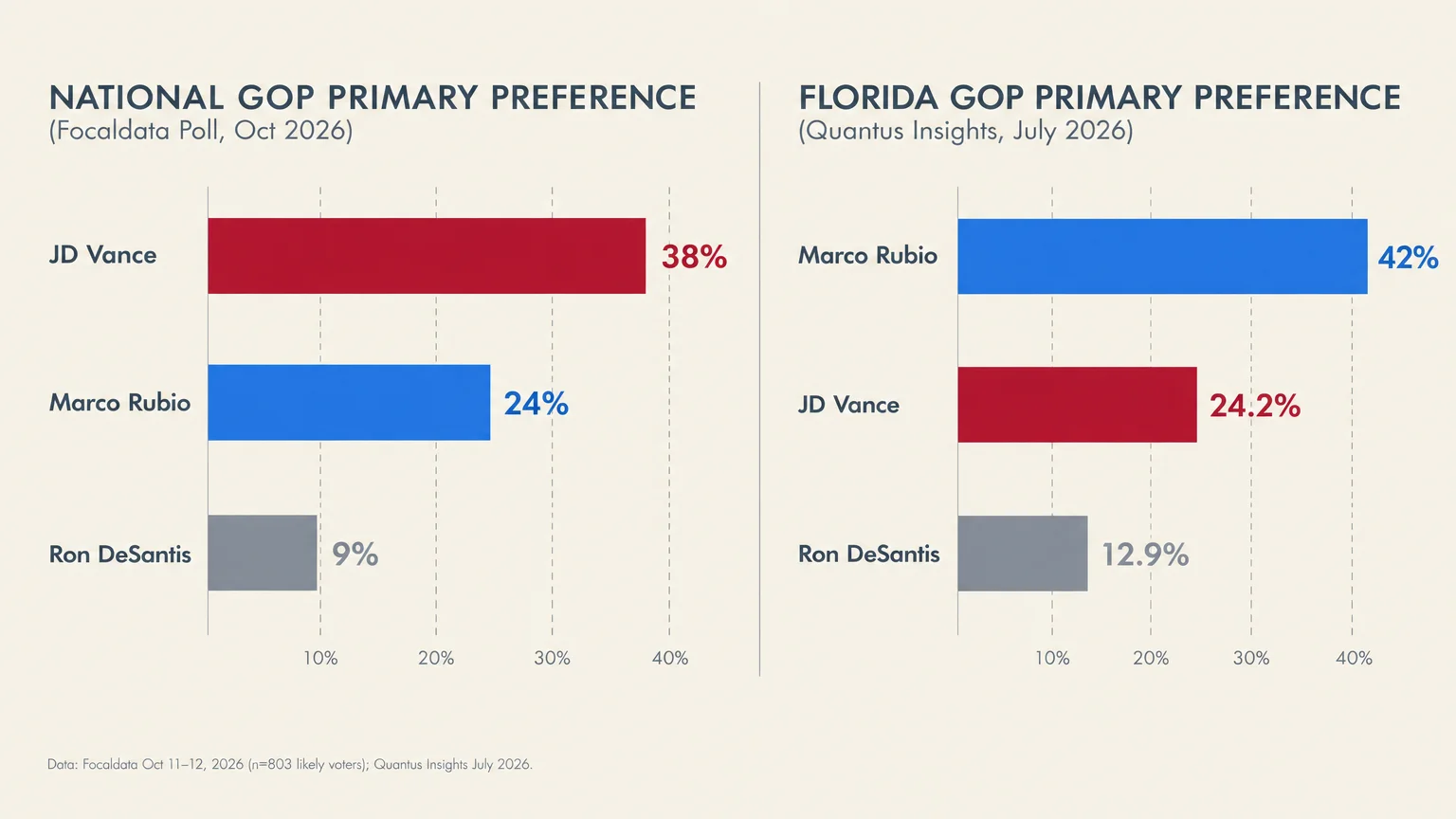
On the Republican side, Vice President JD Vance holds a clear national lead as the primary heir to the administration’s coalition. Vance captures 38 percent among 803 likely GOP voters in the October Focaldata survey and 39 percent in the Harvard Harris poll.
However, Vance does not have an uncontested path to the 270 Electoral College votes required to win. Secretary of State Marco Rubio has emerged as a formidable rival, securing 24 percent in the national Focaldata poll and 17 percent in Harvard Harris.
Rubio’s strength is even sharper in his home state, where a July 27–29, 2026 Quantus Insights Florida GOP poll showed him leading at 42 percent. In that survey, Vance trailed at 24.2 percent while Governor Ron DeSantis took 12.9 percent.
Nationally, DeSantis takes just 9 percent in the October Focaldata poll, illustrating how quickly primary fortunes shift. Meanwhile, Donald Trump Jr. claims second place in the September Harvard Harris survey at 24 percent and registers 7 percent in Focaldata.
Meanwhile, Robert F. Kennedy Jr. takes 9 percent in Harvard Harris and 4 percent in Focaldata, topping Ted Cruz at 2 percent and Vivek Ramaswamy at 1 percent. Nikki Haley earns 5 percent in Harvard Harris, with 12 percent undecided in Focaldata.
The Democratic Fault Lines: Establishment Versus Insurgents
Across the aisle, the Democratic presidential primary exhibits a similar tension between familiar national leaders and unexpected generational challengers. Former Vice President Kamala Harris leads both autumn surveys, pulling 30 percent among 778 likely voters in Focaldata and 38 percent in Harvard Harris.
California Governor Gavin Newsom holds second place, capturing 15 percent in the late September Focaldata survey and 17 percent in the Harvard Harris poll. Yet the combined support for Harris and Newsom leaves roughly half the Democratic electorate looking elsewhere.
Filling that vacuum is Representative Alexandria Ocasio-Cortez, who takes third place with 9 percent in Focaldata and 12 percent in Harvard Harris. Former Transportation Secretary Pete Buttigieg matches her closely, earning 9 percent in Focaldata and 11 percent in Harvard Harris.
Perhaps the biggest surprise in the Democratic data is Georgia Senator Jon Ossoff, who claims 8 percent in Focaldata and 6 percent in Harvard Harris. Ossoff currently edges out high-profile governors whom party insiders often view as top-tier contenders.
By comparison, Pennsylvania Governor Josh Shapiro takes 5 percent in Focaldata and 7 percent in Harvard Harris, while Senator Mark Kelly registers 5 percent. Illinois Governor JB Pritzker captures 5 percent in Harvard Harris, and Kentucky Governor Andy Beshear earns 3 percent in Focaldata.
With 14 percent of Democratic voters undecided in the Focaldata survey, no single wing controls a majority of the primary electorate. As you evaluate these numbers, remember that early name recognition often fades once candidates face scrutiny on the debate stage.
How Primary Calendar Changes Reshape Your Vote
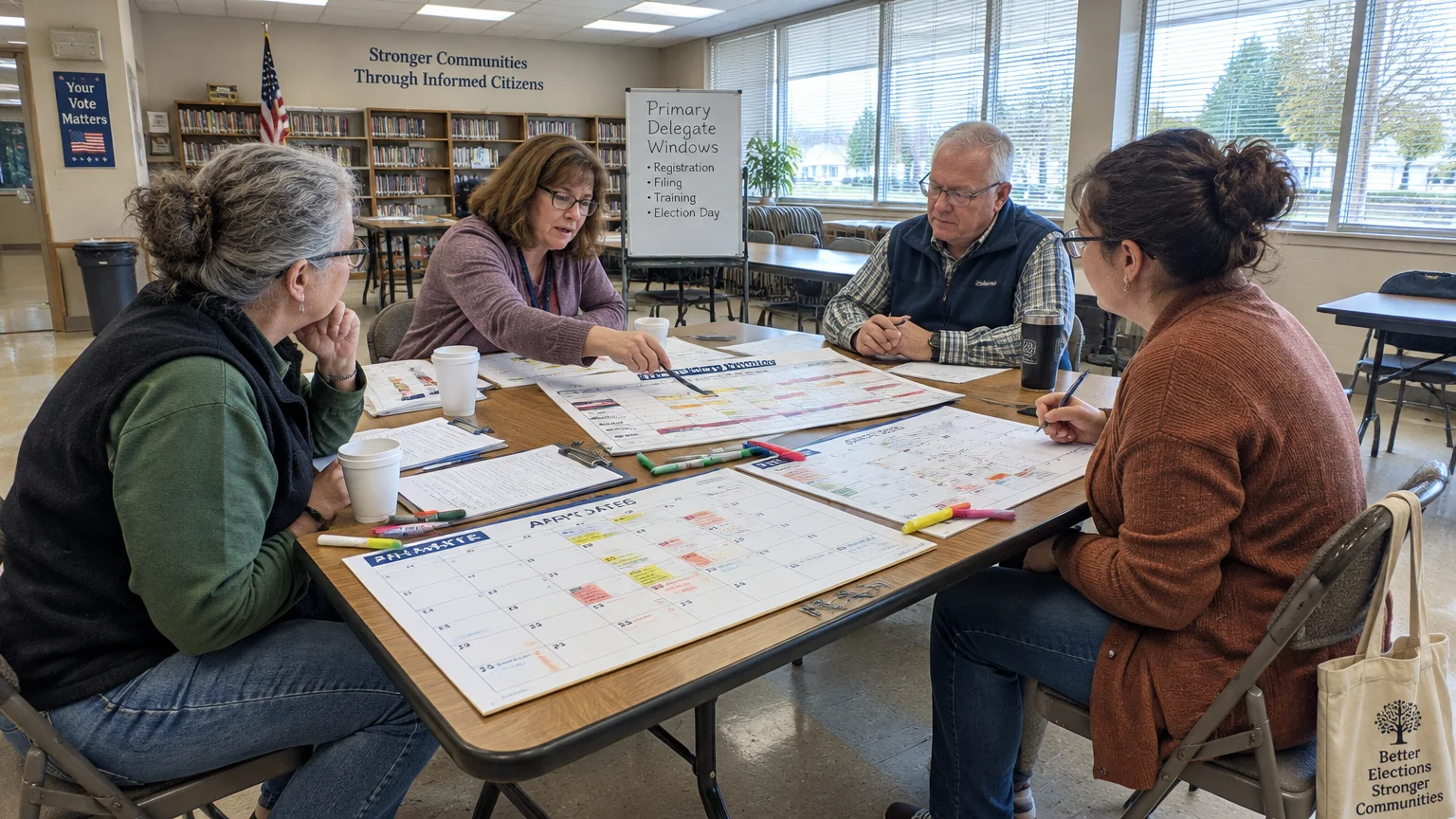
Polling averages tell only half the story because the rules governing where and when you vote heavily influence which candidates survive past February. Both major national party committees approved starkly different 2028 primary schedules during late summer 2026.
On September 10, 2026, the Republican National Committee voted to retain its traditional four early-voting states in their historic order. Republican contenders will compete first in Iowa, followed by New Hampshire, Nevada, and South Carolina, though exact 2028 dates remain unscheduled.
Conversely, the Democratic National Committee approved an overhauled calendar in August 2026 that establishes a six-state early window prior to Super Tuesday on March 7, 2028. Democrats will open their contest in South Carolina on January 22, 2028, followed by Nevada on February 1.
After Nevada, the DNC schedule places New Hampshire on February 8, New Mexico on February 15, Michigan on February 22, and Virginia on February 29. Expanding the February window from four states to six fundamentally alters the financial and demographic math for hopefuls.
The New Hampshire Legal Standoff and Regional Impacts
Adding New Mexico and Virginia to the February window forces Democratic campaigns to fund expensive advertising across diverse regions simultaneously. Placing South Carolina and Nevada first elevates Black and Latino voters, while Michigan and Virginia test support among industrial unions and suburban professionals.
However, scheduling New Hampshire for February 8, 2028, conflicts with New Hampshire Revised Statutes Annotated Section 653:9, which requires holding its primary seven days before any similar contest. Unless Concord lawmakers change that statute, Democrats face another standoff over unsanctioned primaries.
Following the Money: Oversight and the Shadow Primary
While party officials debate primary dates, potential 2028 contenders are navigating federal campaign finance laws to build national infrastructures without triggering formal oversight. Understanding these legal mechanics helps you see how modern presidential campaigns operate in the shadows before election year.
Under the Federal Election Campaign Act, any individual who receives contributions or makes expenditures exceeding $5,000 for a presidential bid becomes a legal candidate. Once a politician crosses that $5,000 threshold, they must register with the Federal Election Commission within 15 days.
Once you register as a federal candidate, strict contribution limits and donor disclosure mandates immediately apply to your campaign. For the 2025–2026 cycle, federal law caps individual donations to candidates at $3,500 per election, or $7,000 total for primary and general contests.
Donors may also give up to $44,300 annually to national party main accounts. Under the Bipartisan Campaign Reform Act of 2002, the FEC adjusts individual limits for inflation in odd-numbered years, so updated caps for the 2027–2028 cycle take effect in early 2027.
By delaying formal registration until 2027, prominent politicians raise money through allied super PACs and use leadership PACs to fund early-state travel. For cabinet officials like Marco Rubio, federal ethics rules also require strictly separating official diplomatic duties from domestic political positioning.
Frequently Asked Questions About the 2028 Presidential Primary
Why have unknown candidates filed with the FEC while major leaders wait?
Lesser-known contenders like Dan Greaney and Royce White file early with the FEC to generate media coverage and build donor lists before heavyweights enter. Major party figures wait until after the November 2026 midterms to delay triggering strict federal campaign contribution caps.
Can President Donald Trump run again in the 2028 election?
No, the Twenty-Second Amendment bars anyone from being elected president more than twice, making Donald Trump constitutionally ineligible in 2028. Every candidate must also be a natural-born U.S. citizen, at least 35 years old, and a U.S. resident for at least 14 years.
How will campaign contribution limits change for 2028 presidential candidates?
In early 2027, the FEC will raise the current $3,500 per-election individual contribution limit for inflation under the Bipartisan Campaign Reform Act. Once contenders cross the $5,000 threshold and register, your donations to their campaigns will follow those updated 2027–2028 caps.
What happens if New Hampshire defies the national party primary calendar again?
If New Hampshire enforces state law to vote before South Carolina’s January 22, 2028 contest, the DNC can strip the state’s convention delegates. For Republicans, no conflict exists because the RNC schedule keeps New Hampshire as the first primary after the Iowa caucuses.
What You Should Watch Next as 2027 Approaches
Your roadmap to the 2028 election begins immediately after the polls close in the November 2026 midterm elections. Within weeks of those results, expect the shadow primary to end as prominent governors, senators, and former officials launch formal exploratory committees.
Watch how the midterm outcomes reshape the polling standing of figures like Gavin Newsom, Josh Shapiro, and Jon Ossoff on the Democratic side. Strong party performances in battleground states will elevate regional governors, while losses could accelerate support for insurgents like Alexandria Ocasio-Cortez.
Within the Republican coalition, monitor whether Donald Trump Jr. or Robert F. Kennedy Jr. take concrete steps to build ground operations in Iowa and New Hampshire. Simultaneously, watch how Marco Rubio balances his State Department duties against JD Vance’s national political operation.
Three institutional deadlines in early 2027 will show you who can seriously compete ahead of the November 7, 2028 general election. First, the FEC will publish its inflation-adjusted contribution limits in early 2027, kicking off the initial wave of formal fundraising bundling.
Second, April 2027 brings first-quarter FEC disclosures, revealing which candidates have genuine grassroots momentum. Third, by tracking those filings alongside state primary law debates in spring 2027, you can evaluate the race toward the January 20, 2029 inauguration without partisan spin.