President Donald Trump fundamentally altered the course of American foreign and domestic policy on Thursday, November 12, 2026. He declared an abrupt end to diplomatic talks with Iran while sidelining Vice President JD Vance from overseas negotiations.
Trump ordered Vance to redirect his focus toward investigating political opponents across Democratic-led states. This tactical shift directly affects your cost of living, energy security, and the constitutional balance between federal power and state sovereignty.
As the administration abandons peace talks, you need to understand how this domestic pivot alters executive power and military strategy.
The Flashpoint: Ending Diplomacy by Executive Fiat
The Truth Social Declaration
On Thursday, November 12, 2026, President Trump posted a decisive foreign policy statement on Truth Social. He formally terminated ongoing peace efforts intended to de-escalate the months-long war with Iran.
Trump stated that the United States no longer requires an agreement with Tehran. He asserted that previous diplomatic windows have permanently closed.
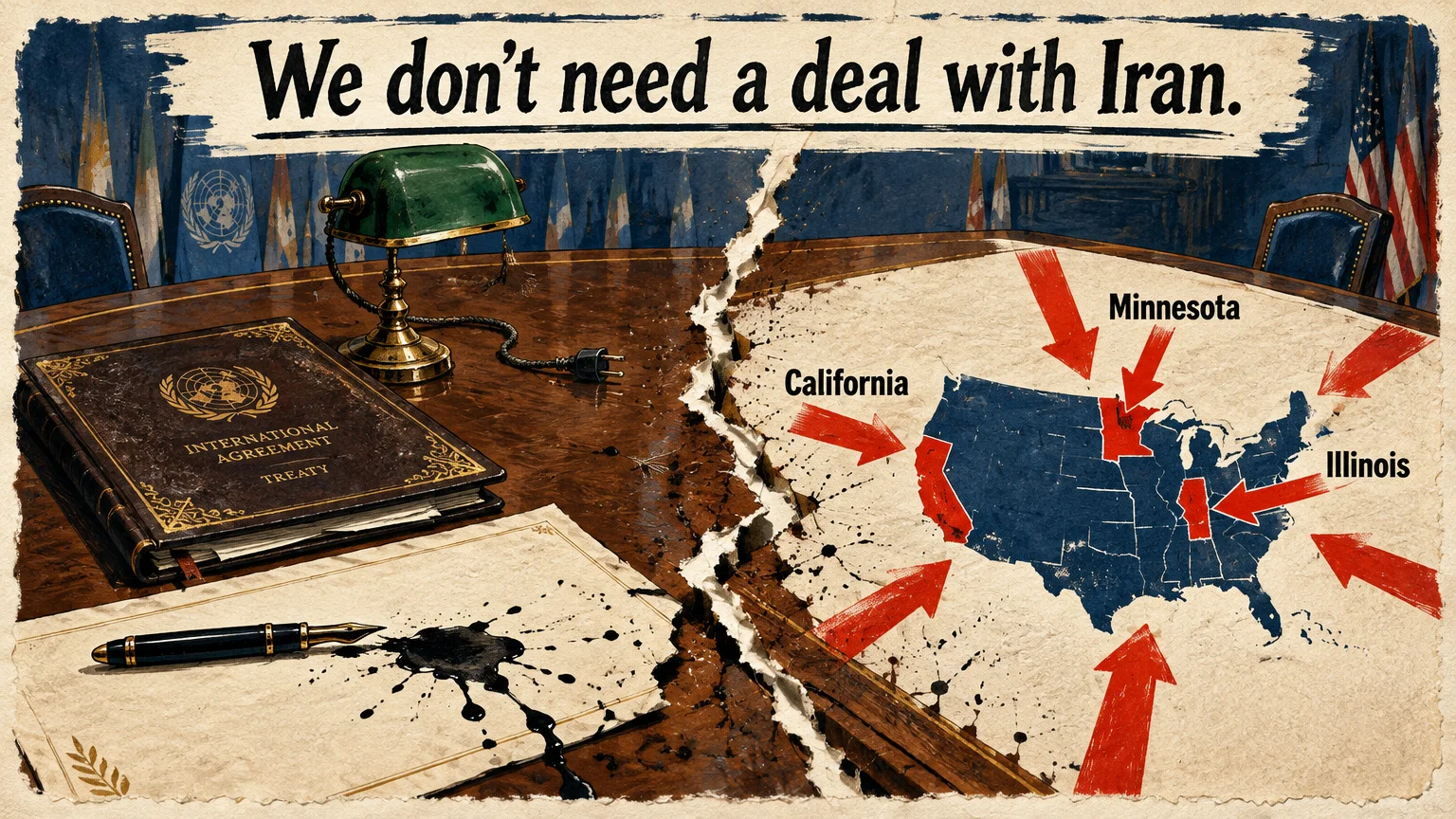
In his announcement, Trump declared: “We don’t need a deal with Iran. Those days have long since passed!”
He pointed to seized financial assets and military leverage to justify the hardline stance. Trump claimed: “We’ve got their money, Hundreds of Billions of Dollars, and we’ve got their Strait!”
The post signaled an immediate rupture with past diplomatic efforts. It also marked an abrupt end to Vice President Vance’s prominent international portfolio.
Trump explicitly instructed Vance to abandon Middle East diplomacy altogether. The directive reassigned the Vice President to an exclusively domestic oversight portfolio.
Trump ordered Vance to focus on “Massive Corruption and Crime taking place in Democrat run Cities and States throughout the U.S.”
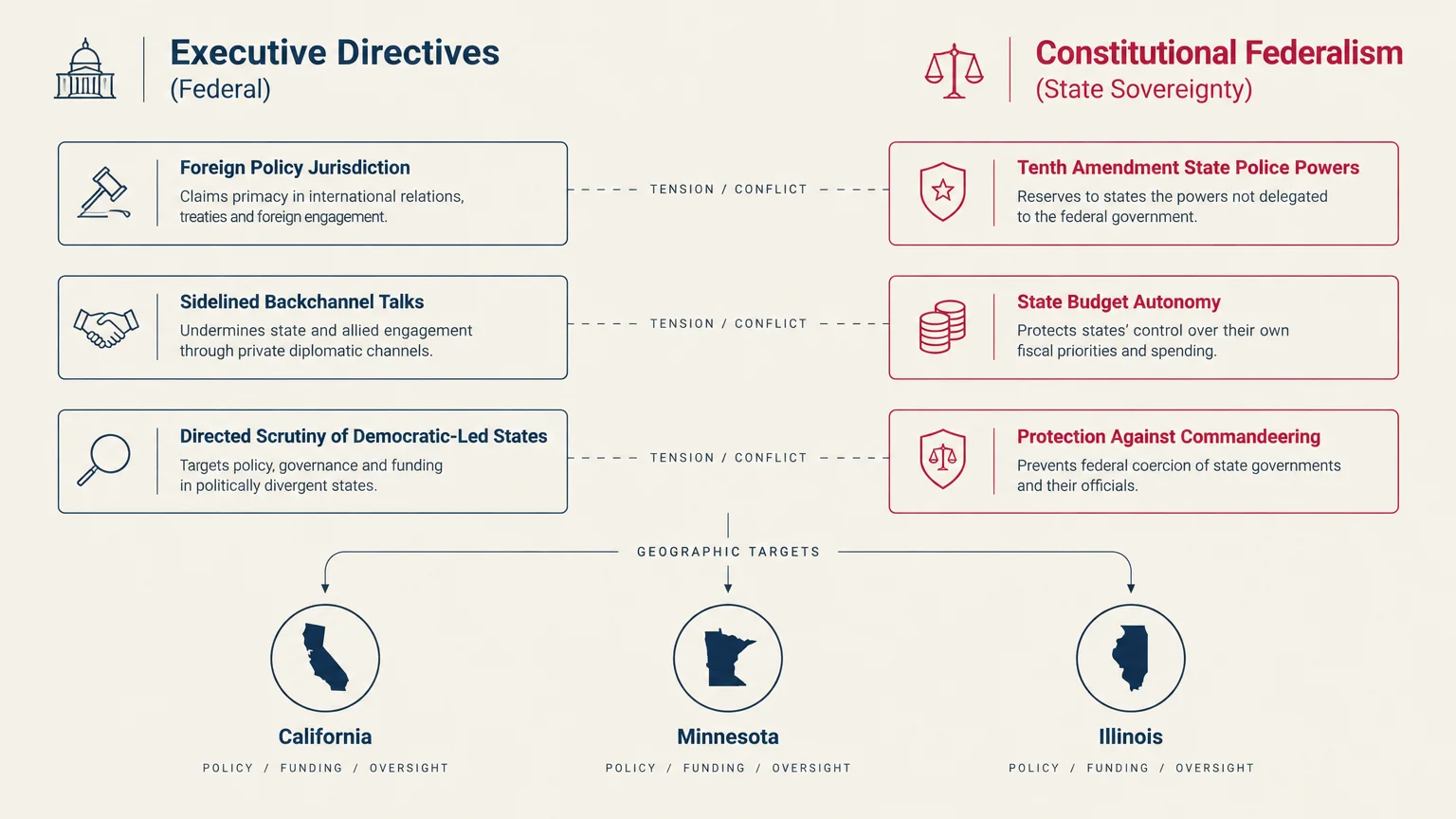
The directive specifically singled out California, Minnesota, and Illinois as primary targets for federal scrutiny. Trump characterized these three jurisdictions as poorly run and corrupt disasters.
Trump also claimed that correcting this activity could balance the federal budget quickly. That fiscal argument creates immediate legal and constitutional friction with state leaders.
The announcement blindsided foreign allies and domestic lawmakers alike. It established a sharp operational break from conventional interagency diplomacy.
Sidelining Vance’s Backchannel Diplomacy
Trump’s public announcement arrived only twenty-four hours after leaks revealed Vance’s confidential diplomatic maneuvers. Reporting published on November 11, 2026, detailed Vance’s efforts to arrange direct talks.
Vance had explored face-to-face negotiations with a hard-line Iranian security official. Intermediaries based in Qatar and Turkey facilitated those preliminary discussions.
Vance aimed to establish a diplomatic framework that would restrict Iran’s nuclear capabilities. His outreach also sought to restore commercial shipping access through the Strait of Hormuz.
Trump’s declaration effectively dismantled Vance’s diplomatic initiative before formal meetings could occur. The public dismissal underscored growing philosophical divisions within the executive branch.
By cutting Vance out of foreign negotiations, Trump reasserted unilateral control over national security strategy. The move left international intermediaries uncertain about Washington’s long-term diplomatic direction.
Foreign ministries in the Middle East and Europe had viewed Vance as an accessible negotiating channel. His sudden removal signals that unilateral economic containment has replaced bilateral compromise.
The decision also limits the Vice President’s ability to influence active military posture. Vance must now navigate a contentious domestic assignment far removed from international diplomacy.
Players and Strategy: An Escalating White House Rift
The Coalition Fractures
The administration’s sudden strategic shift highlights deep fractures within the executive coalition. What began as private policy debates has transformed into an overt struggle over the administration’s trajectory.
Vice President Vance previously positioned himself as an advocate for diplomatic restraint. He argued that sustained foreign entanglements compromise domestic economic prosperity and working-class stability.
In contrast, defense hawks within the administration have pushed for sustained military pressure against Tehran. They insist that punitive measures and naval blockades can force concessions from the Iranian regime.
Trump has balanced between these opposing viewpoints throughout his term. However, his latest statement confirms a decisive shift toward permanent economic containment.
This dynamic isolates populist non-interventionists who supported Vance’s peace outreach. It re-establishes traditional coercion as the administration’s primary foreign policy instrument.
The transition also alters Vance’s standing among grassroots conservative voters. Stripping him of the foreign policy portfolio tests his political independence within the West Wing.
The Midterm Fallout and Public Discord
The timing of Trump’s announcement reflects severe political blowback from the November 3, 2026 midterm elections. The Republican Party suffered historic, sweeping losses across both chambers of Congress.
Voters flipped control of both the Senate and the House of Representatives to Democratic majorities. The electoral defeat drastically narrowed the administration’s legislative pathway.
The morning after the defeat, Vance publicly challenged the White House’s foreign policy narrative. On November 4, 2026, Vance published a post on X that laid blame on the foreign conflict.
Vance wrote: “The reason we lost is the war.” He directly linked the party’s electoral collapse to sustained combat operations overseas.
Vance challenged administration defenders directly in his post. He asked if losing the Senate for the next six years was worth the military campaign.
He concluded with a pointed assertion about voter sentiment: “But everyone knows why we lost.”
The public disagreement marked one of the most explicit breaks between a sitting President and Vice President in modern American history. It signaled deep internal discord regarding executive priorities.
Trump’s reassignment of Vance appears designed to neutralize that internal critique. Relegating the Vice President to state-level crime investigations curtails his public commentary on foreign engagements.
Voter Fatigue and Presidential Polling
Public opinion data confirms that the conflict has taken a severe toll on presidential support. Rising gas prices and food inflation have eroded voter patience across the political spectrum.
On the eve of the military campaign in February 2026, Trump held an approval rating of 42%. Sustained military spending and energy disruption quickly challenged that baseline.
By the November 2026 midterm elections, Trump’s approval rating sank to 37%. Polling demonstrated that economic anxiety and war fatigue drove independent voters toward congressional challengers.
Rather than adjusting military policy in response to voter sentiment, Trump redirected Vance toward domestic political targets. This maneuver attempts to shift public attention away from overseas battlegrounds.
By refocusing on crime in opposition jurisdictions, the administration hopes to rebuild its political base. However, voters remain acutely focused on pocketbook pressures created by global instability.
You can see how national approval figures directly shape administrative tactics. Declining public support often forces executive branch leaders to seek domestic scapegoats.
State Leadership Prepares for Confrontation
Trump’s domestic directive immediately ignited pushback from state leaders named in his announcement. Officials in California, Minnesota, and Illinois denounced the planned federal inquiries as unconstitutional political harassment.
State attorneys general began reviewing executive legal authorities to block unauthorized federal investigations. They pledged to protect municipal autonomy against improper executive interference.
Democratic governors warned that deploying federal resources to scrutinize opposing states violates basic federalism principles. They signaled readiness to challenge any administrative overreach in federal court.
These governors also lead states that represent critical economic engines for the nation. Any attempt to disrupt their governance could trigger significant economic ripple effects.
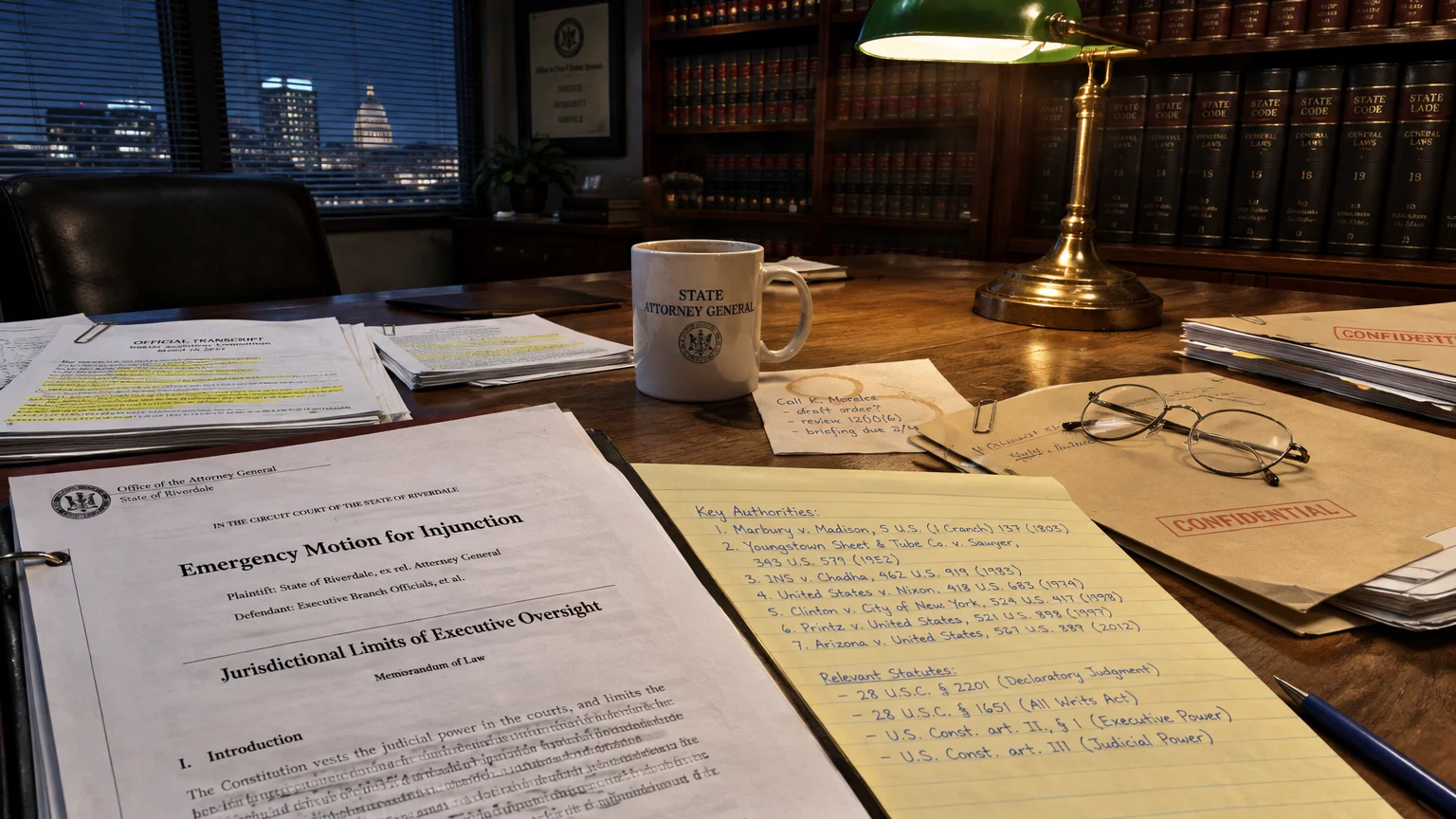
State legal teams are already preparing motions for emergency injunctions. They intend to halt any executive task force that attempts to operate outside standard statutory channels.
This escalation sets up a protracted constitutional struggle between the executive branch and prominent state governments. Your local community could soon experience the jurisdictional fallout.
The Military Reality: Blockades and Escalation in the Gulf
From February Strikes to Operation Iron Gate
To understand the diplomatic collapse, you must examine the eight-month war that preceded it. The conflict began in February 2026 when the United States and Israel launched joint military strikes against Iranian targets.
Tehran responded immediately by firing thousands of ballistic missiles and drones at regional targets. Iranian forces also attacked commercial shipping lanes across the Persian Gulf.
Iran effectively closed access to the Strait of Hormuz during the initial stages of the conflict. That action triggered an immediate worldwide spike in energy and commodity prices.
In response, the Department of Defense established a naval blockade around key Iranian ports. The Pentagon launched Operation Iron Gate to escort commercial maritime traffic through disputed international waters.
Operation Iron Gate has consumed vast naval resources and placed American service members in direct peril. The continuous threat of drone swarms requires constant defensive vigilance.
While the administration claims dominance over the waterway, maritime commerce has not returned to normal levels. Commercial cargo vessels still face extreme operational risks in contested transit lanes.
The Failed Summer Pause
Diplomatic efforts briefly offered hope for a negotiated cease-fire earlier in the year. Vance spearheaded negotiations that produced a memorandum of understanding in June 2026.
The temporary agreement paused active hostilities and permitted limited commercial shipping to resume. However, the truce unraveled within weeks as both sides traded accusations of bad faith.
Trump privately criticized the June agreement as a costly mistake by his negotiating team. He argued that the pause allowed Tehran to collect oil revenues and regroup its military forces.
That internal frustration directly influenced Trump’s decision to terminate Vance’s diplomatic mission in November. Trump concluded that bilateral negotiations provided Tehran with unnecessary leverage.
By abandoning the pause framework, the White House committed to indefinite containment. That choice eliminates off-ramps that could ease regional military tensions.
The collapse of the June pause demonstrates the difficulty of maintaining temporary truces without formal treaties. Without binding verification mechanisms, fragile agreements routinely crumble under political pressure.
Fresh Maritime Attacks and Conflicting Narratives
Despite administration assertions that the Strait is secure, maritime combat operations continue to intensify. On Thursday, November 12, 2026, Iran’s armed forces reported that four oil tankers sustained explosions in contested waters.
Iranian military commanders stated that the vessels ignored warnings while attempting to navigate the waterway. The incident demonstrates that the maritime passage remains volatile for international shipping.
On the same day, Iranian state media reported an enemy military strike on Sirik in Hormozgan province. The escalating strikes show that military friction persists despite presidential claims of containment.
Administration statements have offered conflicting assessments of the ongoing conflict. On Sunday, November 8, Trump told CBS’s 60 Minutes that he was not looking to escalate military hostilities.
On Monday, November 9, Trump told White House reporters that further military action would not be necessary. Yet on November 12, he offered a far more aggressive assessment to Salem Media Group.
Trump told the broadcaster that Iran’s regime is collapsing under the weight of naval blockades. He claimed that the government in Tehran is no longer paying its soldiers.
These shifting statements reveal an executive communications strategy that fluctuates between reassurance and aggression. Such mixed messaging creates profound uncertainty for military planners and international allies.
Policy Breakdown: Executive Powers and Federalism
Vice Presidential Authority and Law Enforcement
Trump’s mandate for Vance raises critical questions regarding constitutional governance and administrative law. The Vice President lacks independent statutory authority to direct federal law enforcement agencies.
Under Article II of the Constitution, executive authority flows through the President to Senate-confirmed cabinet officials. Criminal investigations fall under the statutory jurisdiction of the Department of Justice.
Vance cannot issue federal subpoenas, impanel grand juries, or direct FBI agents without formal departmental coordination. Any attempt to run ad hoc investigations from the Vice President’s office faces severe legal hurdles.
The Vice President can chair advisory commissions and coordinate policy task forces. However, advisory bodies cannot exercise prosecutorial powers or initiate criminal indictments against state officials.
If the administration circumvents established investigative protocols, targeted states will immediately seek injunctive relief in federal district courts. Judicial precedent places strict limits on politically directed law enforcement inquiries.
You must distinguish between public rhetoric and actual statutory power. Executive announcements often promise actions that existing federal laws simply do not permit.
Decoding the Budget Balancing Claim
In his Truth Social directive, Trump linked Vance’s domestic assignment directly to the national budget. He claimed that our budget could be quickly balanced by eliminating corruption in California, Minnesota, and Illinois.
That fiscal assertion contradicts baseline budgetary data published on Congress.gov. Federal grant allocations to individual states represent a modest portion of total annual outlays.
The vast majority of federal spending supports mandatory entitlement programs, national defense, and interest on the public debt. No volume of state-level criminal investigations can mathematically eliminate the federal deficit.
Furthermore, the executive branch cannot unilaterally impound or redirect funds appropriated by Congress. The Impoundment Control Act prevents the President from withholding state grants based on policy disagreements.
Congress retains the exclusive constitutional power of the purse under Article I. If lawmakers allocate funding for state infrastructure or social programs, the White House must release those funds.
Claiming that state-level audits can balance the federal budget misrepresents basic public finance. You should view such claims as political messaging rather than viable fiscal policy.
The Tenth Amendment and Anti-Commandeering Rules
The administration’s domestic mandate directly tests constitutional limits on federalism. The Tenth Amendment reserves powers not delegated to the federal government to the states and the people.
The Supreme Court has repeatedly affirmed the anti-commandeering doctrine in landmark rulings. Federal officials cannot coerce state agencies or force municipal police departments to execute federal directives.
Legal research from the Congressional Research Service notes that federal grant conditions must adhere to strict constitutional standards. Conditions must relate directly to the underlying federal program.
The federal government cannot weaponize grant funding to penalize states over unrelated criminal justice disputes. Any such punitive measures violate established Spending Clause jurisprudence.
If Vance attempts to withhold allocated federal grants from California, Minnesota, or Illinois, courts will likely block the move. Judges have routinely invalidated arbitrary financial penalties imposed on noncompliant states.
These legal protections preserve state autonomy against executive overreach. They ensure that municipal leaders can govern without fear of politically motivated federal retaliation.
Constituent Impact: Pocketbooks, Energy, and Public Services
Energy Shocks and Daily Household Expenses
You directly absorb the economic shock waves generated by ongoing military operations in the Persian Gulf. Disrupted shipping lanes and commercial tanker attacks place immediate upward pressure on global energy benchmarks.
When crude oil prices climb, you pay higher prices at the gasoline pump within days. Elevated fuel costs also increase freight shipping expenses for every product you purchase.
Data from the U.S. Energy Information Administration illustrates how regional conflicts destabilize consumer pricing. Supply chain disruptions create cascading price increases across retail groceries and home heating utilities.
Continued combat operations guarantee sustained volatility for your household budget. Without a diplomatic resolution, energy markets will price in the ongoing threat of maritime disruption.
Independent freight carriers and commuter families bear the heaviest proportional burden during energy spikes. As transportation costs rise, household budgets must absorb reduced discretionary spending.
You should prepare for prolonged utility and grocery inflation as long as maritime blockades continue. The economic consequences of foreign combat reach far beyond the actual conflict zone.
Community Services in Targeted States
If the administration freezes or audits federal disbursements, residents in targeted states will feel the impact first. Funding for regional infrastructure, public transit, and Medicaid delivery could face administrative delays.
Municipal leaders in Chicago, Los Angeles, and Minneapolis rely on predictable federal grant partnerships to maintain basic services. Political disputes between Washington and state capitals threaten those vital local programs.
State officials would have to redirect tax revenues or draw down emergency reserves to cover federal funding lapses. That fiscal strain could force local governments to postpone infrastructure repairs or adjust municipal services.
Schools and community healthcare clinics that depend on federal assistance could face cash-flow disruptions. Even temporary administrative holds create severe planning challenges for municipal budget directors.
These funding battles demonstrate how federal power maneuvers directly affect your daily civic services and local tax burdens. Administrative standoffs produce tangible consequences far beyond the Beltway.
You should follow local city council and state legislative proceedings to track how officials respond to federal scrutiny. State leaders may seek protective legal remedies to safeguard essential municipal programs.
Strains on Service Members and Defense Resources
The sustained naval deployment in the Persian Gulf places severe demands on American military personnel. Crews assigned to Operation Iron Gate face round-the-clock combat readiness in hostile international waters.
Naval destroyers and escort ships expend advanced munitions to intercept incoming drones and cruise missiles. Replenishing those stockpiles costs billions of taxpayer dollars and depletes national defense inventories.
Military families endure extended deployment schedules and prolonged uncertainty as the conflict drags on. Sidelining diplomatic channels removes any clear timeline for bringing deployed service members home safely.
As defense outlays climb, Congress must balance international commitments against domestic funding priorities. That debate will dominate congressional committee hearings over the coming fiscal cycle.
The strain on naval readiness also limits defense posture in other critical global theaters. Sustained operations in the Middle East pull maritime assets away from routine training and modernization.
You contribute directly to this defense expenditure through your tax dollars. The ongoing naval blockade represents an open-ended financial commitment with no definitive conclusion.
Oversight, Ethics, and Emerging Legal Battles
Divided Government and Congressional Investigations
The outcome of the November 3 midterm elections fundamentally alters the oversight environment in Washington. Incoming Democratic committee chairs will wield broad subpoena authority over executive agencies beginning in January.
Lawmakers plan to demand comprehensive testimony regarding military decision-making and diplomatic negotiations. Internal communications regarding Vance’s aborted peace outreach will face intense legislative scrutiny.
Lawmakers also intend to investigate the domestic targeting of California, Minnesota, and Illinois. House and Senate committees will examine whether executive agencies acted to retaliate against political rivals.
Cabinet officials and White House aides should prepare for exhaustive oversight hearings. Executive privilege claims will face vigorous legal challenges from newly empowered committee leaders.
Incoming chairs can review official White House press statements alongside classified intelligence briefings to identify policy contradictions. Divided government ensures that executive decisions no longer escape rigorous legislative audit.
You will soon see congressional committees operate as aggressive watchdogs rather than cooperative partners. This institutional friction will test the limits of executive branch secrecy.
The War Powers Resolution and Military Authorization
The sustained military campaign against Iran continues without a specific congressional declaration of war. That absence creates ongoing friction under the War Powers Resolution of 1973.
Lawmakers from both parties have expressed alarm over unchecked executive war-making authorities. Bipartisan coalitions have drafted resolutions to compel the withdrawal of armed forces from unapproved combat operations.
Incoming congressional leadership will likely bring war powers legislation to the floor early in the legislative session. Such measures will force every lawmaker to vote on record regarding military operations.
While the President would likely veto restrictions on military operations, congressional debates will influence public opinion. Legislative pushback can constrain executive military actions through targeted appropriations riders.
Constitutional scholars continue to emphasize that Congress holds the sole power to declare war. The ongoing conflict highlights the widening gap between constitutional design and modern executive action.
You should track how your representatives vote on upcoming war powers resolutions. Those legislative roll calls reveal where elected officials stand on indefinite foreign combat.
Watchdog Scrutiny on Political Retaliation
Government accountability groups have raised urgent alarms over directing federal law enforcement against specific states. Nonpartisan watchdogs argue that using the Vice President to target opposition jurisdictions violates federal ethics norms.
Legal organizations are preparing freedom of information requests to track coordination between the White House and Justice Department. Watchdogs want to ensure that prosecutorial discretion remains free from executive interference.
Inspectors general across federal agencies will also monitor whether grant reviews follow objective statutory criteria. Agency watchdogs serve as critical safeguards against the weaponization of federal administrative authority.
Any attempt to direct federal audits based on partisan affiliation will trigger administrative complaints and civil litigation. Public servants who resist unlawful directives may invoke federal whistleblower protections.
Ethics groups emphasize that federal law enforcement must maintain strict independence from partisan politics. Breaching that norm undermines public trust in the administration of justice.
You can monitor watchdog filings to see how civil society defends institutional guardrails. Legal advocacy organizations play an essential role in documenting executive overreach.
Frequently Asked Questions
Why did President Trump cancel diplomatic negotiations with Iran?
Trump halted negotiations because he believes maximum economic and military pressure will force total regime compliance. He argued that the United States already holds dominant leverage through naval blockades and frozen funds.
Trump also viewed the previous June 2026 pause as a costly mistake that allowed Iranian forces to regroup. By terminating talks, Trump abandoned bilateral diplomacy in favor of coercive containment.
The shift also serves domestic political purposes following significant midterm losses. Taking a hardline stance allows the administration to project strength while shifting public debate away from peace negotiations.
Can Vice President Vance unilaterally prosecute state-level corruption?
No, the Vice President holds no statutory law enforcement or prosecutorial powers under the Constitution. Federal criminal investigations must be conducted independently by the Department of Justice through established legal processes.
Any attempt by Vance to initiate criminal proceedings or impound state funds would face immediate legal challenges. Federal courts have consistently rejected unauthorized executive intrusion into state affairs.
Vance can convene advisory commissions, but he cannot direct federal prosecutors or grand juries. His role in state oversight remains purely political rather than legal.
How does the ongoing standoff in the Strait of Hormuz affect gas prices?
The Strait of Hormuz serves as the world’s most vital maritime chokepoint for crude oil shipments. Commercial tanker attacks and military blockades restrict global oil supply, forcing fuel prices higher.
When global crude benchmarks surge, retail gasoline prices in the United States climb rapidly. You will continue to face elevated pump prices as long as maritime navigation remains contested.
Higher fuel expenses also increase transportation costs for retail goods and agricultural supplies. These elevated costs contribute directly to persistent consumer inflation across the country.
What actions will the newly elected Congress take regarding the war?
The incoming Democratic-controlled House and Senate plan to assert aggressive oversight over executive military decisions. Lawmakers will hold public hearings on the war’s strategic objectives and fiscal costs.
Congress is also expected to debate War Powers resolutions and introduce legislative riders to restrict military appropriations. These actions will intensify institutional friction between Capitol Hill and the White House.
Lawmakers will also examine the legality of directing federal resources against opposition-led states. Divided government will significantly restrict the administration’s ability to act without legislative scrutiny.
Outlook: Critical Benchmarks to Watch
Commercial Navigation and Tanker Security
You should monitor tanker traffic through the Strait of Hormuz over the coming weeks. Continued drone and missile strikes on commercial shipping will signal that Operation Iron Gate faces persistent operational challenges.
Rising insurance premiums for commercial vessels will provide an early warning indicator for future fuel spikes. If maritime transport stalls, global energy markets will experience renewed supply crunches.
Pay close attention to maritime industry reports and international naval advisories. The safety of commercial shipping corridors determines whether your energy costs stabilize or spike again.
State Legal Filings Against Federal Inquiries
Watch for legal filings from California, Minnesota, and Illinois state attorneys general. These officials will file proactive lawsuits if the White House attempts to withhold federal grant distributions.
Court rulings on preliminary injunctions will establish the legal boundaries of Vance’s domestic assignment. Federal judges will determine whether executive mandates infringe upon Tenth Amendment protections.
These legal decisions will establish important precedents regarding the limits of executive power over states. The resulting rulings will shape intergovernmental relations for years to come.
The Convening of the New Congress
The transition of power on Capitol Hill in January represents the most significant political pivot ahead. Democratic majorities will end unified executive control and initiate aggressive investigations into foreign policy decisions.
The administration must soon defend its dual strategies of foreign escalation and domestic confrontation before skeptical legislative panels. How the White House navigates that divided government will shape American governance.
You can follow upcoming committee appointments and hearing schedules to anticipate key policy battles. The balance of power in Washington is entering a volatile and contentious new phase.