You likely do not notice the complex web of federal legislation shaping your morning commute, your grocery shopping, and your digital privacy. When elected officials draft mundane regulatory frameworks, they inadvertently rewire the daily routines of millions of Americans for generations. While headline-grabbing partisan fights dominate the evening news, the most profound societal transformations stem from decades-old bills passed with little fanfare. To understand how modern American life actually functions, you must trace the long tail of congressional action back to its source. Examining these eight pivotal laws reveals how bureaucratic mandates dictate everything from the size of your airplane seat to the ingredients in your vitamins. Recognizing these legislative turning points prepares you for tomorrow.

Background and Timeline of Legislative Creep
Major shifts in civilian life rarely happen overnight; rather, they seep into the culture through years of bureaucratic rulemaking and judicial interpretations. Congress generally passes legislation to solve a specific, immediate crisis. However, the statutory language embedded in those bills often carries unforeseen powers that federal agencies later utilize to regulate entirely new industries. During the post-war boom of the 1950s, legislation focused heavily on physical infrastructure and national security. By the 1970s, the legislative pendulum swung toward consumer rights and economic deregulation, fundamentally altering how corporations interacted with the public. Moving into the 1990s and 2000s, technology and healthcare took center stage, with lawmakers struggling to predict how their policy frameworks would survive in a digitized economy. Understanding this timeline illuminates how a law passed to fix a momentary political problem can snowball into a permanent restructuring of your daily existence.

Core Analysis of Eight Transformative Policies
The following eight laws were debated under specific historical contexts but outgrew their original parameters. By examining their mechanics, you can see exactly how abstract policy translates into the concrete realities of your life.

The Federal-Aid Highway Act of 1956
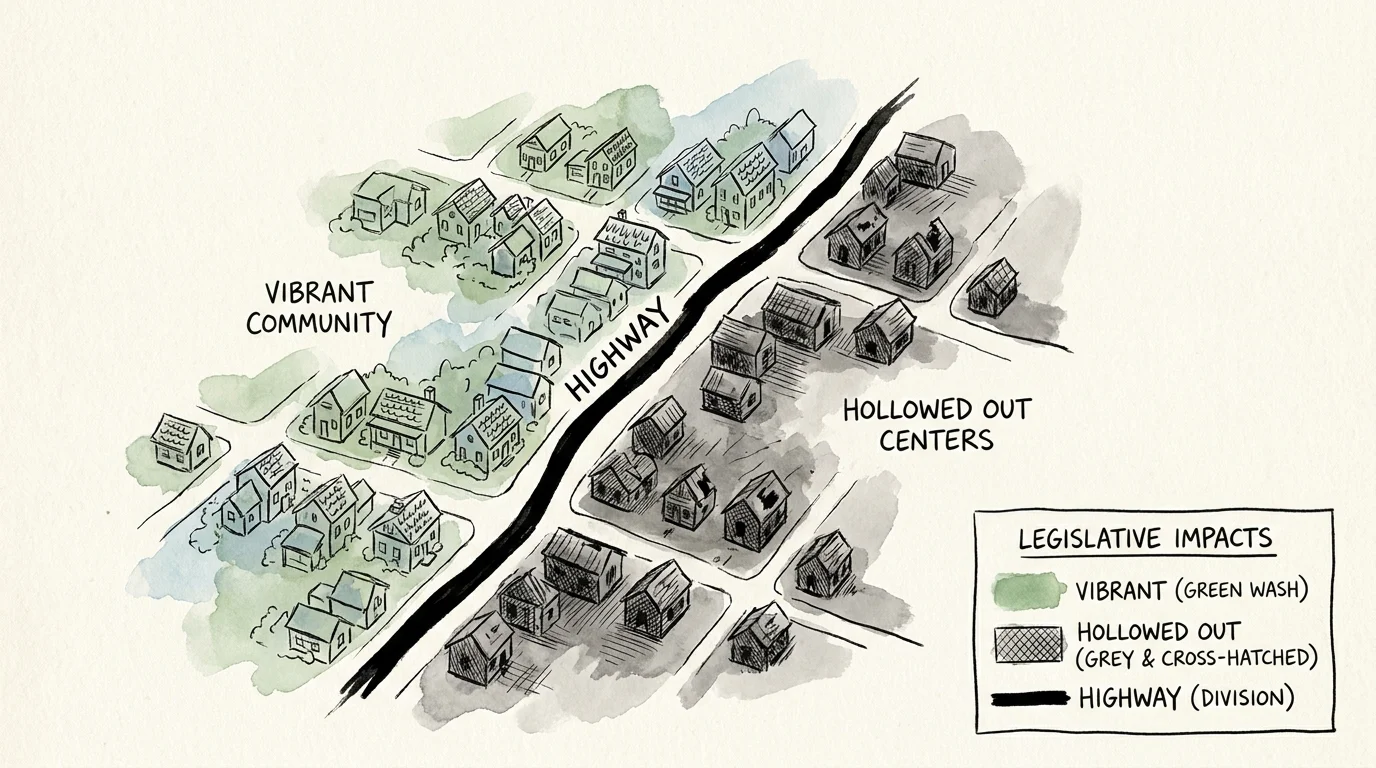
President Dwight D. Eisenhower championed the interstate highway system primarily as a national defense measure, designing a road network capable of moving military convoys rapidly across the continent. Instead, this massive public works initiative completely restructured American residential life. By subsidizing thousands of miles of high-speed pavement, the federal government made long-distance commuting economically viable. This ignited an unprecedented exodus to the suburbs, hollowed out urban commercial centers, and catalyzed the decline of local public transit networks. Your modern dependence on the automobile, the rise of the fast-food drive-through, and the sprawling layout of your local municipality all trace their origins back to this single piece of Cold War-era legislation.
The Fair Credit Reporting Act of 1970
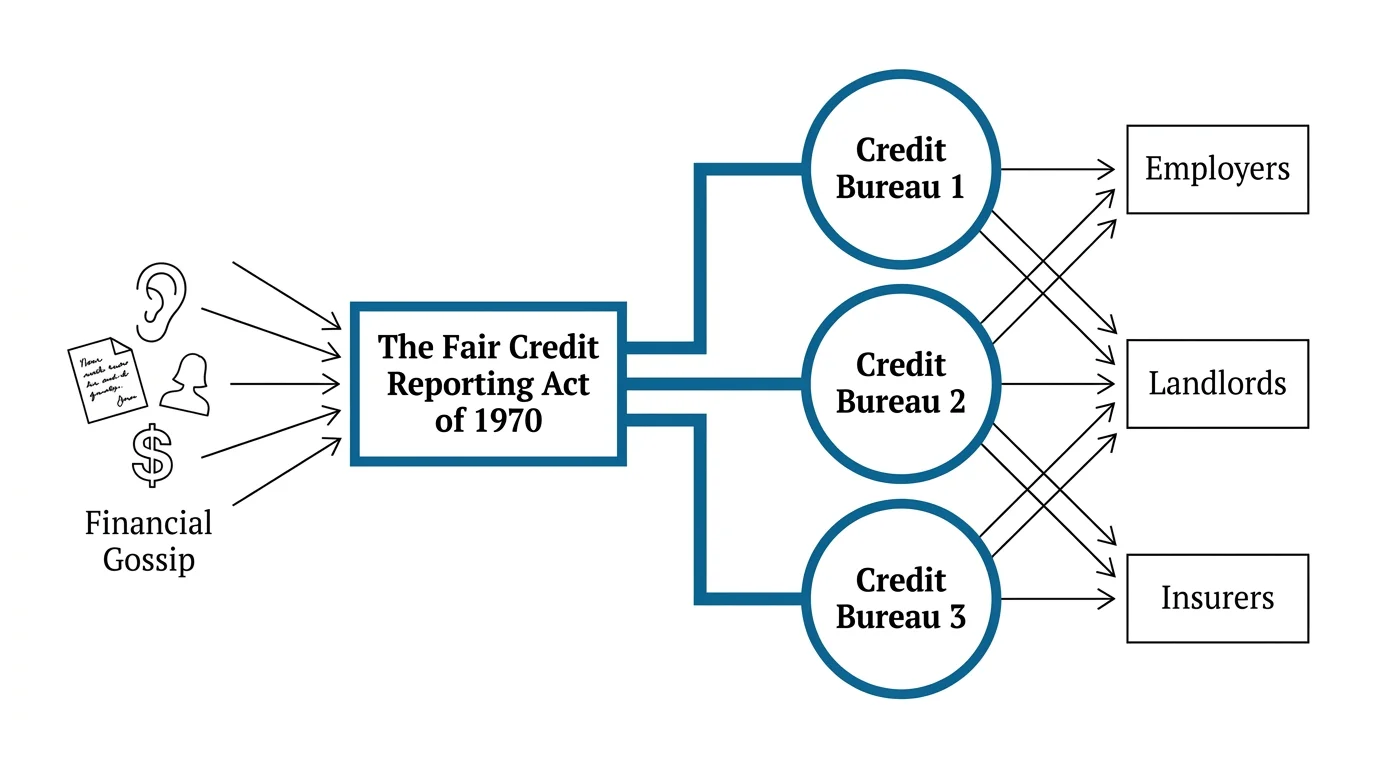
Before 1970, local credit bureaus operated in the shadows, collecting behavioral and financial gossip about consumers with virtually no oversight. Congress passed the Fair Credit Reporting Act to give citizens the right to view and dispute their financial files. While intended as a consumer protection measure, standardizing this data inadvertently established the modern credit scoring industry. By creating a unified, legal framework for sharing consumer data, the law allowed the three major credit bureaus to consolidate power. Today, your standardized credit history dictates far more than your ability to secure a mortgage; it acts as a universal behavioral score that employers use for hiring, landlords use for housing, and insurers use to set your monthly premiums.

Title IX of the Education Amendments of 1972
Contained within a broader education funding bill, Title IX features only 37 words prohibiting sex-based discrimination in any federally funded education program. At the time of its passage, few lawmakers grasped its impending cultural impact. While widely celebrated for revolutionizing women’s collegiate athletics, the law entirely reshaped the administrative structure of American higher education. Over the past five decades, federal agencies interpreted those 37 words to mandate comprehensive campus frameworks for handling sexual harassment and assault. Furthermore, Title IX shifted how universities allocate billions of dollars in academic grants, fundamentally changing the demographic makeup of medical, legal, and STEM programs across the country.

The Airline Deregulation Act of 1978
For decades, the Civil Aeronautics Board functioned as a strict federal cartel, dictating where airlines could fly and exactly what they could charge. When Congress dismantled this agency through the Airline Deregulation Act, lawmakers promised fierce competition and lower prices. They delivered on that promise, democratizing air travel for the middle class. However, this free-market shift destroyed the direct-flight model in favor of the hyper-efficient hub-and-spoke system. If you routinely experience the frustration of connecting through Atlanta or Dallas to reach a neighboring state, you are participating in the direct economic fallout of this law. Deregulation also launched the era of unbundled fares, shrinking seat sizes, and luggage fees as airlines relentlessly optimized their margins to survive in an unprotected market.

The Dietary Supplement Health and Education Act of 1994 (DSHEA)
If you purchase a daily multivitamin or a workout powder, you navigate a marketplace created entirely by DSHEA. Following intense lobbying from the nutritional supplement industry, Congress exempted dietary supplements from the rigorous pre-market safety and efficacy testing required for pharmaceutical drugs. Under this framework, the Food and Drug Administration can only pull a supplement from the market after it proves the product is dangerous. This regulatory inversion birthed a multi-billion-dollar wellness industry virtually overnight. The ubiquitous label stating that a product has not been evaluated by the FDA to diagnose, treat, cure, or prevent any disease is the direct legal shield provided by this legislation, leaving you entirely responsible for evaluating the safety of the supplements you ingest.

The Telecommunications Act of 1996
Billed as an update to outdated radio and telephone monopolies, the Telecommunications Act included a brief provision known as Section 230. This clause declared that internet service providers and website hosts could not be held legally liable for the content posted by their users. By removing the threat of endless defamation lawsuits, this single provision laid the legal foundation for social media, user reviews, and the modern internet economy. Simultaneously, the broader act eliminated historic caps on media ownership. If you notice that your local radio stations all broadcast identical syndicated programming and are owned by a single massive conglomerate, you are witnessing the consolidation explicitly legalized by this 1996 overhaul.

The REAL ID Act of 2005
Buried within an emergency supplemental appropriations bill for the war on terror, the REAL ID Act established minimum security standards for state-issued driver’s licenses. Prior to 2005, the design and issuance of an identification card remained a strictly local affair. By leveraging the power of federal facilities and commercial aviation, Congress effectively strong-armed local governments into compliance. You experience the friction of this law whenever you must drag your birth certificate, social security card, and utility bills down to the local DMV to secure a gold star on your license. This legislation transformed the humble state driving permit into a de facto national identification card.
The Patient Protection and Affordable Care Act of 2010
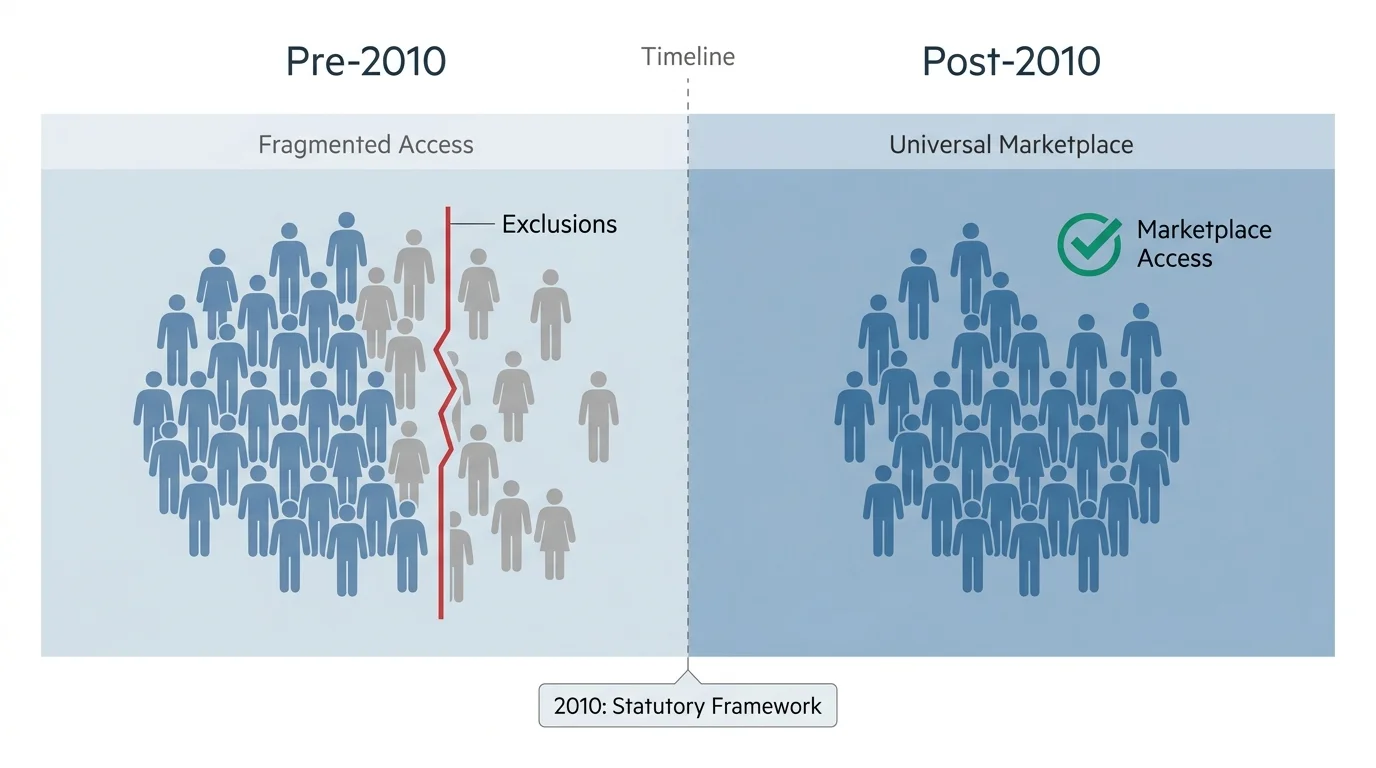
While the partisan battles over the Affordable Care Act focused on insurance mandates and marketplace subsidies, the sprawling legislation carried dozens of hidden provisions that permanently altered daily commercial life. Section 4205 mandated that restaurant chains with 20 or more locations post calorie counts directly on their menus, forever changing how you order your morning coffee. Furthermore, the law required large employers to provide dedicated, private lactation rooms for nursing mothers, prompting massive architectural redesigns in corporate offices across the country. Additionally, the mandate that employers offer health coverage to employees working more than 30 hours a week aggressively accelerated the gig economy, as retail and food service corporations systematically slashed worker hours to remain under the federal threshold.
Impact Lens on Communities and the Economy
When you view these legislative actions through an economic and community lens, the scale of their impact becomes undeniable. Deregulation policies, such as the Airline Deregulation Act and the Telecommunications Act, successfully drove down upfront consumer costs but simultaneously hollowed out local economies by consolidating corporate power into a few major hubs. You benefit from cheaper long-distance communication and affordable airfare, but you lose access to locally tailored news and direct regional transit. Conversely, massive federal investments like the Highway Act created millions of construction and automotive jobs while simultaneously fracturing historic urban neighborhoods. Minorities and lower-income families often bore the brunt of these infrastructure projects, as planners frequently routed high-speed expressways directly through vulnerable communities. Understanding these trade-offs is crucial; every legislative attempt to optimize the national economy carries localized casualties that reshape the civic fabric of your hometown.

Accountability Checks and Transparency Gaps
A significant vulnerability in the American legislative process is the lack of retrospective accountability. Once a law passes, Congress rarely allocates sufficient resources to track its secondary behavioral impacts. Nonpartisan oversight entities, such as the Government Accountability Office, frequently publish extensive audits warning lawmakers about aging highway infrastructure or the dangers of unregulated dietary supplements. However, these reports lack enforcement mechanisms. Furthermore, when the Congressional Budget Office scores a piece of legislation prior to a vote, it primarily evaluates the immediate fiscal deficit rather than the long-term cultural shifts. This transparency gap leaves regulatory agencies stretching decades-old statutory definitions to cover modern problems. Consequently, the executive branch inevitably takes on legislative power, ruling by administrative decree simply because Congress refuses to update its foundational texts. If you want to hold your government accountable, you must demand that elected officials revisit and revise outdated laws rather than outsourcing the interpretation to unelected bureaucrats.
Frequently Asked Questions About Policy Impact
Can citizens challenge these established laws?
Yes, citizens frequently challenge the implementation of federal legislation through the federal judiciary. When you believe an agency has overstepped its statutory authority, you can file lawsuits that ultimately force the Supreme Court to interpret the original intent of Congress. Additionally, organized grassroots lobbying remains a potent tool for prompting lawmakers to draft amendatory legislation that curbs administrative overreach.
How does the government measure the unintended consequences of legislation?
The government relies heavily on oversight committees and inspectors general to conduct retrospective reviews of federal programs. Agencies are periodically required to submit impact reports to Congress detailing whether a program is meeting its statutory goals. However, measuring unintended economic shifts—such as employers cutting worker hours to avoid healthcare mandates—often falls to nonpartisan economic research institutes and public policy think tanks rather than internal government scorekeepers.
Why do mundane regulations take so long to show their full effect?
Passing a bill is merely the first step; the resulting legislation must then pass through the federal rulemaking process. Bureaucratic agencies take years to draft the specific rules, open them to public comment, and defend them against initial legal injunctions. Furthermore, entire industries need time to adjust their business models, meaning you often will not feel the consumer-level impact of a new law until five to ten years after the president signs it.
What role do federal agencies play in expanding a law’s original scope?
Agencies play an immense role in shaping your reality by interpreting vague congressional directives. Historically, courts granted substantial deference to these agencies to interpret ambiguous laws, allowing departments to expand their own regulatory footprint over time. Recent judicial rulings have begun to curtail this deference, meaning federal courts are now forcing Congress to be explicitly detailed in its lawmaking if it wishes to regulate emerging industries.
A Forward Look at Upcoming Legislation
The next wave of transformative legislation is already moving through congressional committees, aiming to regulate an increasingly automated and data-driven society. Lawmakers currently face intense pressure to establish a comprehensive federal data privacy framework that will dictate how technology companies harvest and monetize your personal information. Similarly, the rapid integration of artificial intelligence into the labor market is forcing immediate debates over algorithmic liability, intellectual property, and automated decision-making. Just as the Highway Act rebuilt the physical landscape, these upcoming digital frameworks will quietly redesign your economic reality. To protect your interests, you must actively monitor these mundane committee hearings, submit comments on proposed agency rules, and engage with your local representatives before these bills are signed into law. The policies debated in quiet congressional suites today will inevitably become the inescapable rules of your tomorrow.