You may soon see federal funds arriving in your bank account, even as a much larger cash proposal hangs on the upcoming election. The White House has initiated direct financial relief while promising unprecedented future dividends.
Millions of American households are navigating rising living costs ahead of the midterms. In response, federal agencies have begun distributing targeted health care rebates to selected seniors and families.
Meanwhile, a massive campaign proposal pledges thousands of dollars more if voters deliver a specific congressional outcome. Understanding which checks are real and which remain hypothetical helps you plan your personal finances.
A Triple Wave of Direct Midterm Payouts
The $5,000 Dividend Proposal: Promise Meets Fiscal Reality
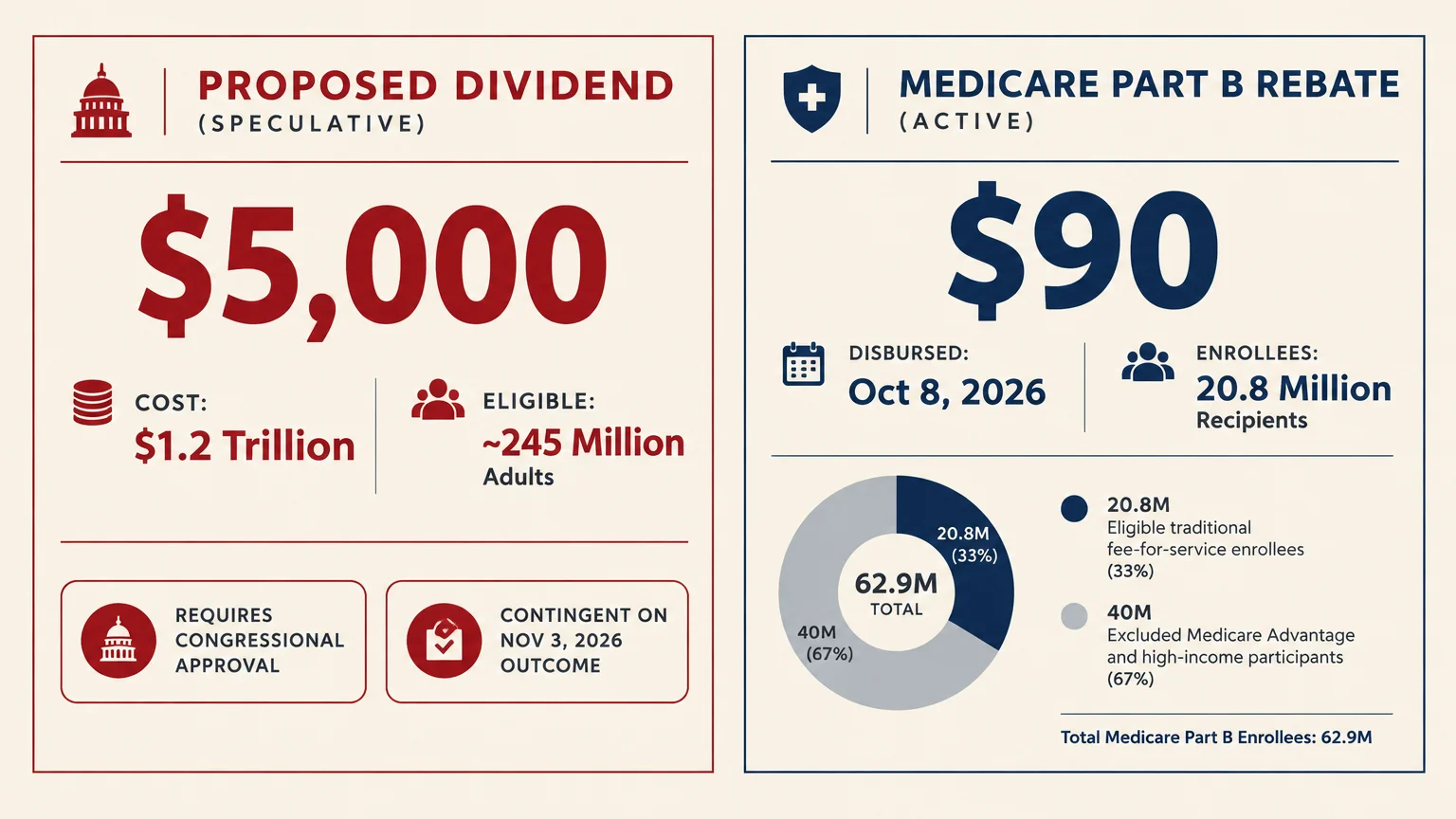
President Trump unveiled the headline proposal on September 9, 2026, during the Republican Midterm Convention in Dallas, Texas. The plan promises a one-time cash dividend of $5,000 to every adult citizen across the country.
You face a crucial statutory caveat with this proposal. The distribution carries an explicit political condition that requires the Republican Party to retain control of both the House of Representatives and the Senate on November 3, 2026.
Under the proposal, recipients must spend these funds exclusively within the domestic economy. The administration argues that this restriction will stimulate local commerce while shielding American industries from foreign competitors.
Budget watchdogs emphasize the staggering scale of such an expenditure. Nonpartisan analysts at FactCheck.org calculate that issuing $5,000 payments to roughly 245 million eligible adults would cost $1.2 trillion.
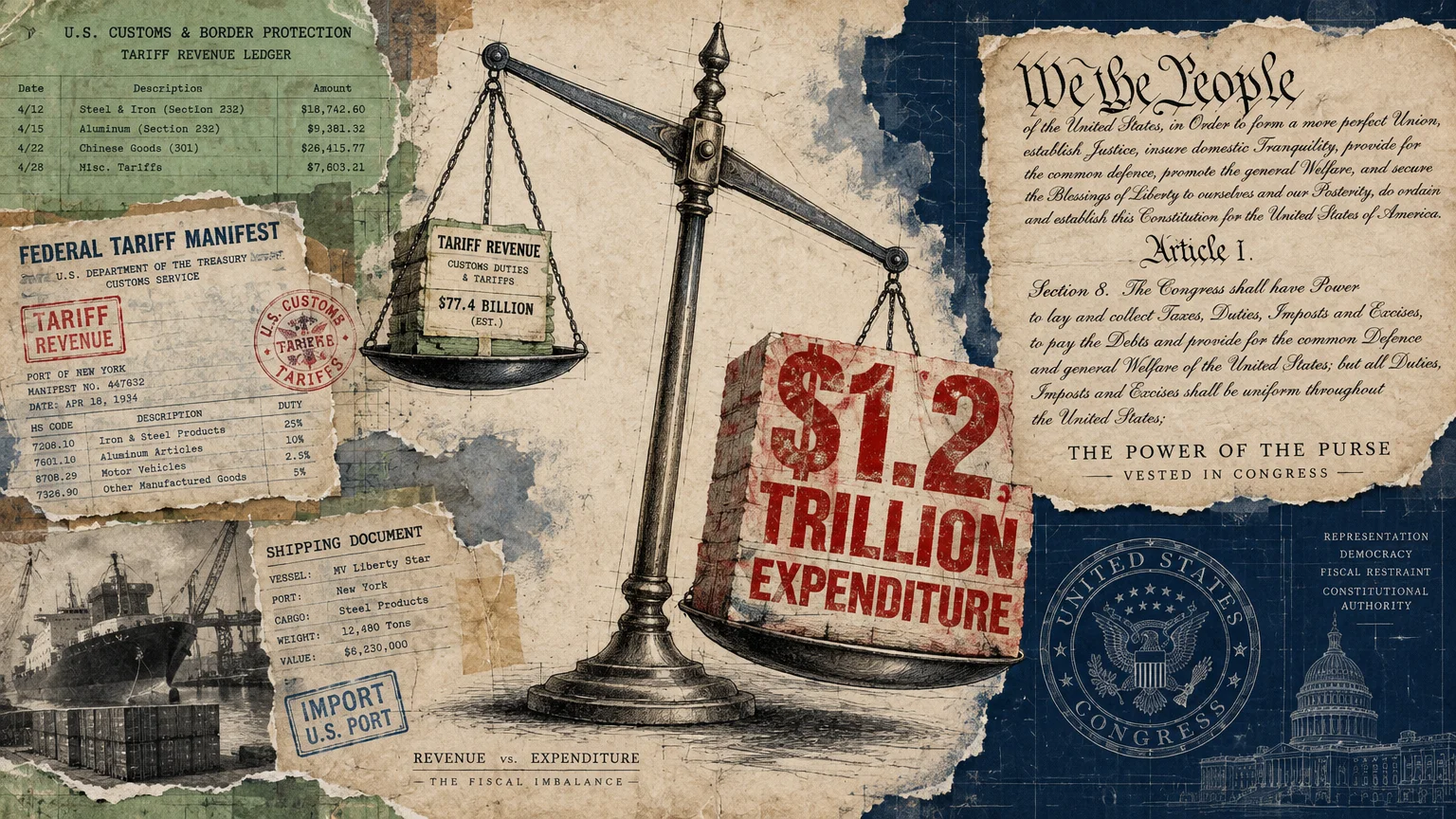
The White House asserts that incoming tariff revenues and expanded domestic production will fully cover the cost. However, independent budget evaluations show that $1.2 trillion substantially exceeds total annual tariff collections.
Without formal congressional legislation, the plan cannot disburse federal funds. The Constitution reserves the power of the purse exclusively to lawmakers, meaning no president can unilaterally issue a $1.2 trillion dividend.
You must therefore view this pledge as an election platform rather than an immediate financial benefit. Your household budget cannot rely on these funds unless Congress drafts, passes, and funds the program next year.
Campaign advertisements and public rallies throughout October 2026 have amplified the promise. As voters weigh their options, understanding the procedural path of this proposal remains essential.
The Active $90 Medicare Part B Rebate Program
While the dividend remains speculative, real money is already moving into millions of bank accounts. On October 2, 2026, the White House announced direct $90 rebate payments targeting seniors enrolled in Medicare Part B.
The federal government began executing direct deposits and mailing paper checks on October 8, 2026. The Social Security Administration and the Centers for Medicare & Medicaid Services coordinate this nationwide distribution.
Trump frequently describes this payout at campaign rallies as nearly $100 or over $100 in direct relief. The initiative reaches 20.8 million eligible older Americans across the country.
You should review your Medicare enrollment status to determine if you qualify. Out of 62.9 million total Medicare Part B enrollees, roughly 40 million do not qualify for the rebate.
The administration restricted eligibility strictly to beneficiaries enrolled in traditional fee-for-service Medicare Part B. If you participate in a private Medicare Advantage plan, the program completely excludes you.
High-income seniors who pay surcharge premiums under income-related adjustment rules cannot receive the funds. The administration also excludes low-income beneficiaries who receive state Medicaid premium assistance.
Officials drew approximately $2 billion from the Medicare Improvement Fund to finance these disbursements. Congress originally established this reserve fund in 2008 to preserve Medicare program integrity.
The administration designed the $90 payment to offset standard monthly Medicare Part B premiums, which stand at $202.90 in 2026. That premium increased from $185 in 2025 and may reach $209.50 in 2027.
This single payment covers roughly 44% of your standard Part B premium for just one month. While the check offers brief relief, it does not permanently reduce your recurring medical expenses.
The $500 ACA Working Families Exchange Rebates
Beyond Medicare beneficiaries, the administration targeted another specific group of consumers through the Affordable Care Act. On September 10, 2026, officials announced a one-time $500 refund for eligible working families.
Federal agencies began mailing these $500 checks in early October 2026. Each disbursement arrives alongside an official White House letter promoting the administration’s healthcare record.
The program distributes financial relief to nearly 1 million Americans across 30 states. The administration restricts these checks strictly to consumers enrolled through the federal exchange at Healthcare.gov.
If your state operates its own independent health insurance marketplace, you cannot receive this payment. The program applies only to states that rely entirely on the federal platform for individual coverage.
Eligibility also hinges on your subsidy status during the current plan year. You qualify only if you paid full price for your 2026 health coverage without receiving federal premium tax credit subsidies.
The Department of Health and Human Services funded this operation by tapping surplus exchange user fees. Federal regulators accumulated these reserve fees during the Biden administration through marketplace operational assessments.
Critics argue that administrative agencies repurposed operational fees that Congress intended for marketplace maintenance. The administration maintains that returning excess fee collections directly to paying consumers represents responsible fiscal governance.
If you meet the criteria, these checks provide an immediate cash infusion to help with your premiums. However, the selective distribution leaves millions of other exchange enrollees without financial assistance.
Background and Timeline: The Road to Pre-Election Checks
Tracking the Policy Rollout from Dallas to Mailboxes
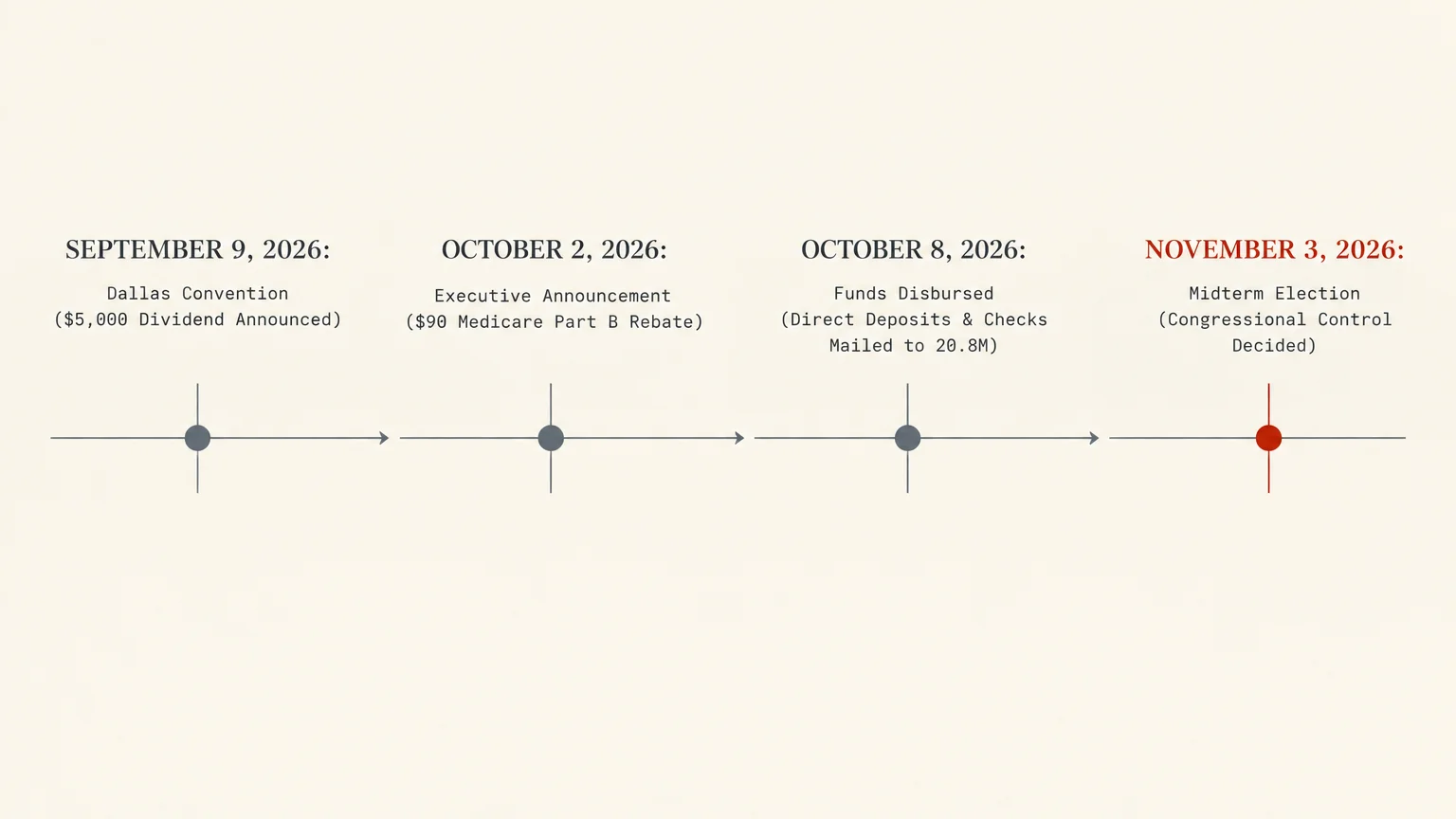
The administration coordinated these check rollouts to coincide with the final stretch of midterm campaigning. The sequence began with the September 9 convention address in Dallas, outlining the $5,000 dividend.
The next day, on September 10, 2026, federal health officials unveiled the $500 exchange refunds. That swift announcement demonstrated an immediate strategy to pair legislative promises with tangible administrative payouts.
Throughout October 2026, the president emphasized both the active rebates and the future dividend during rallies. Campaign advertisements reinforced the message by linking personal financial assistance directly to election outcomes.
The formal execution of the $90 Medicare checks followed on October 2, 2026. Direct payments landed in senior bank accounts starting October 8, barely a month before election day.
This rapid deployment delivered physical checks and electronic deposits precisely when early voting commenced across multiple states. You likely noticed the timing designed to maximize voter awareness at the ballot box.
The combination of prospective proposals and direct checks created a continuous media focus on executive relief. Financial relief dominated daily headlines while political campaigns entered their decisive final weeks.
Historical Precedents for Pre-Election Executive Cash Transfers
Incumbent administrations have often leveraged executive authority to deliver targeted benefits before competitive elections. However, distributing direct cash transfers with explicit partisan voting contingencies represents a dramatic departure from established norms.
During the 2020 election cycle, the federal government sent statutory stimulus checks signed by the president. Yet those pandemic relief distributions originated from broad bipartisan legislation passed by Congress.
Similarly, previous administrations used administrative discretion to adjust farm subsidies or expedite federal grants before November votes. Those programs operated under preexisting statutory formulas without establishing explicit ballot box conditions.
Scholars note that executive branch agencies typically maintain strict nonpartisan boundaries during active voting windows. The current strategy pushes beyond historic conventions by conditioning hypothetical future disbursements on congressional majorities.
You can see how this tactical shift blurs the traditional line separating official state actions from campaign operations. It transforms executive administrative powers into an explicit campaign mobilization mechanism.
Legal historians suggest that such precedents could reshape future federal campaigns permanently. If accepted by the electorate, upcoming administrations from both parties may adopt similar pre-election cash strategies.
Core Policy Analysis: Revenue Sources and Legal Authority
The Appropriations Clause and Executive Spending Limits
The United States Constitution grants Congress exclusive authority over federal spending through Article I, Section 9. Known as the Appropriations Clause, this constitutional provision prevents the executive branch from disbursing treasury funds without legislative approval.
Legal analysts at PolitiFact point out that no president can authorize a $1.2 trillion disbursement by executive order. Even if the administration drafts an executive directive, the Treasury cannot disburse unappropriated revenues.
The administration must therefore persuade Congress to draft and pass explicit authorizing legislation next year. If opposing parties divide congressional control after November 3, 2026, the proposal will almost certainly stall.
You must recognize that statutory budget caps and procedural filibusters in the Senate create steep legislative hurdles. Overcoming those obstacles requires disciplined party unity and substantial legislative majorities.
Federal fiscal watchdogs continually warn that unbacked spending expansions threaten long-term fiscal stability. Nonpartisan analysts routinely monitor such proposals to calculate their real impact on national debt trajectories.
Without formal statutory offsets, adding more debt could trigger mandatory spending reviews across government programs. You must consider how such massive authorizations could alter future fiscal priorities.
Can Tariffs Truly Fund a Trillion-Dollar Cash Transfer?
The White House repeatedly claims that sweeping import tariffs will fully finance the $5,000 dividend checks. The administration argues that foreign exporters effectively pay these levies, creating an unprecedented revenue windfall.
Economic research contradicts this revenue projection. Domestic importers, rather than foreign businesses, pay customs tariffs directly to the federal government at domestic ports of entry.
These companies typically pass higher import duties along to you through elevated retail prices. Consequently, funding domestic cash transfers through tariffs essentially redistributes taxes collected from American consumers.
Furthermore, total annual tariff receipts generate only a small fraction of the required $1.2 trillion expenditure. Funding the program purely through trade duties would require tariff rates so elevated they could disrupt global commerce.
If trade volumes decline due to retaliatory duties, tariff collections will drop sharply. You cannot assume that tariff streams will remain stable enough to sustain massive entitlement payouts.
In reality, implementing the dividend would likely require substantial deficit financing or deep spending cuts elsewhere. The economic trade-offs involve significant risks for taxpayers across all income brackets.
Repurposing Administrative Funds and Agency Reserves
Unlike the proposed dividend, the active Medicare and health exchange checks bypassed congressional votes by tapping agency accounts. The executive branch utilized existing administrative funds that carry broad statutory spending discretion.
Drawing $2 billion from the Medicare Improvement Fund enabled the administration to bypass formal committee deliberations. Regulators at the Centers for Medicare & Medicaid Services allocated the money as administrative premium offsets.
Similarly, officials drained surplus exchange user fees that accumulated over several operating cycles. By reclassifying these platform fees as consumer refunds, the administration secured nearly $500 million for direct mailings.
This funding approach raises pressing policy questions regarding long-term agency stability. Exhausting discretionary reserves leaves federal platforms with diminished cushions to manage unexpected operational costs or systemic disruptions.
Future administrations may find these specialty trust accounts depleted when regulatory upgrades or emergency interventions become necessary. You should evaluate whether short-term consumer relief outweighs the depletion of dedicated program reserves.
Administrative redirection of funds also tests the limits of executive discretion under federal budget statutes. Lawmakers from both parties have voiced concern over the executive branch spending dedicated balances without legislative oversight.

Accountability and Legal Scrutiny: Campaign Ethics and Oversight
Statutory Guardrails Against Ballot Inducements
Conditioning a $5,000 federal payment on specific election results raises serious ethical and legal challenges. Legal scholars at Just Security argue that the promise tests the boundaries of federal election laws.
Federal statutes strictly prohibit individuals from making expenditures to influence how citizens cast their ballots. Specifically, 18 U.S.C. § 597 establishes criminal penalties for anyone who makes or offers expenditures to induce voting behavior.
Additionally, 52 U.S.C. § 10307(c) outlaws paying or offering to pay voters for voting in federal elections. Legal authorities generally interpret these laws as applying to direct cash transactions rather than broad campaign platforms.
However, explicitly conditioning an individualized payout on a specific party retaining congressional control pushes into uncharted legal territory. Critics argue the pledge constitutes an overt attempt to purchase legislative majorities with public treasury funds.
Supporters counter that political candidates routinely promise tax cuts, student loan cancellations, or expanded benefits. The courts have historically granted broad First Amendment protections to campaign promises made on the public trail.
Even so, the explicit contingency creates unprecedented scrutiny from congressional ethics panels and watchdog groups. You should anticipate protracted legal challenges if the administration attempts to implement the program following the election.
These legal questions could ultimately reach federal courts to define the boundaries of executive campaign promises. Judicial rulings on this matter would establish critical guardrails for future presidential administrations.
Official Government Messaging and Promotional Mailings
The active $90 and $500 checks have sparked separate accountability concerns regarding government resources. Agency checks and direct deposits arrived alongside formal correspondence that prominently featured the president’s name and platform.
Congressional oversight committees are examining whether these mailings violated statutory prohibitions against taxpayer-funded campaign material. Federal law strictly prohibits using agency funds for political campaigning or partisan self-promotion.
The administration insists that informing beneficiaries about the statutory source of their payments represents standard administrative transparency. Agency spokespersons state that official correspondence regularly accompanies federal rebates to prevent fraudulent scams.
Nevertheless, the timing of these official letters—arriving days before citizens cast ballots—provoked intense legislative criticism. Watchdog organizations argue that the mailers effectively deployed public revenue to boost executive approval ratings.
You can evaluate the transparency of these communications by reviewing the actual language on your payment notices. Distinguishing between necessary administrative notifications and political promotion remains vital for civic oversight.
Transparency advocates emphasize that taxpayer resources must never subsidize campaign literature. Future statutory reforms may place stricter limits on executive agency messaging during active election periods.

Impact Lens: Household Budgets Against Living Costs
Targeting Inflation and Surging Fuel Costs
These check distributions arrive as American consumers confront stubborn cost-of-living pressures across vital sectors. Geopolitical turmoil and the ongoing conflict with Iran have driven energy prices to punishing levels nationwide.
According to fuel data from the American Automobile Association, average diesel prices reached $6.27 per gallon in early October 2026. That price represents nearly double the rate recorded during the prior year.
Surging diesel prices directly inflate shipping costs, making everyday groceries and household goods significantly more expensive for you. In this challenging economic climate, voters increasingly demand immediate federal relief.
A $90 rebate provides temporary help for an older American facing elevated heating or prescription bills. However, a single $90 check cannot offset months of compounding grocery and transportation price hikes.
Similarly, a $500 health insurance rebate delivers brief respite to an unsubsidized family paying heavy insurance premiums. Yet it leaves the underlying structural drivers of healthcare inflation completely unaddressed.
Cash transfers inject quick liquidity into struggling households, but economists warn that uncoordinated spending can sustain inflationary momentum. You must weigh immediate financial relief against the broader macroeconomic risks of expanded federal deficits.
For many households, temporary checks offer psychological reassurance during periods of economic instability. Yet long-term budget stability requires durable policy solutions that lower everyday prices at the grocery store and gas pump.
Coverage Gaps: Who Misses Out Across the Three Initiatives
When you examine the rules, you discover that the vast majority of Americans receive nothing from the active programs. The targeted eligibility standards exclude tens of millions of citizens who face identical inflationary pressures.
Consider the 40 million seniors enrolled in Medicare Advantage plans or receiving Medicaid premium assistance. These individuals face the same rising living expenses, yet agency guidelines exclude them from the $90 rebate.
The $500 exchange rebate features even sharper exclusions across state lines. Residents in states operating independent healthcare marketplaces cannot receive a check, regardless of their family income.
Furthermore, subsidized exchange enrollees and workers with employer-sponsored health insurance qualify for zero relief under that program. Only nearly 1 million individuals qualify out of hundreds of millions of insured Americans.
These stark disparities mean that geographic location and specific insurance plan types dictate your eligibility. You should verify your specific policy classifications before expecting any federal funds to appear.
Excluded families frequently express frustration when federal programs select narrow beneficiary groups for cash relief. Such eligibility cliffs highlight the practical difficulties of executing targeted executive giveaways.
Frequently Asked Questions
How does the $5,000 dividend differ from active federal rebates?
The $5,000 dividend is currently a campaign proposal that requires full congressional authorization and $1.2 trillion in new appropriations. You cannot receive this payment unless Congress passes authorizing legislation next year.
By contrast, the $90 Medicare checks and $500 exchange refunds are active administrative disbursements already landing in mailboxes. Agencies funded these smaller checks by tapping existing reserve funds without requiring new statutory votes.
While the active rebates deliver immediate financial support to targeted groups, the dividend remains an unenacted legislative promise. Understanding this distinction prevents you from making budgeting errors based on campaign platform pledges.
Do you qualify for the $90 Medicare Part B check?
You qualify only if you participate in traditional fee-for-service Medicare Part B and pay your own standard premium. The federal government sends payments directly to 20.8 million seniors who meet these precise criteria.
If you enroll in a private Medicare Advantage plan, you do not qualify. The administration also excludes beneficiaries who pay high-income surcharges or receive Medicaid premium assistance.
Beneficiaries who meet the criteria do not need to submit an application. The Social Security Administration processes payments automatically using existing direct deposit instructions or mailing records.
Can an administration send cash payments without congressional approval?
No president can unilaterally create new entitlement programs or allocate public revenues from the Treasury. The Constitution’s Appropriations Clause grants Congress exclusive power to authorize federal spending.
An administration can only disburse funds without new legislation if an existing statute already authorized those discretionary reserves. The executive branch used that administrative authority for the Medicare and exchange checks, but cannot do so for the $1.2 trillion dividend.
Any executive effort to disburse unappropriated treasury funds without statutory language would face immediate injunctions in federal court. Constitutional checks and balances ensure that lawmakers retain control over large fiscal transfers.
What happens to the proposed $5,000 checks after the midterms?
If Republicans secure majorities in both the House and Senate on November 3, 2026, party leaders may draft authorizing legislation. However, lawmakers would still face intense fiscal debates over the proposal’s $1.2 trillion price tag.
If Democrats win control of either chamber, the proposal will almost certainly die in committee. Bipartisan skepticism regarding tariff funding and deficit expansion will prevent the check proposal from advancing.
Even with unified party control, passing a trillion-dollar measure requires broad consensus among lawmakers facing competing spending priorities. You should monitor congressional budget negotiations in early 2027 to see if legislative text emerges.
Forward Look: Key Deadlines, Ballots, and Governance
Your immediate attention should focus on the upcoming November 3, 2026, midterm elections. The composition of the next Congress will directly determine whether large-scale dividend proposals have any legislative future.
If you qualify for the $90 Medicare payment, monitor your direct deposit account or mailbox through late October 2026. Beneficiaries should verify their mailing addresses with the Social Security Administration to prevent delivery delays.
Eligible exchange enrollees across the 30 federal marketplace states should also watch for their $500 refund notices. If you believe an agency improperly excluded you, contact your plan administrator to review your 2026 subsidy records.
Looking ahead to 2027, Medicare Part B premiums are projected to increase to $209.50 per month. That projected climb underscores how quickly one-time rebates fade against ongoing healthcare inflation.
Congressional oversight committees will hold hearings early next session to examine the legal authority behind executive check distributions. Lawmakers plan to question agency officials about the depletion of the Medicare Improvement Fund and exchange reserves.
Meanwhile, watch for potential legal challenges from watchdog groups regarding the statutory limits on campaign promises and official mailings. Court rulings could establish new legal standards governing executive communications during election cycles.
As you evaluate competing political pledges, separate concrete statutory programs from speculative campaign promises. Your personal financial security depends on clear facts rather than pre-election rhetoric.