The Flashpoint: A Divisive Vote on Capitol Hill
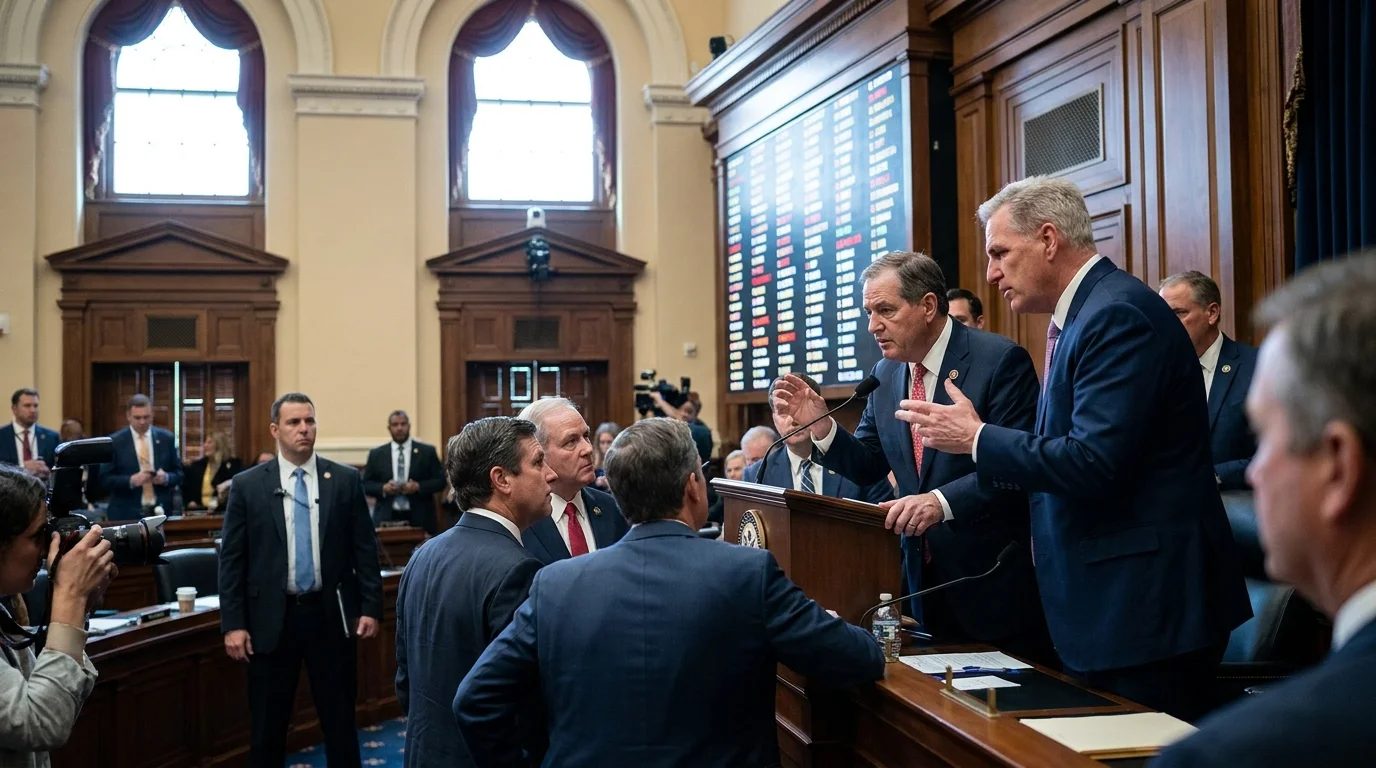
The halls of the Capitol recently witnessed a fierce clash over the future of the nation’s largest healthcare program—a battle that could ultimately redefine medical access for millions of older Americans. During a contentious marathon markup session this spring, the House Budget Committee advanced a sweeping fiscal framework seeking to address the ballooning national debt. The proposed resolution targets federal healthcare expenditures directly, proposing roughly four hundred billion dollars in reduced outlays over the standard ten-year budget window.
Lawmakers backing the measure argue that the federal hospital insurance trust fund faces imminent depletion, necessitating immediate structural reforms to prevent an automatic financial collapse. Opponents passionately counter that the framework balances the federal ledger entirely on the backs of fixed-income seniors who literally cannot afford to absorb another shock to their retirement planning. You need to understand that this initial committee vote serves as merely the opening bid in a protracted legislative battle.
This early maneuvering sets the strict parameters for upcoming appropriations and potential reconciliation bills that dictate exactly how much funding flows to the local hospitals and specialized clinics you rely on every single day. When politicians maneuver to alter these immense, multi-billion-dollar funding streams, the polished campaign rhetoric rarely matches the granular reality of the underlying policy. You must monitor these early developments closely; your ability to retain your preferred medical specialists hangs delicately in the balance as these budget caps move toward a final floor vote.
Players and Strategy: Lobbyists, Lawmakers, and Grassroots Advocates
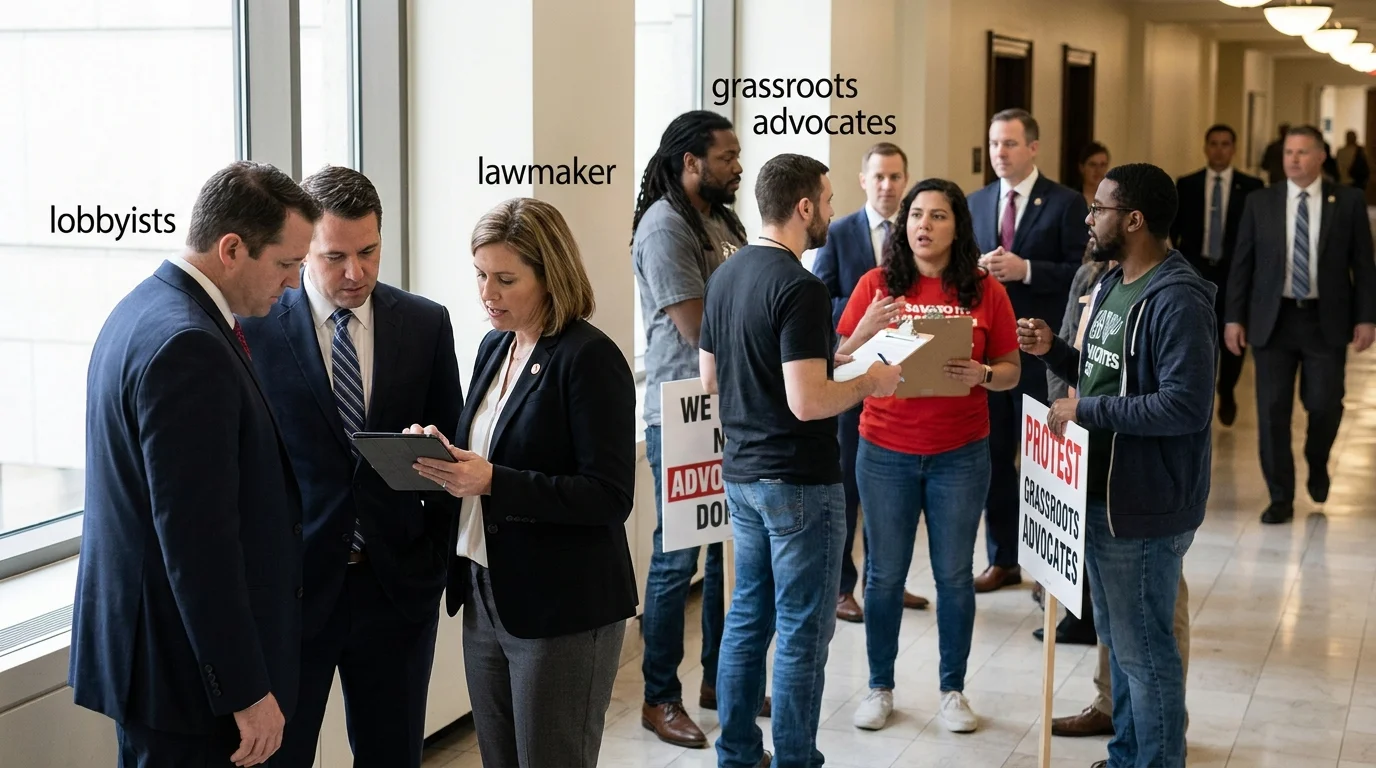
To understand the true trajectory of these proposed legislative changes, you must aggressively map the competing institutional factions fighting for leverage behind closed doors. Fiscally conservative blocs in the House, heavily influenced by deficit-hawk think tanks, view the current spending trajectory as an existential threat to the stability of the federal budget. They demand permanent structural freezes to medical provider reimbursements as a non-negotiable condition for their votes on broader government funding measures.
Pushing back with massive, coordinated financial resources are the institutional provider networks. Organizations representing the nation’s physicians and hospital administrators warn that persistent inflation has already eroded the real value of federal payments over the past two decades. They aggressively argue that further spending cuts will inevitably trigger a devastating cascade of facility closures and critical provider shortages. Meanwhile, grassroots advocacy giants mobilize their massive membership bases to defend current statutory benefit structures.
These senior advocacy groups routinely deploy highly targeted television and digital ad campaigns in vulnerable swing districts, successfully turning obscure federal funding formulas into explosive midterm campaign issues. When you look closely at the campaign finance ecosystem, you quickly see how political action committees representing pharmaceutical companies, insurance conglomerates, and medical device manufacturers strategically distribute their immense wealth. They funnel millions to powerful committee chairs to ensure their specific corporate profit centers remain entirely untouched by the sweeping budget cuts dominating the headlines.

Policy Breakdown: Decoding the Proposed Legislation
When politicians enthusiastically propose sweeping reductions to this vital national program, they rarely suggest explicitly stripping away your hospital coverage or directly canceling your routine preventative care. Instead, the actual legislative text targets the underlying, highly complex payment structures that fund the entire healthcare ecosystem. You must look far beyond the topline budget numbers to see exactly how the mechanics operate on the ground level.
Specifically, current legislative drafts target the capitation rates paid to the private insurance companies that manage alternative coverage models. By permanently freezing the base payment rate and introducing a severe negative adjustment for risk coding, lawmakers hope to claw back billions in perceived historical overpayments. Furthermore, the legislation proposes an extended freeze on the national physician fee schedule—the master list that dictates exactly how much traditional federal insurance pays independent doctors for specific, itemized medical procedures. You can verify these baseline funding projections by reviewing the nonpartisan data published regularly by the Congressional Budget Office.
Traditional fee-for-service coverage operates distinctly from the managed care networks dominating the private sector. When Congress targets the physician fee schedule, they fundamentally alter the base conversion factor used to calculate the real-world value of every single medical service provided under traditional coverage. Conversely, managed care plans rely on a complex bidding system against established federal benchmarks. If lawmakers artificially depress those benchmarks to achieve mandatory budget savings, the private insurers managing your care face a sudden, massive margin squeeze.
You might not see a direct dollar reduction printed on your monthly explanation of benefits; however, a permanent payment freeze in an era of persistent medical inflation acts as a devastating de facto cut to the specific providers currently treating you. Detailed KFF research indicates that when baseline reimbursement rates decrease, massive insurance companies rarely absorb the financial loss. They pass the heavy burden directly onto you through higher maximum out-of-pocket limits, significantly narrower provider networks, or the quiet, unannounced elimination of supplemental benefits like dental and vision care.

Constituent Impact: What This Means for Your Healthcare
The secondary ripple effects of a massive provider reimbursement freeze ultimately crash directly into your personal, daily healthcare access. A one percent cut in federal medical reimbursements might represent a minor rounding error for a massive, multi-state urban health conglomerate, but it represents the entire operating margin for a critical access hospital located in a sparsely populated rural county.
If that isolated rural facility abruptly shutters its specialized departments due to a sudden lack of federal funding, you might find yourself driving two hours simply to reach a cardiologist or an emergency oncology clinic. For those individuals enrolled in traditional federal coverage models, a prolonged freeze on the physician fee schedule fundamentally alters the basic business calculus for independent medical practices. Independent physicians may strictly cap the number of government-insured patients they accept just to keep their clinic doors open and their staff employed.
Consequently, you could face agonizingly longer wait times for basic preventative appointments, or you might receive an abrupt letter stating that your longtime primary care physician is transitioning to a direct-pay concierge model that bypasses federal insurance entirely. The psychological toll of this constant legislative uncertainty forces fixed-income seniors to radically reconsider their strict retirement budgets. You might find yourself dangerously delaying necessary, life-improving procedures—such as joint replacements or cataract surgeries—because you legitimately fear unexpected out-of-pocket costs if your preferred medical provider decides to leave the network mid-treatment.

Oversight and Ethics: Following the Money
True watchdog analysis requires rigorously following the corporate money that shapes these ultimate legislative outcomes. The private insurance companies managing alternative government coverage plans spend hundreds of millions of dollars annually to directly author the exact statutory language currently being debated in committee rooms. Transparency vanishes rapidly when the federal regulators rely heavily on the regulated entities for their own political campaign survival.
The Office of Inspector General consistently flags a highly controversial industry practice known as upcoding, wherein corporate insurers aggressively comb through your historical medical charts to add unverified or dramatically exaggerated diagnoses. This predatory tactic artificially inflates your official patient risk score, forcing the federal government to pay the corporate insurer significantly higher monthly premiums for your theoretical care. Lawmakers routinely frame their proposed budget cuts to the press as a noble, bipartisan effort to eliminate this specific corporate waste.
Yet, a closer, uncompromising examination of institutional campaign finance disclosures reveals a deeply troubling contradiction. The very politicians loudly leading the charge to reform the broken system receive substantial political action committee donations from the exact same insurance conglomerates they publicly claim to be aggressively regulating. This deeply entrenched financial entanglement raises severe ethical questions about whether the final statutory language will genuinely protect the American taxpayer, or if it will merely cement the permanent market dominance of massive healthcare corporations at the direct expense of independent doctors and vulnerable patients.
Frequently Asked Questions About the Proposed Legislation
When would these proposed healthcare changes actually take effect?
Legislative proposals rarely result in immediate, overnight disruptions to your current medical coverage. If Congress successfully passes a broad budget resolution, the relevant oversight committees must still draft binding statutory language through a highly complex procedural mechanism known as reconciliation. Even if the President signs this sweeping legislation into law by the end of the current year, the Centers for Medicare and Medicaid Services strictly requires several months to finalize and implement the intricate administrative rules governing specific provider payments. Therefore, the absolute earliest you would likely experience altered benefit structures, modified provider networks, or direct premium adjustments is during the open enrollment period for the following calendar year, which ultimately impacts medical coverage that begins the subsequent January.
Will my current doctors stop accepting federal insurance if this passes?
The very real threat of provider attrition remains the absolute most significant systemic risk associated with federal reimbursement reductions. While massive regional health systems typically absorb these minor rate freezes to aggressively maintain their overall patient volume and market share, small independent practitioners face a much starker financial reality. If the compounding operational cost of maintaining a private medical practice vastly outpaces the stagnant federal payment rates, your doctor might consciously choose to severely limit the number of government-insured patients they treat. You should proactively initiate a candid, early conversation with your primary care physician’s billing manager to fully understand their long-term strategy for federal program participation.
Are supplemental Medigap policies directly affected by this legislation?
Traditional coverage relies heavily on private supplemental insurance to efficiently cover the twenty percent coinsurance gap that the government intentionally leaves behind. Because these supplemental policies statutorily mirror traditional federal approvals, direct cuts to provider reimbursement rates do not immediately or legally cancel your private supplemental coverage. However, the secondary ripple effects will deeply impact your retirement wallet over time. If the underlying federal payments shrink, medical providers inevitably increase their overall service charges to compensate for the lost revenue. This predictable cost-shifting eventually forces supplemental insurers to drastically raise your monthly premiums to cover their expanded financial exposure. You must review your supplemental premium notices carefully, as these indirect legislative costs almost always sneak past the mainstream news headlines.
How can I accurately track how my elected representative votes on this issue?
Political campaign rhetoric rarely matches the granular, uncompromising reality of behind-the-scenes legislative maneuvering. Rather than passively relying on curated campaign newsletters or carefully orchestrated televised town halls, you need to actively monitor the raw, unfiltered institutional data. You should consistently utilize official congressional portals or independent legislative trackers to review the exact roll call votes on committee markups and procedural motions. Pay particular, intense attention to the obscure, late-night amendments quietly added during the final floor debates; lawmakers frequently use these late-stage additions to successfully carve out lucrative financial exemptions for favored regional healthcare providers while leaving the broader, more painful funding cuts completely intact for everyone else.
Outlook: The Next Milestones to Monitor
The legislative path forward looks exceptionally volatile as the congressional calendar collides directly with the rapidly approaching election cycle. Senate leaders consistently indicate a strong, undeniable reluctance to directly touch the political third rail of senior entitlements immediately ahead of November, often preferring to cleverly disguise these essential funding adjustments within broader, must-pass omnibus spending packages. Meanwhile, aggressive regulatory agencies boldly continue to issue their own complex administrative rules that bypass Congress entirely, quietly reshaping risk adjustment models and prior authorization requirements without a single transparent floor vote.
You must remain intensely vigilant over the coming months as these parallel, high-stakes processes unfold simultaneously. As massive political action committees predictably flood the television airwaves with contradictory messaging and highly emotional appeals, your absolute best defense involves ignoring the partisan noise entirely. Focus your attention exclusively on the structural funding changes quietly moving through the key oversight committees in Washington. The long-term stability and financial viability of your retirement healthcare ultimately depends on fully understanding the fine print long before the final legislative gavel falls.